Former US Negotiator Outlines the Deal That Could Stabilise the Middle East
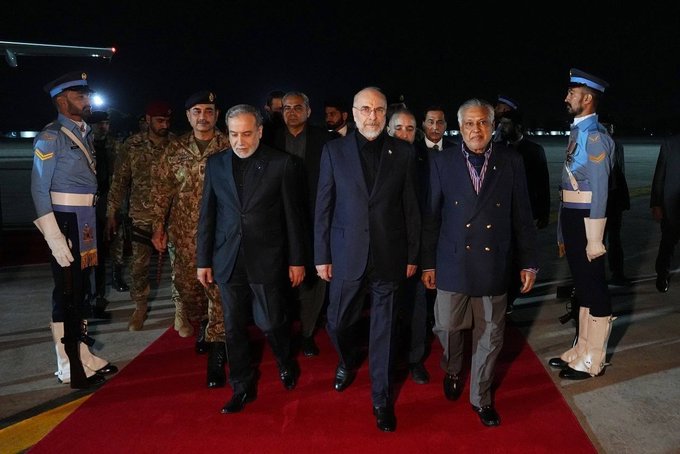
Iranian delegation arrives in Islamabad for summit. (Image X.com)
By TRH World Desk
The former Middle East peace negotiator says sanctions relief for Iran in exchange for strict nuclear constraints under IAEA monitoring is the only viable path to lasting regional stability.
New Delhi, June 30, 2026 — Former U.S. Middle East peace negotiator Aaron David Miller has warned that Washington and Tehran must reach a broader strategic understanding to prevent renewed instability in the Middle East. He argued that technical negotiations alone will not resolve the underlying disputes driving regional tensions.
Speaking to Al Arabiya English, Miller said the current implementation of the U.S.-Iran understanding has been undermined by flaws in both the original memorandum and its execution.
“A flawed U.S.-Israeli military campaign has led to a flawed memorandum of understanding,” Miller said. He argued that shortcomings during negotiations had contributed to the current impasse.
“Clearly our lawyers and negotiators were not as astute as Iran’s and the mediators’. That flawed memorandum has led to a flawed implementation process,” he said.
Two Major Flashpoints
According to Miller, two unresolved issues continue to threaten regional stability. The first concerns Lebanon, particularly the challenge of disarming Hezbollah alongside Israel’s withdrawal from Lebanese territory.
“The continuing problem is what to do about disarming Hezbollah and Israeli withdrawal from Lebanon,” he said.
The second flashpoint involves the Strait of Hormuz, where Iran continues to view its strategic leverage as essential to its national security.
“The Iranians are determined to ensure that they do not lose their leverage there,” Miller said.
He cautioned that any perception that the United States or Gulf Arab states were attempting to weaken Iran’s influence over the strategic waterway would likely provoke a stronger Iranian response.
“Any indication that the Americans or the Gulf states believe they can erode Iran’s influence and control there is going to make the Iranians respond more aggressively,” he said.
Call for a Strategic Understanding
Miller argued that the ultimate solution lies in a political agreement reached directly by leaders in Washington and Tehran rather than through incremental technical discussions.
“What you need is a strategic understanding between the Islamic Republic and the Trump administration,” he said.
He outlined what such an agreement should include.
For Iran, Miller said the deal would need to provide significant financial and economic relief through expanded oil waivers, sanctions relief and the release of frozen assets.
In return, Tehran would have to accept stringent limits on its nuclear programme, including restrictions on nuclear infrastructure, a resolution of the issue surrounding highly enriched uranium and intrusive monitoring by the International Atomic Energy Agency (IAEA).
“Financial and economic relief for Iran in exchange for serious constraints on their nuclear issue—that is the deal,” he said.
Leadership Decisions Needed
While acknowledging that technical negotiations remain useful, Miller said they cannot substitute for political decisions by the highest leadership in both countries.
“Technical talks, while important, will not answer the mail,” he said.
“You need decisions by the leadership in Washington and Tehran to anchor this process,” he stressed. Without such political commitment, Miller warned, the current cycle of retaliatory actions and recurring crises would continue.
“Without it, I think we’re going to drift and we’re going to deteriorate,” he said.
His remarks come amid continued uncertainty over regional security, Iran’s nuclear programme, Hezbollah’s future role in Lebanon and broader U.S.-Iran relations.
Follow The Raisina Hills on WhatsApp, Instagram, YouTube, Facebook, and LinkedIn




About The Author