US Strikes Collapse Chabahar Port Tower as Iran War Escalates
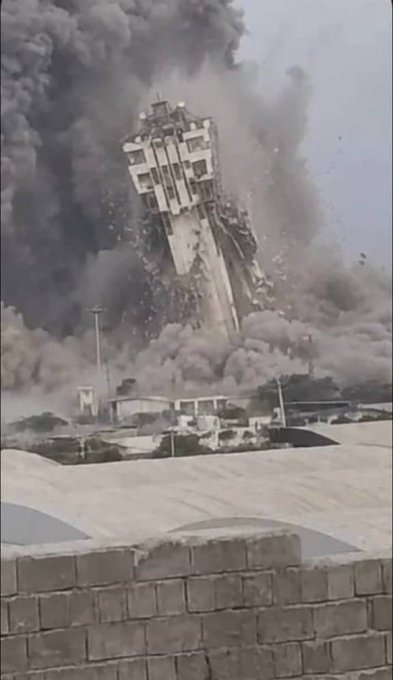
US struck Chabahar Port watch tower on Friday.
By TRH World Desk
US Strikes Hit Chabahar Port for a Third Time, Collapsing Control Tower as Iran-US Conflict Widens
New Delhi, July 17, 2026 — Iran’s Chabahar port — the country’s only deep-water gateway to the open ocean and a strategic linchpin for India’s trade ambitions in Central Asia — has come under repeated American fire, with the latest wave of strikes reportedly collapsing its maritime surveillance tower entirely.
The port, situated on the Gulf of Oman just outside the Strait of Hormuz, was first struck on July 8-9, when US forces destroyed the maritime traffic control tower and damaged two piers, including the India-developed Shahid Beheshti dock.
According to Gulf outlet Gulf News, the operation followed US President Trump’s declaration that the ceasefire reached earlier in the year was effectively over, a move he tied to alleged Iranian attacks on commercial shipping in the strait.
NATO chief Mark Rutte reportedly backed the American response as a justified reaction to repeated Iranian violations of the truce.
By Friday, July 17, the tower had reportedly been targeted for a third time. Lebanese outlet This Is Beirut reported that the civilian maritime control tower was hit for a second time earlier in the week, causing further damage before Friday’s strikes reportedly brought the structure down entirely.
US Defence Secretary Pete Hegseth shared imagery appearing to show the tower’s collapse, an image that had circulated on social media before he posted it.
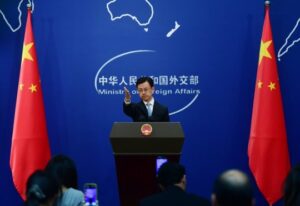
Randhir Jaiswal, spokesperson of India’s Ministry of External Affairs, said on Friday that the “terminal at the Chabahar Port is intact.”
Iran’s state broadcaster network offered its own account of events. PressTV, Iran’s English-language state outlet, reported that the tower at Chabahar’s Shahid Kalantari Port was struck for the third time on Friday morning and was completely destroyed, while noting that the port’s berths and cargo-handling equipment were reportedly untouched and that no casualties were recorded at the port itself.
The outlet added that Iran’s technical teams had begun damage assessments and expected cargo operations to resume shortly. Separately, PressTV reported that Iran’s Energy Ministry issued a call for reduced power usage in the south, citing strikes on power infrastructure.
The Wider Picture
The Chabahar strikes are one front in a much broader campaign. Israeli-linked outlet JFeed reported the tower’s destruction came as part of a wider wave of US strikes against roughly 90 Iranian military targets along the southern coastline, including air defence systems, coastal surveillance assets, and naval infrastructure near the strait.
Casualty figures are being reported almost exclusively through Iranian and regional sources and have not been independently verified.
Coverage citing Iran’s Health Ministry has put the death toll from the broader strike campaign in the dozens, with hundreds more wounded, though these figures come from a single side of the conflict and should be treated as claims rather than confirmed facts pending independent verification.
The conflict has not stayed one-sided. Iran has reportedly launched retaliatory missile strikes against US-allied states in the region, including Qatar, which twice ordered residents to shelter as missiles were reportedly fired toward the country.
Qatar has served as a mediator in the broader US-Iran conflict.
Why Chabahar Matters
Chabahar’s significance goes well beyond the port itself. It is Iran’s only oceanic port with direct access to the Arabian Sea, letting the country move goods without transiting the Strait of Hormuz.
For India, the port has been the anchor of a decade-long strategic bet: New Delhi signed a 10-year agreement in 2024 to operate the Shahid Beheshti terminal, part of a broader push to reach Afghanistan and Central Asia via the International North-South Transport Corridor (INSTC) — a route that bypasses Pakistan entirely.
That investment is now caught in the crossfire of a conflict it had nothing to do with.
Repeated strikes on the port’s control infrastructure raise real questions about the corridor’s near-term reliability, even as both Iranian and American sources indicate that cargo-handling operations at the port have continued.
The Competing Narratives
The two sides describe the same strikes very differently. American officials have consistently framed the campaign as targeting military and maritime-control infrastructure specifically to degrade Iran’s ability to threaten commercial shipping, and have said civilian facilities and energy infrastructure were not deliberately targeted.
Iranian state media, by contrast, has increasingly described the campaign as one striking civilian and power infrastructure, and Iran’s government has reportedly called on the UN’s human rights chief to condemn the strikes.
Neither framing is independently verifiable from outside the conflict zone in real time, and both carry the incentives of a party at war.
Readers should treat casualty figures, intent claims, and damage assessments from any single government or state broadcaster with appropriate caution until corroborated by independent, third-party reporting.
Jennifer Gavito Says US-Iran Conflict Will Ultimately Return to Diplomacy
Follow The Raisina Hills on WhatsApp, Instagram, YouTube, Facebook, and LinkedIn




About The Author