Woman Unknown Review: May el-Toukhy’s Golden Lion Winner Is a Tense Study of Shame and Complicity
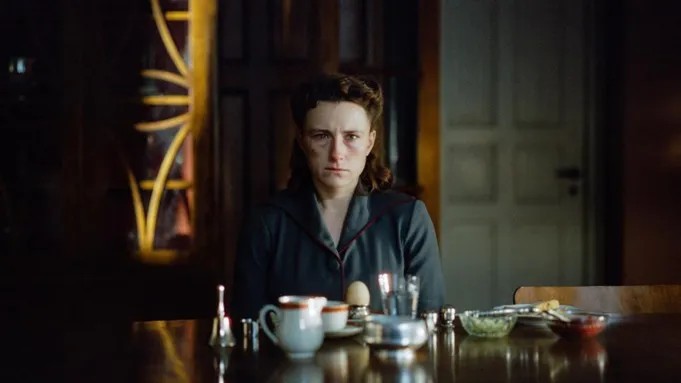
Woman Unknown review: a Golden Lion winner about wartime shame (Image a still from the film)
By TRH Entertainment Desk
Woman Unknown (Kvinde ukendt) is a story about complicity, and about the way shame gets handed from one person to another.
Mumbai, November 15, 2026 — May el-Toukhy has built a career on films that make audiences squirm. Woman Unknown (Kvinde ukendt), her third feature, turns that talent on the most uncomfortable afterlife of the Second World War: what happened to the women accused of fraternising with the enemy.
The film won the Golden Lion at the 83rd Venice International Film Festival, where it was the only competition entry directed solely by a woman.
Set in Copenhagen just after the war, the film follows Marie, played by Mathilde Arcel, a former housekeeper who is about to marry the widowed patriarch of the household she serves, a glove manufacturer named Christian (Carsten Bjørnlund).
She is fighting to protect her new life while the compromises of the wartime occupation resurface. The Film Stage says the trouble begins when she runs into a man from her past.
Around her, the city is turning on women suspected of sleeping with German officers, in scenes of public punishment.
Reviews lean admiring. Moveable Fest, covering TIFF, says it “may just be her first masterpiece,” arguing the film shows Marie’s choices were not made in a vacuum.
The Playlist calls it a “tense post-WWII thriller” and says el-Toukhy succeeds in making Marie better known in the fullness of her humanity, never reducing her to a villain or a victim.
Cineuropa described it as one of the nastier takes on liberation euphoria, noting the vigilante acts of punishment seem, perversely, as euphoric as the celebrations.
The Film Stage places the film as a bridge between the post-war cinema of Christian Petzold and Paul Verhoeven.
The lead performance draws consistent praise. Variety calls Arcel magnetic, and Moveable Fest calls her turn stunning.
The reservations are about subtlety. Variety’s verdict is that it is a “provocative but predictable psychodrama,” complaining that the crimson accents in the washed-out grey and mahogany visuals announce their symbolism almost as bluntly as the swastika smeared on Marie’s door.
The review argues the script avoids explanatory dialogue, but the dots are “awfully close.” The Film Stage writes that el-Toukhy takes the story on with “immense restraint,” which works much of the time, though the story’s territory can feel very recognisable.
Some viewers on Letterboxd call it opaque, with empty provocations and too many ideas that go nowhere. It is a film for audiences who enjoy ambiguity.
El-Toukhy’s earlier film Queen of Hearts (2019) was a steely drama about an affair that Catherine Breillat remade as Last Summer. Variety notes that her feminism is prickly by design, and Woman Unknown extends that stance. She does not absolve Marie, nor does she let the society around her off the hook.
Her cinematographer, Jasper Spanning, turns the rituals of punishment into near-installation art, as Cineuropa notes, which is as unsettling as it is striking.
The film dramatises a history that most war movies skip. The women branded “horizontal collaborators” were often punished by neighbours who had themselves compromised, and the film suggests that a society’s cruelty often grows from its own guilt.
In that sense it is a story about complicity, and about the way shame gets handed from one person to another.
Expect a controlled, uneasy thriller with an excellent central performance, not a conventional war drama. Its restraint will thrill some viewers and frustrate others, and its symbolism will not suit all tastes.
As a Golden Lion winner and a distinctive look at an under-explored chapter of European history, it is likely to be discussed through awards season.
La Bola Negra Review: Los Javis’ Lorca-Inspired Queer Epic Divides Critics
Follow The Raisina Hills on WhatsApp, Instagram, YouTube, Facebook, and LinkedIn




About The Author