Gen Z Is More Than a Generation of Protesters: India’s Youth Demand Jobs, Accountability and a Voice
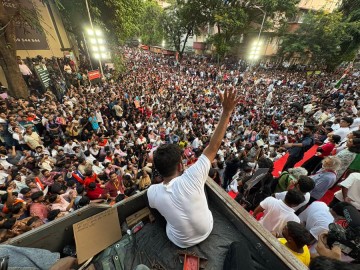
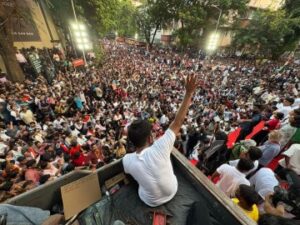
The contrasting police responses to the Cockroach Janata Party’s October 2 protests in Mumbai and Delhi have raised questions about crisis management, democratic accountability and the BJP’s next-generation leadership. (Image Dipke on X)
By BHAWNA MALIK
From unemployment and examination controversies to gender equality and climate change, India’s young generation is challenging institutions and demanding greater accountability, economic opportunity and meaningful political participation.
New Delhi, November 15, 2026 — Is it fair to label Gen Z merely a “digital generation” or a generation of protesters? India’s young people are doing far more. They are questioning institutions, taking to the streets, building businesses and reshaping conversations around jobs, gender, climate, mental health and social justice. They are not necessarily anti-establishment. They are impatient with systems they see as slow, opaque and disconnected from their realities.
For earlier generations, civic participation often meant joining a political party, attending a rally or writing to a newspaper. For Gen Z, it may begin with a post, video, hashtag or online petition—and quickly move to the streets. A viral issue can spark a protest within hours. A campus dispute can become a national conversation. A short video can bring an overlooked local problem into the spotlight.Young people no longer depend entirely on politicians, newspapers or television channels to decide which issues deserve attention. They create their own narratives. But digital power carries responsibility. Misinformation, edited videos and online outrage can spread as quickly as verified information. The ability to amplify an issue must be matched by the willingness to verify facts.
Why are they protesting?
Across the world, youth-led movements have demanded accountability, economic opportunity, political representation and a greater say in decisions affecting their future. India is no exception. From examination and recruitment controversies to unemployment, climate change, gender violence, education costs and corruption, young people are taking concerns from their screens to the streets.
Recent youth movements in Bangladesh, Sri Lanka, Nepal and elsewhere in Asia have demonstrated how quickly citizens can mobilise when they feel institutions are not listening. India’s young people are watching. Unlike traditional political mobilisation, Gen Z protests are often decentralised and driven by digital networks. A single leader may be absent; a video, meme or social media post can become the rallying point.
“Listen to us. We are affected by these decisions,” says Harish Maitre, an aspiring lawyer.
Maitre participated in the CJP protest at Jantar Mantar. For him, the NEET paper leak was not merely an examination controversy but a symptom of systemic failure that needed correction.
Jobs remain the biggest question
Behind Gen Z’s confident digital image lies deep economic anxiety. Young Indians face an intensely competitive job market even as automation and artificial intelligence reshape employment. A degree no longer guarantees a stable career. They want meaningful work, but they also need financial security.
Many are questioning the traditional equation of long working hours with professional commitment. Work-life balance, flexibility, mental well-being and workplace culture matter. Entrepreneurship, too, has gained appeal as social media opens doors for creators, freelancers, small businesses and independent professionals.
For some, success means a start-up or an online business rather than a government job or a corporate career. Yet the freedom to choose an unconventional path means little without access to opportunities and a reliable livelihood.
Sumit (name changed), an influencer who regularly attends protests, says: “Influencers are also citizens. They too can shoot, record and upload. These protests are for every Indian.”
His observation captures the changing nature of public participation: the smartphone is not merely a device for consumption but a tool for documenting events, sharing experiences and demanding answers.
Nepal’s Gen-Z Revolt Exposes the Perils of Xi’s Orwellian Tech
Gen Z has grown up alongside rapid technological change. Digital payments, smartphones and social media are part of everyday life. Yet this technologically ambitious India remains troubled by unemployment, inequality, pollution, unsafe public spaces, gender violence, educational pressure and mental-health concerns.
Young people want cleaner cities, safer streets, better public transport, accessible education and greater transparency. Their expectations extend beyond elections to the everyday quality of life. They speak about climate change and sustainability while embracing technology, fashion and consumer culture. These apparent contradictions are part of a generation navigating competing aspirations in a rapidly changing society.
Gen Z is also challenging inherited ideas about gender and identity. Young women are questioning why safety should restrict their mobility. Young men are increasingly entering conversations about mental health, emotional vulnerability and changing expectations of masculinity. Consent, equality, LGBTQ+ inclusion and workplace discrimination are receiving greater visibility among younger audiences.
But Gen Z is not a uniform bloc. Its experiences differ sharply across urban and rural India, economic classes and levels of digital access. There is no single Gen Z worldview, and online visibility should not be mistaken for universal agreement.
From protest to participation
The bigger question is whether online activism can translate into sustained civic engagement. Posting is easy; building institutions is harder. Protesting matters, but so does voting. Questioning the government matters, but so does understanding policy. A viral campaign can create awareness, but lasting change requires evidence, organisation and persistence.
India’s young citizens are already influencing politics, business, culture, journalism, technology and public policy. They are not waiting for their turn; they are shaping the conversation now.
Their message to the older generation is clear: Do not speak for us. Listen to us.
Gen Z does not simply want to inherit India as it is. It wants a meaningful seat at the table where the country’s future is decided.
For India’s young people, employment remains a defining concern. The figures cited in the article’s source material put unemployment among 15–29-year-olds at 16.2% in June 2026, compared with 5.5% for the population overall. The annual youth unemployment figure for 2025 was 9.9%.
The source material also reports that nearly 40% of graduates in the youth labour force are unemployed, fewer than 7% of male graduates find permanent salaried employment within a year of graduating, and around a quarter of people aged 15–29 are not in employment, education or training.
You Are Not Gen Z: Delhi High Court Turns India’s Protest Politics Into an Age-Verification Exercise
Follow The Raisina Hills on WhatsApp, Instagram, YouTube, Facebook, and LinkedIn




About The Author