Pakistan Sends Climate Minister to India for SCO Dialogue: Is Islamabad Planning to Raise Indus Waters Treaty?
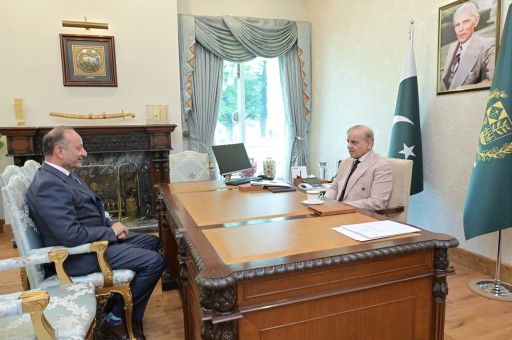
Pakistan sends climate minister Musadik Malik to India's SCO Civilizational Dialogue. Is Islamabad preparing to internationalise the Indus Waters Treaty dispute? (Image Pakistan PMO on X)
By TRH Op-Ed Desk
Musadik Masood Malik’s nomination instead of Pakistan’s culture minister for the November 20-22 SCO Civilizational Dialogue raises questions over Islamabad’s diplomatic strategy, the Indus Waters dispute and the future of India-Pakistan relations.
New Delhi, November 14, 2026 — Pakistan’s decision to send its Climate Change and Environmental Coordination Minister, Musadik Masood Malik, to the Shanghai Cooperation Organisation (SCO) Civilizational Dialogue in New Delhi has added an unexpected geopolitical dimension to the upcoming multilateral gathering.
The November 20-22 event will mark the first visit by a Pakistani federal minister to India since May 2023, when then Foreign Minister Bilawal Bhutto Zardari attended an SCO meeting in Goa. Pakistan’s Foreign Office confirmed on Saturday that Malik would represent the country at the gathering.
In his geopolitical analysis for The Raisina Hills, Manish Anand examines why Islamabad has nominated its climate minister rather than its National Heritage and Culture Minister, who was originally invited by India.
According to Anand, the choice deserves attention because the Indus Waters Treaty dispute falls directly within Malik’s ministerial portfolio. The Pakistani minister has repeatedly criticised India’s decision to place the 1960 treaty in abeyance following Operation Sindoor and has raised the issue at international forums.
Anand believes Malik’s presence in Delhi could provide Pakistan an opportunity to bring the water dispute into the international media spotlight. However, whether this is Islamabad’s principal intention remains to be seen.
A diplomatic message beyond cultural dialogue?
The Indian government has positioned the SCO Civilizational Dialogue as a platform for exploring shared heritage, cultural understanding and people-to-people engagement.
Union Culture Minister Gajendra Singh Shekhawat will lead the Indian side. The inaugural forum will be held at the historic Purana Qila, with representatives from several SCO countries, including China, Kazakhstan, Iran and Central Asian nations. Prime Minister Narendra Modi is expected to attend its inauguration.
Anand identifies another possible explanation for Pakistan’s choice. Shekhawat has emphasised the shared civilizational heritage of South Asia. Pakistan’s decision not to send its culture minister could therefore avoid placing Islamabad directly in a discussion about common historical and cultural traditions.
He also points to Malik’s political profile, his proximity to the Pakistan Muslim League-Nawaz leadership and his experience in international media engagements as factors that could make him a prominent participant.
Will the visit signal a thaw in relations?
The Pakistani minister’s visit also raises questions about whether India-Pakistan relations could gradually move towards normalisation.
However, Anand cautions against interpreting participation in a multilateral forum as evidence of a bilateral diplomatic breakthrough.
Relations remain strained following the May 2025 military confrontation. The Indus Waters Treaty dispute, security concerns and the absence of structured bilateral dialogue continue to complicate the relationship. The International Institute for Strategic Studies has also noted that forthcoming multilateral meetings could provide opportunities for contact without necessarily signalling an immediate resumption of negotiations.
Anand further argues that Pakistan’s civilian political leadership may have an interest in improving relations, but the military establishment’s influence remains a major factor in determining Islamabad’s India policy.
The visit, therefore, presents two competing possibilities: an opportunity for limited diplomatic engagement or another platform for competing geopolitical narratives.
For New Delhi, the challenge will be to host the dialogue without allowing its cultural agenda to be overshadowed by bilateral disputes. For Islamabad, the choice of representative will be closely watched.
The central question is whether the SCO Civilizational Dialogue will create space for meaningful engagement or become another stage for the India-Pakistan confrontation.
India Rejects Pakistan’s Claims Over INS Kolkata-PNS Hunain Collision, Cites 1991 Naval Safety Pact
Follow The Raisina Hills on WhatsApp, Instagram, YouTube, Facebook, and LinkedIn




About The Author