Iran’s Women Defy Hijab Rules, but State Tightens Its Grip on Society
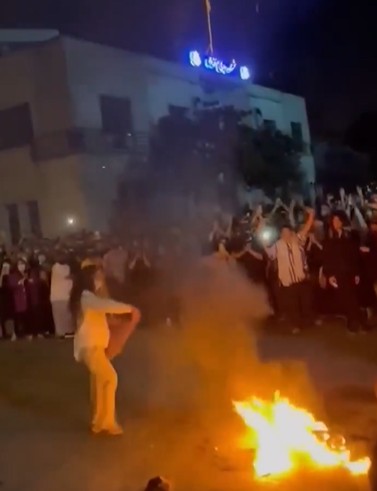
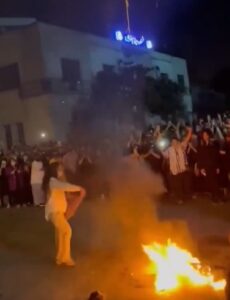
Iranian women increasingly challenge compulsory hijab, even as the Islamic Republic maintains tight political and security controls. (Image video grab)
By TRH World Desk
Images of young women walking unveiled through Tehran suggest a weakening of the Islamic Republic’s ideological control. But Iran analyst Hamidreza Azizi warns that greater flexibility over hijab does not mean greater political freedom, as the state increasingly prioritises security and restricts civil society.
New Delhi, November 16, 2026 — The sight of young Iranian women walking through Tehran without headscarves is a striking illustration of how Iranian society has changed. After years of resistance, protests, arrests and state repression over compulsory hijab, women are increasingly challenging the Islamic Republic’s enforcement of its dress code in public spaces.
But these images should not be mistaken for a government-led liberalisation or a victory granted by the ruling establishment. They represent a social change that Iranian women have fought for over many years, often at considerable personal cost.
Hamidreza Azizi, Iran analyst at the International Crisis Group, has cautioned against interpreting the latest images as evidence that the Islamic Republic is becoming more tolerant. In a post on X, Azizi argued that the visible defiance of compulsory hijab is an achievement of Iranian women rather than a concession by the government.
His assessment points to a deeper transformation within the Iranian state. The Islamic Republic appears to be gradually weakening in its religious and ideological identity while increasingly relying on its security apparatus and pragmatic calculations to maintain power.
However, this transition is far from straightforward.
Azizi argues that the government continues to depend on a minority of deeply committed ideological supporters who regard strict enforcement of religious and moral values as fundamental to the Islamic Republic’s identity. For this constituency, the growing number of unveiled women represents an uncomfortable erosion of the principles they believe the state must defend.
The government consequently faces a difficult political balancing act. Excessive enforcement risks provoking another wave of public anger, while allowing greater social freedom risks alienating its conservative ideological base.
This contradiction helps explain why the state may appear increasingly flexible on compulsory hijab while remaining uncompromising on political dissent and independent civil society.
From ideological control to a security state
Azizi identifies a more consequential development behind this apparent contradiction: the growing securitisation of the Iranian state.
He points to increasingly restrictive rules governing contact with foreign media organisations, institutions and individuals. Such restrictions indicate that the government’s willingness to accommodate certain social changes should not be confused with a broader commitment to political openness.
In other words, Iran may be witnessing a gradual retreat of ideological enforcement in some aspects of everyday life without a corresponding expansion of individual liberties.
This distinction is particularly important as Iran navigates the consequences of war and growing regional instability. The eventual direction of the Islamic Republic will depend significantly on how the conflict shapes its political leadership, security institutions and domestic priorities.
Azizi’s assessment is that, despite the visible changes in public behaviour, the broader trajectory for political freedoms and civil society remains restrictive rather than liberalising.
A victory won by Iranian women
Wladimir van Wilgenburg, an author who has also drawn attention to the latest developments, noted that a significant number of young women are now walking through Tehran without headscarves.
The images carry particular significance given Iran’s recent history. The compulsory hijab became a focal point of resistance, particularly after the death of Mahsa Amini in September 2022, which triggered the nationwide Woman, Life, Freedom movement.
Women who challenged the dress code faced arrests, intimidation, surveillance and other forms of state pressure. Universities and public spaces also became sites of confrontation over the enforcement of religious restrictions.
Yet the persistence of resistance has changed the social landscape. The growing visibility of unveiled women suggests that compulsory hijab has lost much of its social legitimacy among sections of the population, even as the state retains the legal and coercive machinery to enforce it.
The distinction between society and the state is therefore central to understanding contemporary Iran. Iranian women may be reclaiming space in public life, but the political establishment has not necessarily accepted the broader demands for freedom, accountability and democratic participation.
The images from Tehran are significant. They reflect the determination of women who refused to surrender control over their bodies and choices. But they also expose the limits of interpreting social change as political reform.
Follow The Raisina Hills on WhatsApp, Instagram, YouTube, Facebook, and LinkedIn




About The Author