Why Iran Believes It Has Gained Leverage After US-Israel Attacks
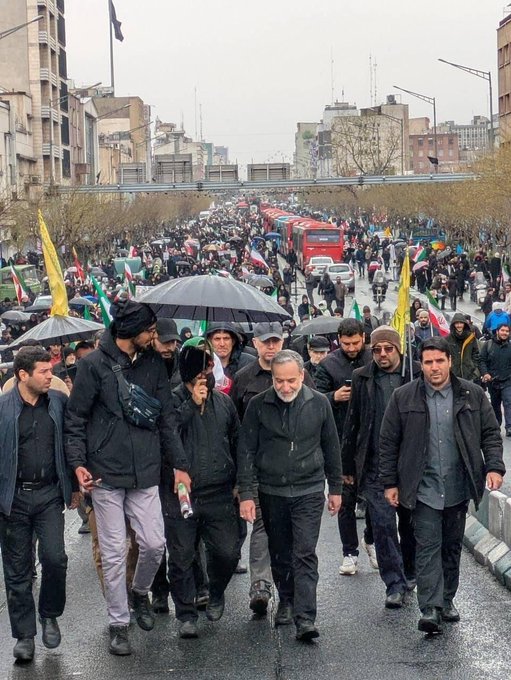
Iran's Foreign Minister Seyed Abbas Araghchi during International Quds Day walk (Image X.com)
By TRH World Desk
Former US Ambassador Edward Djerejian says Iran believes it survived a major US-Israel military campaign through asymmetric warfare, strengthening nationalism at home while seeking a stronger position in negotiations with Washington.
New Delhi, July 1, 2026 — Iran believes it has emerged from the recent conflict with the United States and Israel with a renewed sense of resilience, even as it remains acutely aware of its economic and strategic vulnerabilities, according to former US Ambassador Edward Djerejian.
Speaking to Al Arabiya English, Djerejian said Tehran views its ability to withstand military pressure from two of the world’s most powerful armed forces as a significant achievement, one that could strengthen its hand in future negotiations with Washington.
“The Iranians have very effectively used what one could call asymmetrical warfare with the United States and Israel, two of the most powerful military establishments in the world,” Djerejian said.
He compared Iran’s asymmetric military strategy to the dynamics seen in the Russia-Ukraine war, where comparatively weaker forces have managed to impose significant costs on stronger adversaries.
Iran ‘Feels Empowered’
According to Djerejian, Iran believes it has survived “a massive military intervention” by Israel and the United States, creating a perception of resilience despite extensive damage to its military infrastructure, cities and nuclear facilities.
“They’re feeling a bit empowered that they have survived,” he said. However, he cautioned that Iranian leaders remain fully conscious of the country’s fragile domestic situation.
“They know exactly what their vulnerabilities are,” Djerejian noted, pointing to the severe strain on Iran’s economy and society following the conflict.
Nationalism Has Strengthened the Regime
Djerejian said conversations with Iranian experts suggest the conflict has also triggered a wave of nationalism inside the country. While acknowledging that the Iranian leadership remains unpopular among many residents of Tehran, he argued that the attacks have fostered greater national unity.
“The regime is not popular in Tehran, but there’s a sense of nationalism after the very successful military operations by Israel and the United States on Iran’s infrastructure, cities and nuclear sites,” he said.
The remarks suggest that external military pressure may have inadvertently strengthened public solidarity around the state, at least temporarily.
Opportunity in US Talks
Looking ahead, Djerejian said Tehran is likely to approach negotiations with Washington believing it has retained meaningful leverage despite the recent conflict.
He argued that Iranian leaders see diplomacy as an opportunity to place the country on “a firmer footing” in regional politics while balancing their military resilience against persistent economic weaknesses.
“They see an opportunity now in these negotiations with the United States to put Iran on perhaps a firmer footing in regional politics,” he said.
His comments come as attention remains focused on the future of US-Iran diplomacy following weeks of heightened military tensions in the Middle East.
Ukraine War: Russian Soldiers’ Survival Time Shrinks Amid Drone Attacks
Follow The Raisina Hills on WhatsApp, Instagram, YouTube, Facebook, and LinkedIn




About The Author