India-Japan Ties: Big Promises, Slow Delivery, Says Analyst

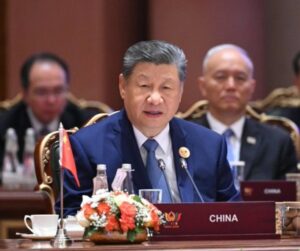
Japan PM Sanae Takaichi India visit analysis. (Image MEA India)
By TRH Op-Ed Desk
As PM Sanae Takaichi Visits India, Analyst Warns a Decade of Momentum Has Been Lost on Bullet Train and Defence Projects
New Delhi, July 3, 2026 — Japanese Prime Minister Sanae Takaichi’s three-day visit to India this week, which included extensive talks with Prime Minister Narendra Modi, has put fresh focus on a partnership that geopolitics analyst Manish Anand says has quietly lost a decade of momentum.
Speaking on The Raisina Hills, Anand noted that Takaichi carries the legacy of former Japanese PM Shinzo Abe, is known for pushing Japan’s military modernisation, and shares a close rapport with US President Donald Trump. Despite headline announcements of a trillion-dollar Japanese investment pledge and talk of joint defence production, Anand argued the real story is India’s persistent struggle with execution.
“It looks like whatever momentum should have built in India-Japan relations over the last ten to twelve years simply hasn’t materialised,” Anand said, pointing to the Mumbai-Ahmedabad bullet train as the clearest example.
The Bullet Train That Illustrates the Problem
The project traces back to Manmohan Singh’s tenure as Prime Minister, when Singh and Abe — then Japan’s PM and a driving force behind the Quad grouping of India, Japan, Australia and the US — agreed on the roughly 450-km high-speed rail line, funded by Japan’s international cooperation agency at a budget of around ₹1 lakh crore.
The line was originally slated for completion in 2023. Instead, Anand said, it now looks set for 2029 — a six-year slip — while the cost has climbed past ₹2 lakh crore.
“For a developing country to spend ₹2 lakh crore on a single 450-kilometre stretch should be a matter of deep concern,” Anand said, arguing that sum could have modernised large parts of India’s existing rail network — raising average speeds from around 70 km/h toward 90 km/h, adding more trains and easing chronic ticket shortages. India chose the bullet train instead for the technology transfer and the wider “qualitative shift” it promised Indian Railways, he noted, but the delay has undercut that rationale.
Defence Cooperation Also Stalled for Over a Decade
Anand pointed to a second unfulfilled commitment from the Manmohan Singh era: a jointly developed amphibious assault ship, which would have been the first India-Japan joint defence production project. That plan also stalled.
“This was agreed upon back in 2012. Why has it taken fourteen years to even begin discussing it again?” Anand asked, referring to the fresh talk of joint defence production during Takaichi’s visit.
China Looms Over Both Relationships
Anand situated the India-Japan drift within the wider China challenge both countries face. He described India’s approach to China as inconsistent — ties frozen for four years after the Galwan Valley clash before being rapidly normalised — allowing Beijing to use leverage over critical minerals and fertilisers to reset the terms of engagement. India, he argued, has not similarly mobilised Japanese capital toward self-reliance.
With Washington’s attention tilted toward the Middle East rather than the Indo-Pacific, Anand said Japan, Taiwan and India increasingly need to build deterrence capability among themselves rather than count on the US as a stabilising force.
“That capability against China won’t materialise until committed projects are executed on time and relationships are put into fast execution mode,” he said, adding that Modi’s tenure has shown “slackness” in delivery. Completing the original bullet train project within its original ₹1-lakh-crore budget, he argued, would have built the credibility needed to move forward on the roughly ten to twelve additional bullet train corridors India has since announced.
Anand also flagged the human dimension of the relationship — Japan’s ageing population depends heavily on Indian manpower across hospitality, healthcare and hospital sectors — as another reason the two countries have stronger grounds to deepen ties than the current pace of execution suggests.
The verdict from Anand: Takaichi’s visit signals seriousness, but without a change in India’s execution capacity, the bigger strategic opportunity with Japan will keep slipping.
Follow The Raisina Hills on WhatsApp, Instagram, YouTube, Facebook, and LinkedIn




About The Author