‘We Did Not Deserve This Fate’: How Myanmar’s Refugees Became Victims Again in Manipur
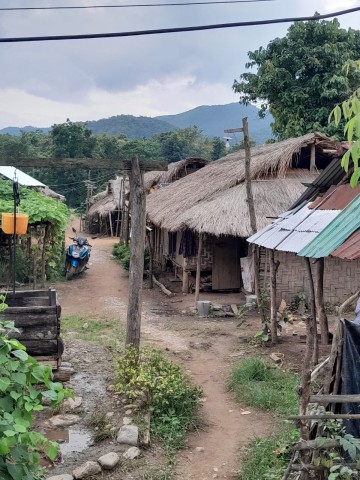
Phaikoh village in Kamjong district of Manipur along India-Myanmar border.(Image Nirendra Dev)
By NIRENDRA DEV
Thousands fled Myanmar’s military coup hoping to rebuild their lives in India’s border villages. But as ethnic tensions engulfed Manipur, many Burmese refugees found themselves displaced once again. This opinion piece examines the humanitarian crisis unfolding quietly in Kamjong district.
Kamjong (Manipur), July 27, 2026 — Violence most often is linked to human displacement. Such a thing happened in neighbouring Myanmar when the military coup threw out the elected regime. But military takeover was not smooth. In many places; ethnic armed groups resisted the junta.
The results were — profound human suffering, loss of livelihoods, and many of them — the faceless middleclass and poor. Men and women had to flee and take shelter in Kamjong district of Manipur.
‘Displacement’ is not just a word for such ill-fated people. Thousands are now sheltered in border villages like Phaikoh, Shangkhalok, and Aloyo.
The ‘ethnic Burmese’ refugees — generally Buddhists — are heavily monitored with the government-sponsored biometric recording by the district administration and the Assam Rifles.
 The refugee presence in this specific region of Manipur involves several key dynamics. The refugees include Chin tribes (who have ethnic ties to the Kuki-Zo community), Shan and Burmese communities, and a smaller number of Myanmarese Meiteis.
In 2021 when they came many were housed with the support of the local communities. The government has conducted biometric registration drives, with thousands of illegal immigrants and refugees identified for future deportation once the situation in Myanmar stabilizes.
Humanitarian aid, however, has been distributed to those sheltering in designated camps. Well, there is a story of ‘hope’ against hope too.
Twenty-three-year-old young lady I spoke to is a mother of a small kid. Her son was born in the camp. He goes around, shaking hands with “Indian security personnel” and strangers. His mother too interacts with a smile on her face but eyes are moist.
“We did not deserve this fate,” she laments.
The inmates of the designated refugee camp here are all residents of Upper Kabaw Valley in Myanmar and hailed from small villages such as Ongjia, Phailin and Momo. The Momo village is also known as Mongiang.
The woman and others in the camp could be lamenting about the military coup and the ouster of former state counsellor Aung San Suu Kyi. But as they say — the “ill-fate” too follow one like a lazy fielder in the cricket field who has just dropped a few catches.
In 2026, the ‘ethnic Burmese refugees’ were attacked by Tangkhul Nagas after the Kuki-Naga clashes reached its crescendo. Even shops run by ethnic Burmese inmates were attacked by angry Naga mob. A number of houses in the designated refugee camp were charred and so where a few shops.
Some villagers said this happened because Tangkhul Nagas take Kukis as ‘ethnically linked or related to Burmese people’. The refugees in Phaiko and Shangkhalok villages in Kamjong district are Buddhists. But on the other side of international border along Mizoram — many Christian refugees from Chin have crossed the border to seek refuge in the state of Mizoram.
It was a different situation in 2021 in Mizoram. The then chief minister Zoramthanga (of MNF and an ally of the BJP) had reportedly said that his state would always welcome any ‘ethnic Mizo or other Myanmar citizens’ facing persecution for participating in pro-democracy protests in Myanmar.
Things looked good so far even in Manipur. But once the Kuki and Tangkhul Naga problems resurfaced in February 2026; the ethnic Burmese also had to face the brunt of people’s anguish and hatred.
India shares an unfenced border stretching 1,643 kilometers with Myanmar, covering the four states of Mizoram, Nagaland, Manipur and Arunachal Pradesh.
 Manipur alone shares a 398 km porous with Myanmar while Mizoram shares about 400 km with Myanmar. India does not have a national refugee protection framework.
A Government of India — Home Ministry — letter to state governments in 2021 said that the provincial governments have no power to officially grant refugee status to any foreigner.
India is also not a signatory to the UN Refugee Convention of 1951 and its 1967 Protocol.
Despite this non-signatory status, India hosts one of the largest refugee populations globally, managing asylum seekers on a case-by-case and administrative basis.
Instead of relying on the UN legal framework, India relies on its own mechanisms, such as issuing Long Term Visas (LTV) and following Standing Operating Procedures from the Ministry of Home Affairs to verify and accommodate persecuted foreign nationals.
Time for Action: “ … Anyone found with a gun is to be arrested or fired upon, if they do not surrender” — the orders are explicitly clear.
‘Neutralise miscreants and gun-totting boys if found roaming with weapons in civilian areas of Manipur’ — This strategy has created havoc in many quarters.
In June 2026, displaying the determination to take on the ultras of all hues, the CRPF inducted two battalions of the Commando Battalion for Resolute Action (CoBRA). The elite COBRA forces were immensely successful in their operations against Maoists.
Giving positive and determined signals, Home Minister Amit Shah told NEC meeting in Shillong not long ago that “the Modi government ended the era of violence in the Northeast and transformed the region from a hotspot of disputes to a hotspot of opportunities.” This also means — whenever there are troubles in future — go for ‘action.’
(This is an opinion piece. Views expressed are the author’s own.)
Follow The Raisina Hills on WhatsApp, Instagram, YouTube, Facebook, and LinkedIn




About The Author