India’s Disability Inclusion Gap: Why Rights on Paper Are Still Not Equal Opportunities
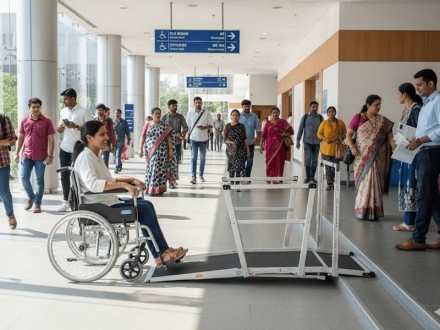
Meaningful disability inclusion requires accessible infrastructure, equal employment opportunities and participation in public life. (Image Shopaccred.com)
By G. KUMAR
From inaccessible schools and workplaces to employment discrimination and inadequate public infrastructure, persons with disabilities continue to face barriers despite the Rights of Persons with Disabilities Act, 2016. India needs stronger implementation, private-sector participation and universal accessibility to make inclusion meaningful.
New Delhi, November 16, 2026 — Inclusion is not about making space for persons with disabilities as an act of kindness. It is about recognising that they are equal citizens, entitled to education, employment, healthcare, mobility and participation in every aspect of society. In a country as diverse as India, inclusion means creating an environment where disability does not determine a person’s opportunities, independence or place in the community.
Yet, the distance between rights on paper and reality on the ground remains considerable. A child with a disability may be enrolled in a school but lack accessible classrooms or trained teachers. A qualified young adult may secure a job but struggle with inaccessible public transport or an office without reasonable accommodation. A wheelchair user may be invited to a community event but find the entrance inaccessible. Presence is not inclusion; meaningful participation is.
According to the Census of India 2011, approximately 2.68 crore people, or 2.21 per cent of the population, were recorded as persons with disabilities. The figure included people with different types of disabilities, from visual and hearing impairments to locomotor, intellectual and multiple disabilities.
However, these figures are based on data collected more than a decade ago. They should not be treated as a definitive picture of India’s current disability population. Differences in identification, reporting and definitions can also influence estimates.
The Rights of Persons with Disabilities Act, 2016, recognised 21 categories of disabilities, expanding the earlier legal framework. It strengthened provisions relating to equality, non-discrimination, education, employment, accessibility and participation in public life.
The challenge now is to turn these legal guarantees into everyday experiences. How many government schools have genuinely accessible toilets? How many workplaces provide assistive technology? How many neighbourhood parks, community centres and public offices can be used independently by persons with disabilities? These are the questions that reveal whether inclusion is working.
Education: Beyond admission registers
Inclusive education requires more than admitting children with disabilities into mainstream schools. It calls for accessible buildings, trained educators, appropriate learning materials, assistive devices, individual support and an environment free from bullying and stigma.
A child with a hearing impairment may need communication support, while a student with a visual impairment may require accessible digital content or Braille materials. Children with intellectual disabilities may benefit from individualised learning plans and flexible teaching methods. The objective is not to make every child learn in exactly the same way. It is to ensure that every child receives a fair opportunity to learn, develop friendships and participate in school life.
Employment remains another critical test of inclusion. Persons with disabilities need opportunities to demonstrate their skills rather than face assumptions about their capabilities. Accessible recruitment, workplace adjustments, digital accessibility, flexible arrangements where appropriate and fair promotion policies can help remove barriers.
The Rights of Persons with Disabilities Act provides for a minimum reservation of four per cent in government establishments for persons with benchmark disabilities. But a legal provision alone cannot guarantee implementation, suitable jobs or career progression. Private employers, too, have an important role in building inclusive workplaces.
The private sector, which now creates most new jobs, is under no reservation mandate at all. Many employers still treat hiring a disabled person as charity or risk rather than a business decision. Surveys have long suggested that only a minority of working-age disabled Indians are in paid work, and women with disabilities fare worst of all.
First, fill the vacancies. Governments must audit reserved posts, publish the data and set deadlines for clearing the backlog. Identifying suitable roles should be routine, not an afterthought.
Second, create real incentives for private employers. Tax benefits, wage subsidies and help with workplace adaptations can offset the perceived cost. Large companies could be required to report on disability hiring, as many already do for gender diversity.
Third, fix education and skills. Inclusive schooling, accessible learning material and vocational training linked to actual market demand matter more than generic certificates. Digital and remote work, in particular, can open doors that physical offices keep shut.
Fourth, make access universal. The Accessible India Campaign sets targets for buildings, transport and websites, but many deadlines have slipped. Accessibility should be a condition of approval for new construction and public procurement, not a favour.
Fifth, support entrepreneurship. Many disabled people turn to self-employment when jobs are denied to them. Easier credit, mentoring and market access would help those businesses grow.
Inclusion is practical, not utopian
Inclusion does not require perfection. It requires small, concrete changes: a screen reader installed, a desk moved, interviews that focus on skills, a manager willing to ask “what do you need?” rather than assume. Reasonable accommodation is usually cheaper than employers imagine.
Above all, disabled people must be at the table when policies are written. The slogan of the global disability movement, “nothing about us without us”, is not rhetoric but a method. Those who navigate broken systems every day know best how to repair them.
India’s demographic promise rests on using the talent of all its people. Leaving tens of millions outside the workforce is not only unjust, it is an economic waste the country cannot afford.
FAQs:
Q1. What is disability inclusion in India?
Disability inclusion means ensuring that persons with disabilities enjoy equal access to education, employment, healthcare, public infrastructure and participation in society.
Q2. What is the Rights of Persons with Disabilities Act, 2016?
It is India’s principal disability rights legislation, recognising 21 categories of disabilities and providing protections relating to equality, education, employment and accessibility.
Q3. What is the reservation for persons with disabilities in government jobs?
The RPwD Act provides a minimum of four per cent reservation in government establishments for persons with benchmark disabilities.
Q4. What is the Accessible India Campaign?
It is a Government of India initiative aimed at improving accessibility in public buildings, transport systems and information and communication infrastructure.
Q5. Why is private-sector employment important for disability inclusion?
Private enterprises account for a significant share of employment opportunities. Inclusive recruitment, workplace accommodation and career development can expand economic participation for persons with disabilities.
Mental Health Is More Than Depression: The Hidden Struggles of Patients and Caregivers
Follow The Raisina Hills on WhatsApp, Instagram, YouTube, Facebook, and LinkedIn




About The Author