India’s Child Stunting Rate Falls Below 30% for First Time, but Malnutrition Crisis Persists
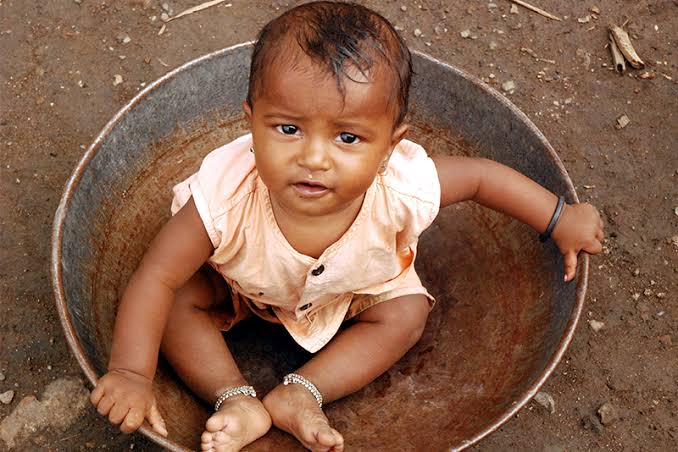
India’s declining child stunting rate marks progress, but widespread malnutrition and dietary inequalities remain major challenges. (Image PK panda)
By Pradeep Kumar Panda
NFHS-6 records a significant decline in child stunting, but persistent wasting, poor infant feeding practices and regional disparities expose the unfinished battle against malnutrition.
Bhubaneswar, November 6, 2026 — India has crossed a significant milestone in its long battle against child undernutrition. The latest National Family Health Survey (NFHS-6, 2023-24) shows that stunting among children under five has declined to 29.3 per cent, the first time the figure has dropped below the 30 per cent mark in the survey’s history. This represents a substantial improvement from 38.4 per cent in NFHS-4 (2015-16) and 35.5 per cent in NFHS-5 (2019-21).
The acceleration in the most recent period is encouraging and reflects the cumulative impact of sustained policy attention, rising incomes in parts of the country, better maternal care, and sanitation gains under the Swachh Bharat Mission.
Yet the absolute numbers remain staggering. Nearly three in every ten Indian children are still too short for their age, a condition that signals chronic undernutrition and carries lifelong consequences for cognitive development, educational attainment, adult productivity and intergenerational health.
The first 1,000 days from conception to a child’s second birthday remain the most critical window. Deficits incurred during this period are often irreversible. Malnutrition in all its forms—undernutrition, micronutrient deficiencies, and the growing problem of overweight and obesity—continues to impose heavy human and economic costs.
Child undernutrition still contributes significantly to under-five mortality and undermines the formation of human capital that India needs for its demographic dividend.
While stunting has declined meaningfully, progress on other indicators has been far slower. Wasting, which reflects acute undernutrition, has remained largely stagnant at around 19 per cent across the last three NFHS rounds. Severe wasting did improve, falling from 7.7 per cent in NFHS-5 to 5.2 per cent in NFHS-6, suggesting better detection and treatment of the most extreme cases in some areas.
Underweight, a composite measure, improved from 35.8 per cent in NFHS-4 to 32.1 per cent in NFHS-5 but then plateaued at 31.8 per cent in the latest survey. The near-stagnation of these indicators after years of programme expansion points to unfinished business in the quality of care, dietary adequacy and underlying determinants of nutrition.
Infant and young child feeding practices reveal a particularly worrying gap between service coverage and behavioural outcomes. Exclusive breastfeeding among infants under six months rose between NFHS-4 and NFHS-5 but then declined sharply to 55.8 per cent in NFHS-6.
Even more striking is the persistence of inadequate complementary feeding. Only 15.3 per cent of children aged 6–23 months receive a minimum adequate diet—an improvement from 11 per cent in the previous round, yet still leaving the overwhelming majority without the recommended dietary diversity and meal frequency.
These figures highlight that gains in institutional deliveries (now 90.6 per cent) and full immunisation (87.1 per cent for children aged 12–23 months) have not been matched by improvements in the quality of diets and care practices that directly influence growth.
Regional disparities remain wide and stubborn. High-burden states continue to carry a disproportionate share of the national caseload. Stunting exceeds 35 per cent in several places, including Bihar (35.6 per cent), Gujarat (35.3 per cent), Jharkhand (35.0 per cent) and Meghalaya (36.8 per cent). Dadra and Nagar Haveli and Daman and Diu also report rates near 37 per cent. Uttar Pradesh and Madhya Pradesh remain well above the national average.
In contrast, West Bengal recorded a sharp improvement, bringing stunting down from 33.8 per cent to 22.4 per cent. Southern states and some Himalayan and north-eastern states generally perform better, though even Karnataka, Telangana and Andhra Pradesh still report non-trivial levels. Wasting is particularly high in Madhya Pradesh (around 23.8 per cent) and remains elevated in Jharkhand, Odisha, Chhattisgarh, Assam, Gujarat and West Bengal.
Rural rates consistently exceed urban ones, and children from the poorest wealth quintile, Scheduled Tribes and Scheduled Castes face markedly higher risks. These patterns underscore that national averages mask deep inequities that require targeted, equity-focused interventions.
India is simultaneously confronting a dual and, in some cases, triple burden of malnutrition. While child undernutrition declines slowly, adult overweight and obesity have risen sharply.
Among women of reproductive age, the proportion who are overweight or obese has more than doubled over the past two decades. The co-existence of undernutrition and overnutrition—within the same household, community or even individual—is increasingly documented.
Anaemia remains widespread, with earlier NFHS data showing high prevalence among both children and women. This nutrition transition demands “double-duty” actions that address undernutrition and the rising risk of overweight and non-communicable diseases without exacerbating either problem.
Successive governments have built an elaborate architecture of programmes. The Integrated Child Development Services (ICDS) has long provided the backbone of early childhood care and nutrition. The National Nutrition Mission, launched as Poshan Abhiyaan in 2018 and later restructured as Mission Saksham Anganwadi and Poshan 2.0, sought to bring greater convergence, digital monitoring through the Poshan Tracker, and a sharper focus on the first 1,000 days. Complementary schemes such as the Public Distribution System, mid-day meals, and maternity entitlements under the Pradhan Mantri Matru Vandana Yojana form part of the broader safety net. Evaluations of early Poshan Abhiyaan districts suggest modest positive effects on multidimensional malnutrition indices.
Coverage has expanded and monitoring has improved. Yet persistent challenges remain: variable quality of take-home rations and counselling, incomplete inter-sectoral convergence, heavy workloads for frontline workers, supply-chain gaps, and insufficient attention to dietary diversity and the dual burden.
The comparative picture that emerges from NFHS-4, NFHS-5 and NFHS-6 is one of real but incomplete progress. Chronic undernutrition, measured by stunting, has declined at an accelerated pace in the most recent interval. Acute undernutrition and underweight have improved far less. Feeding practices lag significantly behind improvements in health-service coverage. Interstate and socio-economic disparities continue to limit the reach of national gains.
Administrative data from the Poshan Tracker sometimes show lower prevalence than household surveys, reflecting differences in measurement and coverage, but both sources confirm that undernutrition remains a mass phenomenon affecting tens of millions of children.
The next phase of India’s nutrition effort must shift from expanding coverage to improving quality and equity. Programmes need to move beyond calorie-focused interventions towards ensuring access to affordable, nutrient-dense foods, especially for complementary feeding. Stronger counselling, support for women’s time and workload, and better integration of nutrition with water, sanitation, health, education and social protection are essential.
Double-duty strategies that simultaneously tackle undernutrition and the rising tide of overweight must be embedded in policy design. High-burden states and vulnerable groups—particularly tribal communities, the poorest households and rural populations—require intensified, context-specific attention. Sustained political commitment, strengthened delivery systems at the last mile, and rigorous use of data for real-time course correction will be critical.
India’s reduction of stunting below 30 per cent is a genuine achievement and demonstrates that progress is possible. Yet the remaining burden is still large, the pace of improvement on other indicators is uneven, and new challenges linked to the nutrition transition are emerging.
Realising the full human capital potential of the country’s young population will depend on converting recent gains into faster, more equitable and more comprehensive reductions in malnutrition in all its forms. The window of the first 1,000 days does not wait. Neither should policy.
(This is an opinion piece. Views expressed are the author’s own.)
Follow The Raisina Hills on WhatsApp, Instagram, YouTube, Facebook, and LinkedIn




About The Author