India’s Mental Health Crisis: 84.5% Treatment Gap, Rising Distress and the Need for Compassion
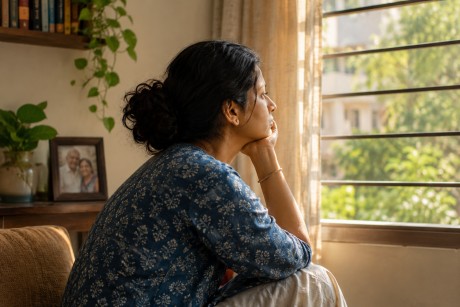
Mental health awareness must recognise emotional distress, grief and the need for accessible professional care. (A representative image)
By BHAWNA MALIK
From inadequate access to psychiatric care to the hidden pain of bereavement, India needs a more compassionate approach to mental wellbeing, combining professional treatment with emotional awareness and resilience.
New Delhi, November 17, 2026 — The National Mental Health Survey (NMHS), run by NIMHANS in 2015–16, remains the country’s most comprehensive snapshot. It found that about 10.56% of adults currently live with a mental disorder, and 13.67% will at some point in their lives. In a country of 1.4 billion, that means well over 100 million people. One estimate puts the number needing active intervention at roughly 150 million.
The real scandal is what happens next. The survey put the overall treatment gap at 84.5%, so fewer than one in six people with a mental disorder receives care. For depression and anxiety, the gap runs past 85%.
The deaths are the visible tip. The NCRB recorded 1,70,924 suicides in 2022, a rate of 12.4 per 100,000, the highest in decades. The 2023 report reportedly counted 1,71,418, including 10,786 farmers. The burden falls hardest on the young and the poor: daily-wage workers made up 26% of the 2022 victims, and suicide remains a leading cause of death among those aged 15–29. The WHO’s modelled estimates are higher than official counts, because suicide is under-reported in a country where stigma and legal fear have long hidden it.
Stigma is the oldest obstacle. Mental illness is still described as weakness, a failure of character, or even a family shame that can harm marriage prospects. Pressure builds from every direction: exam cut-offs, unemployment, debt, crop failures, long working hours, loneliness in fast-growing cities, and the constant comparison of social media.
Too few doctors, too little money
The system meant to catch people is thin. India has about 0.75 psychiatrists per 100,000 people against a WHO norm of at least 3. That is roughly 9,000 working psychiatrists, with about 36,000 more needed. Psychologists number just 0.12 per 100,000. At the current training rate of about a thousand new psychiatrists a year, closing the gap would take decades.
Money is scarcer still. The 2025–26 mental health budget is about ₹1,898 crore, roughly 1% of the Union health budget. That is below even the global median of about 2%, and far from the 5–18% that richer countries spend. The economic cost of neglect is steep: one estimate puts India’s loss from mental health conditions between 2012 and 2030 at about $1.03 trillion.
The cost reaches households too. The NMHS found that families spent a median of ₹1,000–1,500 a month on treatment and travel, which is crushing for the poor. Many choose a faith healer, or nothing at all.
When grief turns into depression: the pain we often ignore
Losing someone we love can change the way we see the world. Yet, while society expects us to move on, the emotional wounds of loss may deepen into a mental health struggle that often goes unnoticed.
Grief is one of the most personal experiences of human life. The loss of a parent, partner, child, sibling or close friend can leave a void that no words can adequately describe. Yet in a society that often struggles to acknowledge emotional pain, grief is frequently treated as something to be overcome quickly. People are told to be strong, keep busy and move on. What is rarely asked is whether they are truly healing or simply learning to hide their suffering.
Losing someone is not merely losing a person. It can mean losing companionship, familiar routines, emotional security and a part of one’s identity. For someone who has shared decades of life with a partner, the silence of an empty home can be overwhelming. Ordinary moments, such as sharing a cup of tea, discussing the day’s events or hearing familiar footsteps, can become painful reminders of an absence that feels impossible to accept.
In the first days after a bereavement, family and friends gather around the grieving person. There are phone calls, condolences and assurances of support. But as weeks turn into months, the world returns to its routine. The bereaved person, however, may still be struggling to make sense of life without the person they loved.
This is where grief can become a silent mental health concern. Some people withdraw from social gatherings, lose interest in activities they once enjoyed or struggle to concentrate on everyday responsibilities. Sleep and appetite may change. Others experience persistent loneliness, anxiety, exhaustion or a sense that life has lost its meaning.
These signs are sometimes dismissed as a natural part of ageing, emotional weakness or an inability to accept reality. Older adults, particularly those who have lost a spouse, may be encouraged to stay occupied rather than given a chance to express their pain. Men may feel pressure to suppress their emotions, while women may be expected to keep caring for everyone else despite their own loss. The result is that emotional distress can remain hidden behind an appearance of normality.
Grief and depression are not the same
Grief and depression can share several symptoms, but they are not identical. Grief often comes in waves, frequently triggered by memories, anniversaries or familiar places. Even amid deep sadness, a grieving person may still experience moments of comfort, affection or happiness.
Depression, however, can involve a persistent low mood or a loss of interest and pleasure that affects everyday life. Feelings of worthlessness, excessive guilt, hopelessness, difficulty functioning and changes in sleep or appetite may become increasingly pronounced.
Bereavement does not automatically lead to depression, and intense grief alone does not mean someone has a mental health disorder. However, grief can coexist with depression, and the emotional burden of loss may contribute to its development in some people.
When sadness remains overwhelming, daily functioning deteriorates or the person feels increasingly disconnected from life, professional assessment becomes important. There is no fixed timetable for grieving, and seeking help does not mean the person has failed to cope.
One of the most damaging responses to grief is the insistence that the bereaved must return to normal quickly. Statements such as “You must be strong,” “Time heals everything” or “You have to move on” may be well-intentioned, but they can make a grieving person feel that their pain is inconvenient to others.
Healing does not mean forgetting. Nor does it require someone to stop loving the person they have lost. It means gradually learning to live with the absence while finding ways to reconnect with life.
Recognising pain is the first step towards healing. Mental health awareness must extend beyond familiar discussions of anxiety and depression to include the emotional consequences of bereavement. Grief deserves recognition, patience and compassion, not a deadline.
The positive mind: what Indian psychology can teach us
In a world that constantly tells us to move faster, achieve more and keep up, the mind rarely gets permission to pause. Young people face academic and career pressures, adults juggle work, relationships and family responsibilities, and many quietly carry loneliness, uncertainty and fear. Mental wellbeing, therefore, is not simply about avoiding illness. It is also about developing an inner capacity to face life with awareness, balance and resilience.
Indian psychology has explored this inner world for centuries. Its central insight is not that life will always be positive, but that our relationship with our thoughts, emotions and circumstances can change.
Sakshi bhava (witness consciousness). One of the most important ideas is the attitude of being a witness. Instead of becoming consumed by every thought, a person learns to observe it. “I am having a difficult thought” is different from believing “I am a failure.” This small psychological distance can create space for a calmer response.
Mindfulness and awareness. Practices such as meditation, yoga and conscious breathing encourage people to return attention to the present moment. For a young person overwhelmed by examinations or social comparison, or an adult worrying endlessly about tomorrow, that return can be valuable.
Samatva (equanimity). The Bhagavad Gita speaks of maintaining balance amid success and failure, pleasure and difficulty. In contemporary language, this is emotional resilience: celebrating success without becoming dependent on it, and facing setbacks without letting them define one’s entire identity.
Seva (service). Helping another person can create a sense of connection and purpose. In an increasingly individualistic world, meaningful relationships and contribution to the community can become important sources of psychological strength.
Santosha (contentment). Contentment does not mean giving up ambition. It means appreciating what exists in the present instead of permanently postponing happiness until the next achievement, possession or milestone.
For young people, these ideas offer an alternative to the constant pressure of comparison. For adults, they provide a framework for stepping back from the endless demands of work, family and social expectation.
Meditation, spirituality or positive thinking cannot replace professional mental health care when someone is in significant psychological distress. Nor should people be told simply to “think positive.” Genuine wellbeing includes acknowledging difficult emotions and seeking appropriate support.
As positive mind is not one that never experiences sadness, anger, anxiety or disappointment. It is one that learns to meet these experiences with awareness rather than being controlled by them.
In today’s mental health conversation, India has an opportunity to bring together its rich traditions of inner inquiry with modern psychology and evidence-based care. The goal is not to create people who are permanently cheerful. It is to help people feel deeply, think clearly, connect meaningfully and face life with greater resilience. That may be the real meaning of a positive mind.
Mental Health Is More Than Depression: The Hidden Struggles of Patients and Caregivers
FAQs:
What is the mental health treatment gap in India?
The treatment gap refers to the proportion of people with mental health conditions who do not receive appropriate treatment. The article cites the National Mental Health Survey’s estimate of 84.5%.
Why is mental health care difficult to access in India?
Stigma, inadequate mental health infrastructure, a shortage of trained professionals and financial constraints are among the barriers.
What is the difference between grief and depression?
Grief often comes in waves and may be triggered by memories or reminders of loss. Depression can involve persistent low mood, loss of interest, hopelessness and impaired daily functioning. They can coexist, and professional assessment may be important.
Can Indian psychology help improve mental wellbeing?
Concepts such as sakshi bhava, samatva, seva and santosha offer perspectives on awareness, emotional balance, connection and contentment. They should complement rather than replace professional treatment.
Toxic Corporate Jobs in India: The Human Cost of High Pressure
Follow The Raisina Hills on WhatsApp, Instagram, YouTube, Facebook, and LinkedIn




About The Author