Delhi Mental Health Policy Faces Biggest Test Beyond Launch: Counsellors, Funding and Accountability
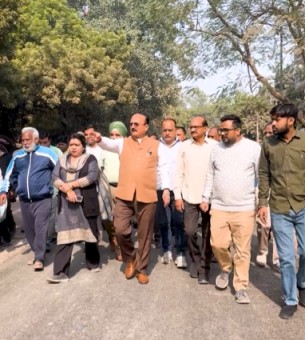
Delhi's Mental Health and Well-being Policy aims to support students and young people, but counsellor availability and accountability will determine its impact. (Image Sood on X)
By SIDHARTH MISHRA
Delhi’s new Mental Health and Well-being Policy promises support for students and young people, but shortages of trained counsellors, bureaucratic compliance, stigma and weak monitoring could undermine its ambitions.
New Delhi, November 23, 2026 — The Delhi Government last week launched with much fanfare its Mental Health and Well-being Policy. The intent is laudable, its real significance, however, will not be determined by the ceremony at Indira Gandhi Indoor Stadium. The benefits of the presence of Gurudev Sri Sri Ravi Shankar, or Bhajan Clubbing sessions accompanying the speeches, will be determined by what happens after files move from the minister’s office to the desks of the bureaucracy.
Education Minister Ashish Sood’s observation that the government should handhold a school in the event of an untoward incident, rather than merely seek a routine explanation, captures an important philosophical shift. Yet this very philosophy could become the policy’s first casualty if its implementation is entrusted to the same administrative machinery that is accustomed to treating every government initiative as a checklist.
The instinct of administration is often to identify responsibility, demand reports and fix accountability. A mental health crisis, however, demands empathy, professional intervention and institutional support before it becomes a tragedy. By becoming the first state to introduce such a policy, Delhi has made a significant statement about the need to look beyond academic performance and recognise the emotional and psychological well-being of its young population.
Mental health is no longer a peripheral concern confined to schools or counselling rooms alone. It’s visible in a young professional’s struggle with workplace stress and the pressure to succeed. Its visible in an old person’s struggle to survive. Even the everyday experience of navigating Delhi, its traffic, pollution, crowded public spaces, aggressive behaviour and the relentless pace of urban life, takes a toll on emotional well-being.
Many challenges may be foreseen in the implementation of the policy. The biggest potential pitfall will the tendency to reduce mental well-being to compliance. Schools may be instructed to conduct awareness sessions, appoint nodal officers and submit periodic reports. Institutions may dutifully complete these formalities without necessarily creating an environment where a child feels comfortable discussing anxiety, depression, bullying or personal distress.
Mental health cannot be measured merely by the number of programmes conducted or forms filled. The government will have to develop indicators that assess whether students actually feel safe, whether they have access to trained professionals and whether their concerns are being addressed confidentially.
The second challenge is the acute shortage of trained professionals. Since the government has claimed that under the policy, one counsellor for every 500 students would be provide, Delhi will need a carefully designed network of trained counsellors, referral institutions, psychologists and psychiatrists. The government must determine whether counsellors will be appointed institutionally, deployed across clusters of schools or supported through a centralised referral system. Without adequate manpower and budgetary commitments, the policy risks creating expectations that the system is incapable of fulfilling.
The third challenge is the stigma that the policy seeks to dismantle. In many families, a child expressing emotional distress is still told to be stronger, concentrate on studies or stop overthinking. Changing this mindset requires sustained engagement with parents, teachers and students. Conversations must become a regular part of school life, supported by age-appropriate material, parent engagement and assurances that seeking help will not lead to labelling or discrimination.
The policy has proposed coverage of young people up to 25 years of age, including those outside the formal education system. This is an important recognition that vulnerability does not end with school. However, the scale of urban mental health concerns extends, as mentioned earlier, beyond this age group and beyond classrooms. Workplaces, corporate entities, public transport, neighbourhoods and community spaces must eventually become part of the larger conversation.
The minister will therefore need to establish a mechanism that ensures coordination between the departments of education, health, women and child development, social welfare and other relevant agencies. Mental health cannot be addressed through departmental silos.
Lastly, the most important requirement for the success of the policy is an independent monitoring mechanism. The implementation of the policy has to match the grandiose of its launch, which has set a very high benchmark.
India’s Mental Health Crisis: 84.5% Treatment Gap, Rising Distress and the Need for Compassion
Follow The Raisina Hills on WhatsApp, Instagram, YouTube, Facebook, and LinkedIn




About The Author