India Eases China FDI Rules: Cabinet Clears Faster Approvals
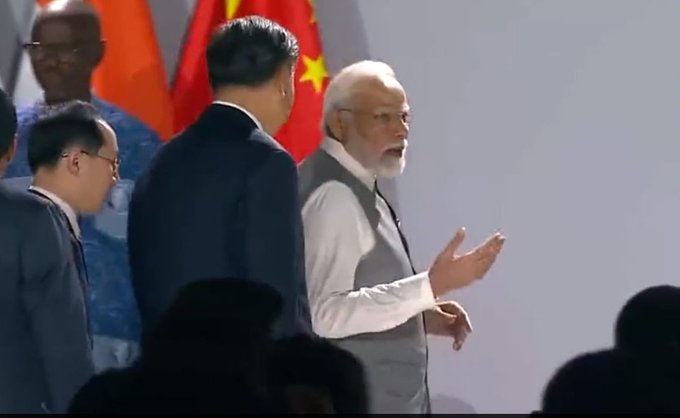
PM Narendra Modi with Chinese President Xi Jinping on the sidelines of BRICS Summit in Johannesburg.
Cabinet’s amended FDI guidelines under Press Note 3 introduce 60-day approvals for Chinese investments in electronics and solar sectors, marking India’s most significant economic opening to Beijing since the 2020 border crisis
By AMIT KUMAR
New Delhi, March 10, 2026 —In a significant signal of diplomatic and economic thaw between India and China, the Union Cabinet chaired by Prime Minister Narendra Modi on Tuesday approved sweeping changes to India’s foreign direct investment policy governing investments from land-bordering countries — a framework that has, since 2020, effectively kept Chinese capital at arm’s length.
The revised policy, announced by the government, introduces a 60-day expedited approval window for investments in strategically important manufacturing sectors — electronic components, electronic capital goods, capital goods, polysilicon, and solar ingot-wafer production. The move is widely seen as India carefully reopening the door to Chinese investment in supply-chain-critical industries, while retaining firm control over ownership and national security.
Dismantling the COVID-Era Wall
The original Press Note 3 (PN3), introduced in April 2020 at the height of the pandemic — and weeks after the Galwan Valley standoff — required all investments from land-bordering countries, including China, to go through a lengthy government approval route. In practice, it froze Chinese FDI and left hundreds of applications in limbo for years.
The Cabinet’s amendment now introduces a formal definition of “Beneficial Owner” — aligned with Prevention of Money Laundering Rules — and carves out a significant exemption: investors with non-controlling beneficial ownership of up to 10% from land-bordering countries will now be permitted under the automatic route, subject to reporting requirements. This directly benefits global PE and VC funds with Chinese limited partners, who had been caught in regulatory uncertainty since 2020.
A Calculated Opening
The 60-day decision timeline for specified sectors is the headline reform. Indian startups and deep-tech firms — starved of Chinese manufacturing partnerships and component supply chains — stand to benefit most immediately. The government has built in a critical safeguard: majority shareholding and control of any investee entity must remain with resident Indian citizens at all times.
The policy shift arrives against a backdrop of quietly improving India-China ties. Border disengagement agreements reached in late 2024, resumed direct flights, and accelerating diplomatic contacts between New Delhi and Beijing have steadily rebuilt the conditions for economic re-engagement.
India’s electronics and solar manufacturing ambitions under Atmanirbhar Bharat and the PLI scheme have long been constrained by dependence on Chinese components — a tension the government now appears ready to address head-on rather than wish away.
Follow The Raisina Hills on WhatsApp, Instagram, YouTube, Facebook, and LinkedIn




About The Author







It is a confirmation of being buffeted from both the East & the West & a proof of India having lost its economic independence . Iran conflict proved that India is of no consequence in international matters of both economic & strategic importance & what counts is only its huge consumption market