Trump-Xi Meeting Shows China’s Fear of the ‘Thucydides Trap’
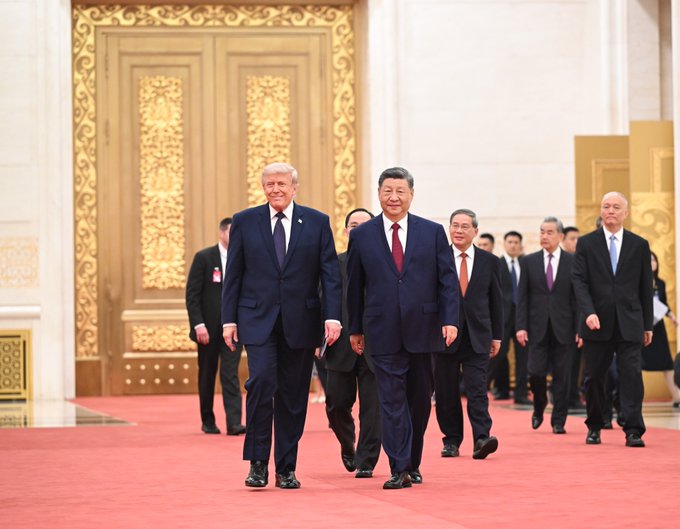
China President Xi Jinping held a welcoming banquet for US President Trump. (Image China MFA)
By TRH World Desk
Chinese messaging stressed stability and avoiding conflict, while Donald Trump appeared focused on extracting strategic concessions, says Akita International University scholar Yu-Hua Chen.
New Delhi, May 17, 2026 — The phrase “Thucydides Trap” resurfaced prominently during commentaries on the latest meeting between Donald Trump and Xi Jinping, revealing how deeply Beijing worries about the increasingly confrontational trajectory of US-China relations.
According to Yu-Hua Chen, China’s messaging during the summit repeatedly emphasized “stability,” “cooperation,” and avoiding the so-called Thucydides Trap — a geopolitical theory describing the danger of war when a rising power challenges an established one.
Writing on LinkedIn, Chen argued that the tone and choreography of the summit reflected a strategic imbalance: China appeared eager to stabilize ties with Washington, while the United States projected confidence and pressure.
“China needs the US more than the US needs China,” Chen wrote, arguing that Beijing’s unusually elaborate reception for Trump revealed China’s anxiety about the deteriorating relationship.
The contrast, he suggested, was stark when compared with earlier episodes in US-China diplomacy. During Barack Obama’s visit to China years ago, Beijing was accused of diplomatically slighting the American president by failing to provide a proper staircase upon arrival. This time, however, Trump was greeted with exceptional ceremony, including mass student performances and highly choreographed public symbolism.
For Chen, the optics mattered.
In Xi’s speeches and official Chinese statements, references to “avoiding the Thucydides Trap,” expanding cooperation, and invoking the legacy of Henry Kissinger indicated Beijing’s desire to prevent strategic confrontation with Washington.
American messaging, by contrast, focused less on relationship management and more on outcomes. “In other words,” Chen observed, “for the US, obtaining concrete benefits is more important than whether the bilateral relationship is stable.”
That asymmetry may define the next phase of the US-China rivalry.
The concept of the Thucydides Trap has become increasingly influential in discussions surrounding the strategic competition between China and the United States. The theory suggests that when an emerging power threatens to overtake an established hegemon, fear and mistrust can push both sides toward confrontation, even if neither desires war.
China’s repeated invocation of the phrase signals that Beijing is acutely aware of the historical analogy — and eager to avoid it.
Yet the summit also highlighted a psychological dimension to the rivalry. Chen described “a serious Trump facing a nervous Xi.” Observers noted that throughout the meeting, visits, and banquet events, Trump maintained a stern and deliberate demeanour that appeared designed to project leverage and pressure. Xi, meanwhile, appeared restrained and carefully polite.
“Their relationship is probably not as friendly as Trump’s public remarks suggested,” Chen wrote, despite Trump’s repeated assertions that he and Xi “get along” well.
The body language itself became part of the geopolitical narrative. Trump’s posture contrasted sharply, Chen argued, with his warmer interactions during meetings in Tokyo with Japanese conservative leader Sanae Takaichi. With Xi, the atmosphere appeared more transactional and strategic than personal.
The broader message emerging from the summit is that Beijing increasingly sees stability in US-China ties as an urgent national interest, especially amid slowing economic growth, supply-chain realignments, technology restrictions, and intensifying military competition in Asia.
Washington, meanwhile, appears more willing to tolerate instability if it produces strategic or economic advantages.
That divergence may itself be the clearest warning sign of a modern Thucydides Trap.
Follow The Raisina Hills on WhatsApp, Instagram, YouTube, Facebook, and LinkedIn




About The Author