Israel’s Netanyahu Era Faces New Challenge as Arab Parties Back Gadi Eisenkot for PM
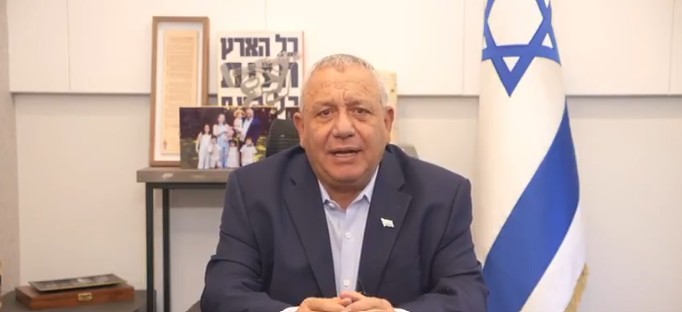
Israel Opposition leader Gadi Eisenkot reacts to allegations of Israeli PM Benjamin Netanyahu on allegations of poll manipulations. (Image video grab)
By TRH World Desk
With 67 Knesset recommendations against Netanyahu’s 46, opposition leader Gadi Eisenkot is pushing for a national emergency government. But Arab-party support, military conscription and his own coalition’s conditions could complicate the effort to end Netanyahu’s political dominance.
New Delhi, November 6, 2026 — Israel’s political crisis has entered a decisive phase after Arab-led parties extended their support to opposition leader Gadi Eisenkot, strengthening his bid to replace Benjamin Netanyahu as prime minister.
Eisenkot, a former Israeli military chief and leader of the Yashar party, says Israel is facing a “true, tangible, and dangerous state of emergency” that threatens its democratic foundations. In a statement on X, he argued that the country needs stable and responsible leadership to prevent another election and end Netanyahu’s continued tenure as caretaker prime minister.
The latest consultations at President Isaac Herzog’s residence have produced a significant political setback for Netanyahu. Eisenkot secured recommendations from 67 lawmakers in the 120-member Knesset, compared with 46 for the outgoing prime minister. Herzog is expected to announce his choice of candidate on Sunday.
The backing of the Arab-led Joint List and United Arab List, also known as Ra’am, has proved decisive in giving Eisenkot a parliamentary recommendation majority.
Arab parties secured a record 19 seats in the October 27 election, making them potential kingmakers in Israel’s fragmented political landscape. Their support could help Eisenkot challenge Netanyahu’s longstanding political dominance.
However, the alliance remains politically complicated. Eisenkot’s proposed emergency government requires partners to recognise Israel as a Jewish and democratic state, accept the values of its Declaration of Independence, support mandatory military, national or civilian service, and recognise Hamas as a terrorist organisation while committing to dismantle its military-political power.
These conditions could create friction with Arab parties, particularly over military conscription and the political treatment of Hamas.
Netanyahu’s Political Future at Stake
Eisenkot has accused the caretaker government of operating the security and law enforcement systems without adequate parliamentary confidence. He argues that the political deadlock has become dangerous while Israel continues to face security challenges.
Netanyahu’s Likud emerged as the largest party in the election, but his broader bloc failed to secure a majority. The decision of the ultra-Orthodox United Torah Judaism party not to recommend a candidate further weakened his position.
The opposition’s challenge, however, extends beyond replacing Netanyahu. Eisenkot must reconcile competing political interests, overcome resistance to Arab-party support and secure enough parliamentary backing to govern.
Eisenkot’s emergence reflects growing demands for political change and a more inclusive governing arrangement. Yet the support of Arab lawmakers may prove both his greatest opportunity and his biggest obstacle.
Follow The Raisina Hills on WhatsApp, Instagram, YouTube, Facebook, and LinkedIn




About The Author