Sindh Is Not Pakistan: Thousands Protest in Karachi Against Proposed Division, Demand Sindhudesh
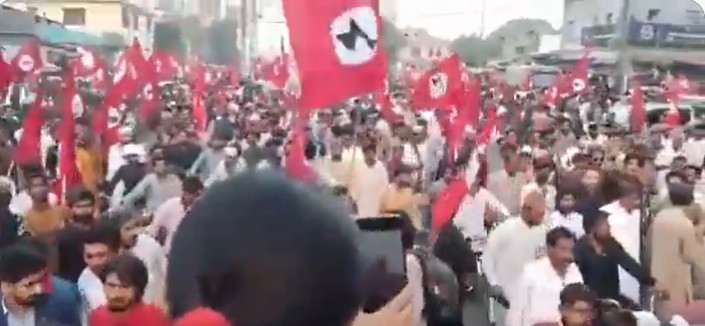
Sindhi nationalists rally in Karachi against the proposed restructuring of Sindh and renew calls for Sindhudesh. (Image video grab)
By NIRENDRA DEV
Sindhi nationalist organisations, lawyers and civil society representatives have opposed Interior Minister Mohsin Naqvi’s proposal for smaller administrative units, arguing that a referendum could be used to legitimise the division of Sindh.
New Delhi, November 25, 2026 — Thousands of Sindhi nationalists took to the streets of Karachi to oppose a proposal to divide Pakistan’s provinces into smaller administrative units, reviving demands for an independent Sindhudesh. Protesters accused Pakistan’s Army Chief, Field Marshal Asim Munir, and the federal establishment of conspiring to divide Sindh.
The immediate trigger was a proposal floated by Interior Minister Mohsin Naqvi, a close aide of Munir, to create smaller administrative units, potentially through a referendum. The idea has drawn opposition from Sindhi nationalist organisations and the Pakistan Peoples Party (PPP), a key partner in the federal government.
The protesters rejected the proposed referendum, arguing that it could be used to legitimise a decision already taken by the authorities. They insisted that Sindh’s territorial integrity was non-negotiable and warned against any attempt to redraw its boundaries.
The march was led by Jeay Sindh Mahaz chairman Riaz Ali Chandio, Niaz Kalani and other nationalist leaders. Lawyers and civil society representatives also joined the demonstration, leading to the temporary closure of several roads in Karachi.
The protesters also clarified that their campaign was not directed against Urdu-speaking residents or other ethnic communities, seeking to distinguish their opposition to the proposed division from ethnic hostility.
Sindhudesh demand returns to the streets
The demonstrations have brought renewed attention to the Sindhudesh movement, which advocates an independent and sovereign homeland for the Sindhi people.
The movement was formally founded in 1972 by Sindhi nationalist leader G. M. Syed, following the creation of Bangladesh in 1971. It emerged from demands for greater political autonomy and the assertion of Sindhi national identity, eventually developing into a campaign for an independent Sindhudesh.
Shafi Muhammad Burfat, Germany-based chairman of the Jeay Sindh Muttahida Mahaz (JSMM), reiterated the movement’s position with the slogan: “Sindh is not Pakistan.”
In a statement, Burfat described Pakistan as an “unnatural state” and alleged that Sindh was under Punjabi domination. He rejected what he called attempts by the Pakistani military to divide the province and appealed to the United Nations and the international community to support Sindhudesh’s independence.
“The national restoration of Sindhudesh is the fundamental objective of the Sindhi nation’s struggle,” he said.
Ayaz Latif Palijo, a Supreme Court advocate in Pakistan, also described the public mobilisation against the proposed division as a demonstration of political unity.
“The massive and enthusiastic participation in Mehar Jalsa against the conspiracies to divide Sindh is a powerful message of resistance, unity and political awareness. The people of this small town, Mehar, have demonstrated that Sindh’s integrity is non-negotiable,” Palijo wrote on X.
Threat of economic blockade against Punjab
The protests have also taken on an economic dimension. The JSMM has threatened an economic blockade of Punjab, Pakistan’s most populous and politically influential province, while its members raised slogans in support of an independent Sindhudesh.
Such a threat adds another dimension to the dispute, given Punjab’s central role in Pakistan’s political and economic structure. The proposed administrative changes have therefore triggered resistance that extends beyond questions of provincial boundaries to wider concerns about political power, ethnic identity and control over resources.
Sindhudesh movement and opposition to CPEC
The Sindhudesh movement has also been associated with opposition to Chinese involvement in the region, particularly projects linked to the China-Pakistan Economic Corridor (CPEC).
In May 2016, a roadside bombing in Karachi injured a Chinese engineer and his driver. The Sindhudesh Revolutionary Army claimed responsibility for the attack, reportedly leaving a note threatening to sabotage the $46 billion CPEC project and opposing Chinese involvement in the region.
The latest protests, however, have been triggered by the proposal to create smaller administrative units within Pakistan. The renewed demand for Sindhudesh and the threat of an economic blockade have widened the political debate surrounding the proposal.
For the federal government, opposition from Sindhi nationalists as well as the PPP presents a challenge to any attempt to pursue provincial restructuring without broad political agreement. For the protesters, the central issue is the territorial integrity of Sindh and the right of its people to determine the province’s political future.
Why Pakistan Hasn’t Seen a Bangladesh-Style Youth Revolt Despite Deep Public Anger
Follow The Raisina Hills on WhatsApp, Instagram, YouTube, Facebook, and LinkedIn




About The Author