Hormuz Standoff: Is Trump Facing a Binary Choice as Iran Tests the US Blockade?
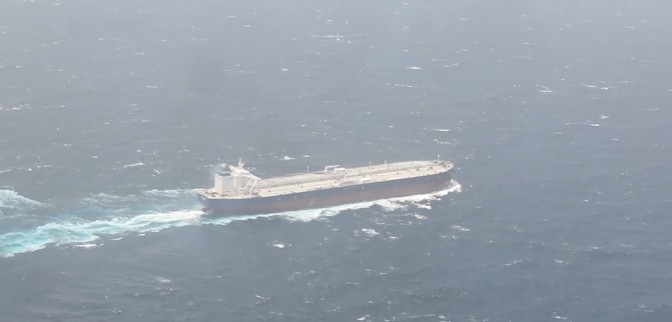
Iran stages tankers at Kharg and the US widens its blockade. What the evidence says about the choices ahead. (Image US CENTCOM)
By TRH World Desk
Iran stages tankers at Kharg and the US widens its blockade. What the evidence says about the choices ahead.
New Delhi, November 22, 2026 — Tehran University professor Hassan Ahmadian has claimed that Iran would in days to come test the strength of the American blockade in a bid to force US President Donald Trump to come of his “state of indecision.” His core argument is: Iran sends tankers through the Strait of Hormuz with advance notice, and Donald Trump must either fire on them or let his blockade lapse.
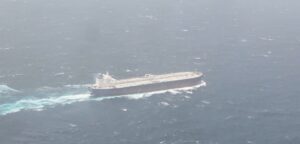
Salman al-Nahyan, a Middle east commentator, also echoed claims of Ahmadian, saying in a post on X that Iran’s deputy foreign minister Kazem Gharibabadi described the American blockade as an act of war.” In a post on X, al-Nahyan wrote: “…an Iranian media outlet linked to the Revolutionary Guard published a plan: strike oil facilities in the UAE, Saudi Arabia and Qatar if the United States intervenes. More than 14 tankers flying the Iranian flag are stationed at Kharg Island. Their crews have been assigned. And they are waiting to break through the blockade toward the Gulf of Oman.”
Satellite and ship-tracking data, per reports, show more than 14 Iranian-flagged tankers staged at Kharg Island, Iran’s main crude terminal, with crews assigned and flags raised.
Iran International reported that no Iranian official has confirmed a convoy. The idea has moved from commentary in the Guards-linked Fars news agency, which called it “Operation Fereydoun,” to parliament and Friday prayer leaders.
Iranian Foreign Minister Abbas Araghchi said, “the naval blockade must be broken.” Hardliners threaten to strike oil facilities in the UAE, Saudi Arabia and Qatar if the US intervenes, Iran International reported.
A convoy would be the first seaborne export of Iranian crude since mid-July.
On Wednesday, US Central Command widened the blockade to cover ship-to-ship transfers at sea, warning that such ships may be stopped, boarded, diverted or captured.
Trump said Friday the Navy is enforcing the blockade, adding “we have total control over the Hormuz Strait.” He has earlier boasted of “history’s greatest Naval Blockade.”
The US struck an Iranian island near the waterway on November 4, and CENTCOM says it has redirected about 150 vessels and disabled five since the summer.
Ahmadian says no third option exists for the US: either lift the blockade or attack the Iranian ships. The record suggests several options are still available for Washington.
Selective enforcement: CENTCOM has disabled individual ships but, as a maritime analysis notes, has not yet faced a multi-ship convoy under Iranian flags.
Escalation ladder: Boarding, diverting or shadowing a vessel is not the same as sinking it. The US could enforce at the margins, such as ship-to-ship transfers, without firing on a flagged convoy.
Tolerance: Windward counts 31 laden sanctioned tankers already past the Strait near the blockade line, per the Maritime Executive, so Iran has other ways to test the blockade without the Kharg group.
Diplomacy: Qatar and others have been trying to avert renewed war.
Ahmadian is right about the cost of ambiguity. A flagged convoy raises the political price of enforcement, and Trump’s “total control” language leaves little room to appear to blink. Analysts quoted by HNGN doubt Iran can defeat the blockade by force but note that policing every ship-to-ship transfer is harder than stopping tankers leaving port. Iran’s threat to hit Gulf energy infrastructure raises the stakes of any firing.
What markets suggest: Brent settled at $92.57 on Friday, up modestly after a tanker fire but still down for a third straight week. Traders do not yet price a major escalation.
Weighing the two: The evidence leans toward a messy middle: partial enforcement and ambiguity, not a clean choice. Trump has so far avoided direct action against Iran, and his stated confidence is a position, not a plan. If Iran sails a visible, flagged convoy, the middle narrows quickly. Until then, Ahmadian’s binary is a forecast presented as a fact.
FAQs:
- Has Iran sent tankers through the blockade? As of Friday, no Iranian official had confirmed a convoy, though 14+ tankers are staged at Kharg.
- What can the US do? Enforce selectively, board or divert ships, or fire on a convoy, which Iran has threatened to answer against Gulf oil facilities.
- How are oil markets reacting? Brent is still falling for a third week and is not pricing major escalation.
Follow The Raisina Hills on WhatsApp, Instagram, YouTube, Facebook, and LinkedIn




About The Author