Trump’s ‘No War, No Deal’ Iran Strategy Faces a Dangerous Deadlock
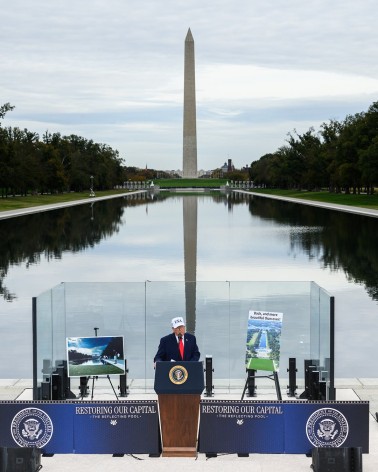
Can Trump’s economic pressure campaign force Iran to surrender? Danny Citrinowicz argues that Washington’s “no war, no deal” strategy faces a dangerous deadlock—with renewed military action, nuclear escalation and regional instability all possible. (Image White House)
By TRH World Desk
CIA Director John Ratcliffe reportedly favours continuing the blockade and economic pressure, but Middle East analyst Danny Citrinowicz warns that Tehran may resist concessions, leaving Washington with increasingly dangerous choices between diplomacy and renewed military action.
New Delhi, November 3, 2026 — US President Donald Trump’s confrontation with Iran is approaching a strategic crossroads. Washington believes economic pressure can force Tehran into concessions without the cost and unpredictability of another military campaign. But the central question is whether Iran’s economic pain will translate into political surrender—or push the Islamic Republic towards greater confrontation.
In a phone interview with Barak Ravid, Trump said he was “in no rush” to decide whether to resume fighting. According to Ravid’s reporting, CIA Director John Ratcliffe is advising the president to maintain the “no war, no deal” status quo, allowing economic pressure to continue in the hope that Tehran will eventually concede or face internal instability.
Yet this strategy rests on a potentially dangerous assumption: that economic distress will necessarily weaken Iran’s negotiating position.
Middle East analyst Danny Citrinowicz, in a post on X, argues that the current standoff cannot continue indefinitely. The American naval blockade may be inflicting considerable economic damage, but its effectiveness must be measured against its strategic objective. If Tehran refuses to change its position, Washington will eventually have to confront the possibility that economic coercion has failed.
For Iran’s leadership, Citrinowicz suggests, the confrontation extends beyond nuclear negotiations. It concerns the survival of the Islamic Republic and its determination not to appear capitulating to American pressure. Concessions made under military threats could, from Tehran’s perspective, invite further demands.
The costs of maintaining the American military presence, protecting regional shipping and enforcing the blockade are also mounting. Meanwhile, Iran has demonstrated its willingness to threaten regional energy infrastructure and shipping routes, ensuring that the economic consequences are not confined to Tehran.
The nuclear dimension makes the impasse particularly troubling. Prolonged confrontation without a diplomatic framework could encourage elements within Iran’s leadership to conclude that nuclear deterrence, rather than compromise, offers the ultimate guarantee of survival.
Washington consequently faces a dilemma. Allowing Iranian challenges to freedom of navigation to go unanswered could undermine American deterrence. Renewed military action, however, could trigger a wider conflict that proves considerably harder to terminate than initiate.
The danger is not simply another US-Iran confrontation, but a conflict expanding beyond the Middle East. Iranian officials have warned that renewed American strikes could bring US-linked military facilities in Europe into the equation. Such threats underline the potential international consequences of escalation.
Diplomacy, however, has not disappeared. Recent Qatari-mediated discussions have explored a possible phased arrangement involving reopening the Strait of Hormuz and ending the American blockade. Tehran has indicated that its proposal could be implemented rapidly if Washington meets its conditions.
The Trump administration’s most consequential question is therefore not how much additional economic pain Iran can endure. It is what happens if Tehran refuses to surrender—and the Iranian population does not rise against its government.
That possibility exposes the weakness of a strategy built on expectations rather than a clearly defined political endgame. Economic pressure can create leverage, but leverage is not victory.
Without a credible diplomatic exit, Washington risks transforming a campaign designed to compel Iran into an open-ended confrontation with increasingly unpredictable consequences.
Iran’s Double Game? War Preparations Intensify as Tehran Tests US Diplomatic Opening
Follow The Raisina Hills on WhatsApp, Instagram, YouTube, Facebook, and LinkedIn




About The Author