Two warnings, no deal: Iran’s “never” and Washington’s “absolutely” leave the Gulf on a knife-edge

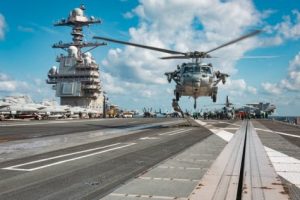
USS Gerald R Ford Carrier (Image credit X.com_
By TRH World Desk
Iran Bars US Warships From the Persian Gulf as Envoy Says Strike “Absolutely” Possible: Analysis
New Delhi, October 24, 2026 — Iran said on Saturday that US warships would never be allowed into the Persian Gulf “under any circumstances.” A senior US envoy said a US strike on Iran was possible this weekend. The two statements sit at opposite ends of a standoff, and neither side has said what happens if the other does not back down.
The New Arab reported that Iranian armed forces chief of staff Ali Abdollahi said, via state television, that US President Trump would “take that dream to his grave.” Iran’s Mehr News Agency carried a harsher version, saying Iran had made the US Navy ineffective and would not let “rusting US warships” return.
Washington’s signal was more ambiguous. Ambassador to Turkey Tom Barrack told a podcast host, “Could there be a strike this weekend? Absolutely.” The Times of Israel noted that Barrack has no direct role on Iran, and that Trump later said he knew nothing about such plans. Gulf News reported that Trump, a friend and business partner of Barrack, downplayed the remarks. That was despite Trump earlier saying there would be no strike before the midterm elections, less than two weeks away.
Both statements may be aimed at audiences as much as at each other. Iran’s message is deterrence and domestic reassurance. Barrack’s message, delivered on a podcast while visiting the Gulf, may be bargaining pressure.
He said Trump remains open to a deal and that continued threats to US allies and the Gulf would bring consequences. He also said regime change is not the goal, which distances Washington from Israel’s position.
Gulf News said Netanyahu is pushing for exactly that. The Times of Israel also reported that US and Israeli officials are said to be drafting plans for resumed strikes after the midterms, and that Israel’s military chief sees no operational need before Israel’s election.
Mixed messages are dangerous in a crowded waterway. Iranian forces have restricted traffic through the Strait of Hormuz since the war with the US began on February 28, and the US has responded with a counterblockade on Iranian ports.
A single naval encounter could turn rhetoric into combat, particularly if each side believes the other is bluffing. Oil markets and Gulf states, whom Barrack named as the ones threatened, would feel it first.
The sharpest contrast is between Tehran’s absolutes and Washington’s contradictions. Iran has set a line it says it will not allow to be crossed. Washington has said both that a strike is possible and that its leader knows nothing about it. Until one side clarifies, diplomats, shipping firms and Gulf governments will plan for the worst.
(Developments were moving quickly at the time of writing.)
American Blood in Jordan: The Iran War Just Got Harder to Sell as “Almost Over”
Follow The Raisina Hills on WhatsApp, Instagram, YouTube, Facebook, and LinkedIn




About The Author