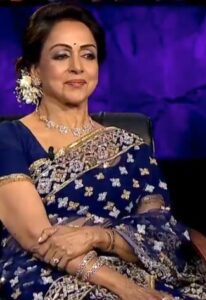
Hema Malini: The ‘Dream Girl’ Who Became the Hero of Her Own Cinema
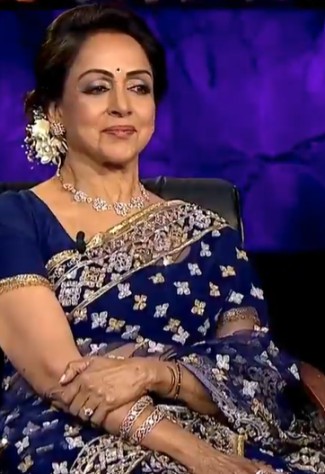
From Basanti’s “Yunki, yeh kaun bola?” to the emotional depth of Meera and Khushboo, Hema Malini was much more than Bollywood’s Dream Girl. She was a star who repeatedly made herself the centre of the story. (Image video grab)
By NIRENDRA DEV
From Seeta Aur Geeta and Sholay to Khushboo and Meera, Hema Malini combined comic brilliance, classical dance and dramatic depth to challenge the conventional role of women in Hindi cinema.
New Delhi, October 24, 2026 — “Yunki, yeh kaun bola?”
The line, delivered by Hema Malini as Basanti in Sholay (1975), remains one of the most memorable examples of her impeccable comic timing. But reducing Hema Malini to the fast-talking tonga driver or Bollywood’s celebrated ‘Dream Girl’ would mean overlooking an extraordinary career in which she repeatedly stepped beyond the conventional boundaries of a Hindi film heroine.
Hema Malini was among the few actresses of her generation who established themselves as major stars early in their careers. She made her screen debut in the Tamil film Idhu Sathiyam in 1963 in a supporting dance role before making her Hindi film debut as the leading lady in Raj Kapoor’s Sapno Ka Saudagar in 1968. Playing Mahi, a gypsy girl opposite Kapoor, she began a journey that would eventually make her one of Hindi cinema’s most bankable female stars.
Initially, her youth, conventional beauty and resemblance to the established star Vyjayanthimala attracted considerable attention. Yet Hema Malini soon demonstrated that her appeal extended well beyond her looks. Her screen presence, dancing ability, physical agility and comic instincts helped her carve out an identity of her own.
Seeta Aur Geeta: When the heroine took centre stage
The defining moment came with Seeta Aur Geeta (1972). Playing twin sisters with contrasting personalities, Hema Malini transformed a familiar premise into a showcase for her versatility. Seeta was timid and submissive; Geeta was spirited, rebellious and fearless.
With Dharmendra and Sanjeev Kumar playing important male roles, the film placed Hema firmly at its centre. Her ability to switch between the two characters, coupled with her effortless comedy and physical performance, made her the driving force of the narrative. The film was a commercial success, and her performance earned her the Filmfare Award for Best Actress.
She had demonstrated that a female star could carry a mainstream Hindi film without depending on a male protagonist to drive the story.
Her dialogue in the film, “Bhagwan jab apni mutthi mein chand ko chupata hai … toh suraj nikalta hai,” captured the poetic quality that could complement her otherwise energetic screen persona.
Sholay: Basanti becomes immortal
If Seeta Aur Geeta established her as a performer capable of carrying a film, Sholay turned her into a cultural phenomenon.
As Basanti, the outspoken tonga driver, Hema Malini created one of Indian cinema’s most enduring characters. Basanti was independent, irrepressible and unafraid to speak her mind. Her occupation itself challenged conventional expectations of women, while her endless chatter became a defining feature of the character.
Three lines remain closely associated with her performance:
– “Chal Dhanno, aaj teri Basanti ki izzat ka sawaal hai!”
– “Dekho, mujhe befuzool baat karne ki aadat toh hai nahi.”
– “Yunki, yeh kaun bola?”
Basanti was far more than comic relief. Her energy, independence and determination gave her a distinctive place in a film dominated by several celebrated male characters. Hema made the character memorable without sacrificing its vulnerability or emotional appeal.
Her performance opposite Amitabh Bachchan in Naseeb offered another example of her ability to combine humour with moral clarity. In one exchange, she tells him, “Aap ek achche aadmi hain … aur ek achche aadmi ke haath mein sharaab ki botal achchi nahi lagti.”
The ‘one-woman industry’
Hema Malini’s extraordinary box-office success led to her being described as a “one-woman industry”. In 1976, she was the highest-paid female star in Hindi cinema, an indication of her commercial standing at a time when the industry largely revolved around male superstars.
Her successful pairing with Dev Anand added another dimension to her career. Films such as Johny Mera Naam, Amir Garib, Shareef Badmash, Jaaneman, Chhupa Rustam and Joshila strengthened her position as a leading actress.
The melancholic Kishore Kumar song “Kiska Rasta Dekhe” remains one of the memorable musical highlights of Joshila.
Her filmography also included Abhinetri, in which she played a classical dancer opposite Shashi Kapoor. The role allowed her to bring together her screen glamour and her considerable dance training.
The success of Dream Girl (1977), opposite Dharmendra, further consolidated the screen identity that would remain attached to her for decades.
Beyond glamour: Gulzar and the search for depth
Hema Malini’s career cannot be assessed solely through her commercial successes. Some of her most distinctive performances emerged when she moved away from the glamorous image that had made her famous.
Her collaborations with filmmaker Gulzar brought out a quieter, more introspective side of her acting.
In Khushboo (1975), based on Sarat Chandra Chattopadhyay’s Bengali novel Pandit Moshai, she played Kusum, a woman shaped by emotional endurance and social circumstances. In Kinara (1977), she portrayed a character grappling with trauma, while Meera (1979) offered her the opportunity to embody the spiritual intensity of the medieval poet-saint.
These films demonstrated that her expressive abilities extended beyond glamour and energetic comedy. She could communicate emotional conflict through restrained gestures, facial expressions and carefully modulated performances.
Her classical dance background, particularly in Bharatanatyam, alongside training in Kathak and Kuchipudi, was central to this screen presence. Her command of abhinaya—the art of expression—helped her convey emotions through movement, posture and the eyes. Dance was not merely an ornamental interruption in her films; it was an integral part of her artistic identity.
Hema also explored socially grounded narratives in Ek Chadar Maili Si (1986) and Rihaee (1988), films that engaged with the difficult circumstances and social expectations confronting women.
A star who outlasted her era
The Hindi film industry has often struggled to sustain the careers of its leading actresses as they grow older. Hema Malini, however, continued to command attention across generations.
Her appearance opposite Amitabh Bachchan in Baghban (2003) re-established her as a compelling presence in mature romance and family drama. The film showed that her appeal had survived changes in audience tastes and the industry’s shifting ideas about female stardom.
Her personal life and reported relationships frequently attracted disproportionate public attention, sometimes overshadowing serious consideration of her acting. Yet her body of work offers a more substantial measure of her contribution to Hindi cinema.
Consider the contrast between Basanti’s irrepressible humour, Geeta’s rebellious spirit, Kusum’s emotional resilience and Meera’s spiritual conviction. Few actresses of her generation moved so visibly between such different screen identities while retaining a recognisable individual style.
Hema Malini was celebrated as the ‘Dream Girl’, but her larger legacy lies in how often she refused to remain confined to the conventional heroine’s role.
She was not merely a catalyst for the male protagonist’s journey. In films such as Seeta Aur Geeta, she became the narrative’s driving force. In Sholay, she created a character whose dialogue and personality outlived the film’s original release. In her collaborations with Gulzar, she demonstrated an ability to look inward and explore more complex emotional terrain.
The real achievement of Hema Malini’s career was not simply that she became a superstar. It was that, within an industry structured around male heroes, she repeatedly proved that a woman could be the centre of the story—and the reason audiences came to watch it.
Follow The Raisina Hills on WhatsApp, Instagram, YouTube, Facebook, and LinkedIn




About The Author