Xi Jinping Has No Successor: The Political Risk China Cannot Ignore
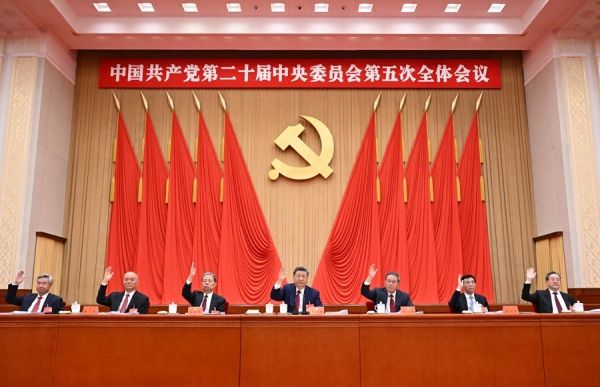
Xi Jinping Purges His Own Loyalists: Fear, Military Control and the Battle for China’s Future (Image MFA China on X)
By TRH World Desk
Finnish geopolitics analyst Sari Arho Havrén warns that Xi Jinping’s concentration of power, the absence of a designated successor and military purges could expose China’s political system to long-term instability.
New Delhi, November 16, 2026 — China’s political stability may be more fragile than it appears. President Xi Jinping has consolidated unprecedented power within the Communist Party, weakened potential rivals and dismantled the informal leadership succession arrangements that once helped ensure political continuity. But the concentration of authority around one man could eventually become a source of systemic vulnerability.
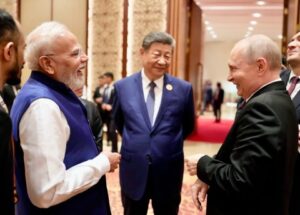
In a discussion with Finnish newspaper Iltalehti, Finland-based geopolitics analyst Sari Arho Havrén and Turkki Teppo examined China’s political future, Xi’s leadership and speculation about his health following his appearances at the BRICS summit in India and the White House during the autumn.
Havrén, senior adviser to Business Finland and visiting researcher at the Royal United Services Institute (RUSI), cautioned against treating rumours about Xi’s health as established facts.
“We do not know whether the rumours about Xi being ill are true, as the party strictly guards the health information of its leaders,” she said.
However, she identified a much bigger political concern: Xi has not designated a successor. At 72, the Chinese leader’s health and eventual departure from power have become particularly sensitive questions for the Communist Party.
The end of China’s leadership succession model
Under previous Chinese leadership arrangements, promising politicians were gradually promoted to senior positions, creating a pool from which the next generation of leaders could emerge. This informal succession mechanism helped prevent excessive dependence on a single individual.
Xi’s consolidation of power has fundamentally altered that arrangement.
According to Havrén, emerging leaders have been denied opportunities to advance to the highest levels of authority. This has potentially generated dissatisfaction within the party, even if no organised opposition has emerged.
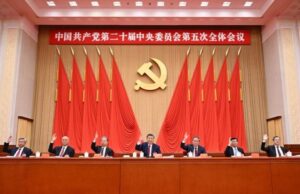
The Communist Party and, by extension, the Chinese state are now firmly under Xi’s control.
The military leadership purges provide another indication of this centralisation. Xi’s anti-corruption campaign has increasingly targeted senior military figures, reinforcing his authority over the armed forces.
“Challenging Xi while he is alive is dangerous,” Havrén observed, explaining that a purge could cost an official not only his position but also his political network and his family’s standing.
Why Xi’s departure may not mean China’s collapse
Despite the concentration of power, Havrén does not expect Xi’s resignation or departure to automatically trigger a revolution or the collapse of the Communist regime.
The Chinese Communist Party remains deeply embedded in state institutions and society. Its organisational structure is much stronger than any individual leadership arrangement.
She also points out that the current members of the Politburo and its Standing Committee owe their positions to Xi and do not necessarily command independent political power blocs.
This creates the possibility of weak collective leadership and political paralysis rather than an immediate struggle between powerful rival factions.
China’s stability: Strength or an illusion?
The analysis also echoes concerns raised by Andrew J. Nathan in Foreign Affairs, where he argued that China’s future may be more fragile than commonly assumed because perceptions of stability are partly sustained by the image projected by the Communist Party.
The central contradiction in Xi’s political model is becoming increasingly apparent. By eliminating rivals and concentrating authority, he may have reduced immediate challenges to his leadership. But he has also weakened the institutional mechanisms that could manage a transition after him.
China’s political system may therefore face a difficult succession question: who takes over when the man who has accumulated so much power is no longer in charge?
For Beijing, the absence of a visible successor is not simply a question of leadership. It is a test of whether a political system built around one powerful individual can guarantee continuity without him.
Key Takeaways:
Power concentration may create a succession vulnerability: Xi’s elimination of potential rivals may strengthen his immediate position while weakening the leadership transition mechanisms China once relied upon.
The absence of a successor is a structural concern, not merely a personnel issue: China’s political system faces uncertainty over how authority will transfer after Xi, particularly if no credible successor has been prepared.
Military purges can strengthen control but deepen institutional uncertainty: Repeated leadership changes within the military may reinforce Xi’s authority while affecting institutional continuity and confidence.
China’s stability may be stronger institutionally than its succession arrangements: The Communist Party retains deep control over the state, meaning a leadership transition need not automatically result in regime collapse or revolution.
A post-Xi crisis could manifest as paralysis rather than revolution: Weak independent power centres and the absence of established successors could complicate decision-making and collective leadership during a transition.
The central paradox of Xi’s leadership: By reducing threats to his own authority, Xi may have increased the uncertainty surrounding the political system’s future after his departure.
China’s greatest long-term political test may be continuity without Xi: The real measure of the CCP’s resilience will be whether it can manage a leadership transition without destabilising the system Xi has reshaped around himself.
Why Xi Jinping Is Purging His Own Trusted Generals and Communist Party Leaders
Follow The Raisina Hills on WhatsApp, Instagram, YouTube, Facebook, and LinkedIn




About The Author