Silver Price Crash Explained: Why It Fell 65% and What’s Next
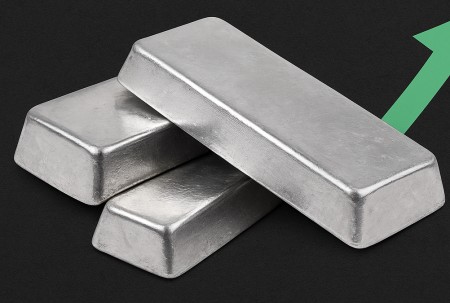
Silver is about 65 per cent below its January record and below its 1980 and 2011 highs.
By S. JHA
Silver price crash explained: from a record $121 to about $42, and what happens next
Mumbai, November 21, 2026 — Silver has lost nearly two-thirds of its value in under a year. It is trading around $42 an ounce, roughly 65 per cent below its January 2026 peak of $121.65. It has also dropped below its 1980 and 2011 highs, both near $50, which erases a run that took 45 years.
The latest leg was fast. Silver has lost about 14 per cent since November 9, while gold has lost about 8 per cent,
Silver fell toward $42 on Friday as gold slid below $3,550.
Silver and Gold are the two metals that share a trigger but not a structure. They also fall differently.
The Fed: The October minutes, released November 18, show almost all policymakers considered further rate increases appropriate. Higher rates and a dollar near multi-month highs raise the cost of holding any non-yielding metal.
Inflation shock: The slide accelerated after a hot October inflation report. USAGOLD cited producer prices running 6.5 per cent yearly, which kept December rate-hike bets alive.
Industrial exposure: Silver is a hybrid. Roughly half or more of demand is industrial, in solar panels, electronics and batteries, so it suffers when growth fears and investor selling arrive together, a Yahoo Finance analysis said. Gold is backed more by central bank buying, which has no equivalent in silver.
Leverage and liquidation: USAGOLD said leveraged holders sell the more volatile metal first, which widens the gold-silver ratio. One analysis from FXNX also blamed higher exchange margin requirements and leveraged contracts.
The demand picture: Demand is softening for a specific reason: price. The Silver Institute expects total demand to fall 5 per cent in 2026 to about 1.08 billion ounces, with industrial use down 3 per cent and jewellery sharply lower, FXStreet reported.
Solar manufacturers have accelerated efforts to use less silver or replace it, and BeInCrypto said the Silver Institute expects solar demand to fall 19 per cent this year, a record decline. Silver held in exchange-traded products has dropped 55 million ounces in 2026.
Why a deficit hasn’t saved the price: The market is still forecast to post a sixth straight annual supply deficit, about 35 million ounces in 2026, with cumulative shortfalls of around 746 million ounces since 2021, per Forex.com.
A deficit does not guarantee rising prices when futures positioning, investment demand and industrial expectations all weaken together. High prices also encourage substitution, which erodes the very demand the deficit relies on.
Is this 2011 again: The comparison is common. Forex.com argues the 2026 bubble was bigger, but the backdrop differs: industrial demand is a larger share of the market today and accumulated deficits offer some support, though elevated prices have pushed users to economise.
Where analysts see risk: BeInCrypto flags support at $41.50 and then $36.20, and resistance near $45.50. A daily close back above $54.50 would invalidate the bearish structure. Coinpaper and KuCoin point to $40 as a downside risk. IndexBox says there is no sign yet of the silver and miner leadership that typically marks a bottom.
Three scenarios
More pain: Hotter data and a hawkish Fed keep the dollar firm, and silver tests $40 and then the mid-$30s.
A base: Deficit and thrift-driven buying slow the decline, leaving a choppy range in the low $40s.
A rebound: Inflation cools, the Fed softens and industrial demand holds, narrowing the gold-silver ratio.
What to watch: The December 9 Fed decision. Inflation and jobs data. The dollar and Treasury yields. Solar and electronics demand signals, and ETP flows.
Gold Price Crash Explained: Why It Fell a Third From Its Record and Where It Goes Next
Key takeaways
- Silver is about 65 per cent below its January record and below its 1980 and 2011 highs.
- Fed rate-hike bets, a strong dollar and forced selling explain much of the fall.
- Industrial exposure makes silver more vulnerable than gold.
- A supply deficit gives support but has not stopped the decline.
- Indian buyers should check local rupee prices, which also depend on the exchange rate and duties.
- Prices were moving at the time of writing. This is not a recommendation.
Follow The Raisina Hills on WhatsApp, Instagram, YouTube, Facebook, and LinkedIn




About The Author