Chinese Glassmaker Turns France’s Unrest Into a Viral Advertisement
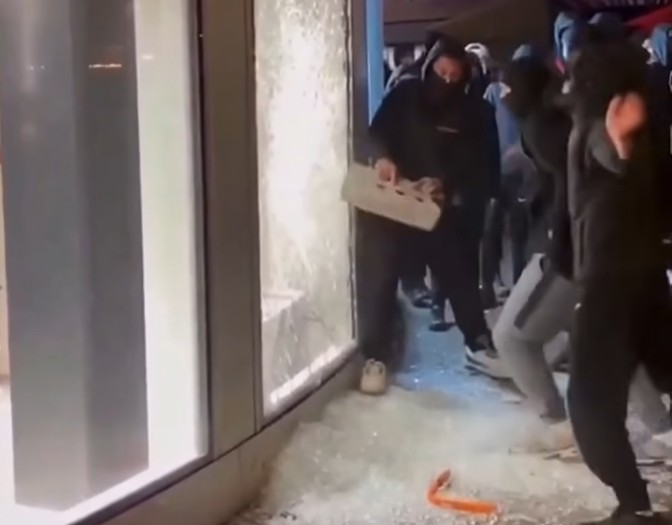
A viral video showing glass resisting break-in attempts gives Hengxinfeng unexpected publicity (Image video grab)
By S. JHA
Hengxinfeng Special-Glass has reportedly leveraged footage of failed break-in attempts during French unrest to promote its security glass. The episode highlights the power of viral marketing—and the importance of verifying product claims.
Mumbai, November 7, 2026 — Sometimes the most powerful advertisement is the one a company never had to make. A Chinese glass manufacturer, Hengxinfeng Special-Glass, has reportedly found an extraordinary promotional opportunity in footage of attempted break-ins during unrest in France.
The video circulating on social media shows masked individuals repeatedly striking a shopfront with metal bars, stones and other objects. The glass develops extensive cracks but remains intact, preventing the attackers from breaking through.
For a manufacturer specialising in security glass, the footage offers something conventional advertising struggles to achieve: an apparently real-world demonstration of a product under extreme pressure.
According to reports, Hengxinfeng shared the footage on social media to showcase the resilience of its glass. The company did not need to organise a demonstration, hire actors or construct an elaborate advertising campaign. The incident itself provided the visual narrative.
The resulting attention illustrates how social media can transform an unexpected event into a promotional opportunity. A video initially associated with vandalism and attempted looting becomes a product demonstration, reaching audiences far beyond the manufacturer’s conventional customer base.
The company, based in China’s Henan province, specialises in high-strength security glass, including products designed for applications requiring resistance to impact and intrusion.
The episode also feeds into a larger conversation about Chinese manufacturing quality. For decades, products labelled “Made in China” were frequently associated with inexpensive manufacturing rather than technological sophistication.
China’s industrial transformation has increasingly challenged that perception. From electric vehicles and consumer electronics to advanced materials, Chinese manufacturers have become formidable competitors in international markets.
A viral video showing glass resisting repeated blows provides a striking visual shorthand for that broader industrial narrative.
The marketing opportunity is undeniable, but the circumstances are uncomfortable. Civil unrest, property damage and attempted looting are not conventional advertising settings. Businesses affected by violence face financial losses, disruption and potential safety risks.
Yet the internet frequently transforms unexpected situations into commercial opportunities. The most memorable advertising increasingly comes from real-world incidents rather than expensive production studios.
Hengxinfeng’s reported campaign offers a lesson in modern marketing: authenticity, timing and an instantly understandable visual message can outperform a carefully scripted commercial.
The glass may have cracked, but the video has helped build an image of extraordinary resilience.
Whether that translates into measurable sales remains unknown. Nevertheless, the episode demonstrates how quickly an incident of urban disorder can become a global marketing conversation—and how Chinese manufacturers are increasingly adept at capturing that attention.
China Is Not Japan: Why Washington’s Old Economic Playbook May Fail Against Beijing
Follow The Raisina Hills on WhatsApp, Instagram, YouTube, Facebook, and LinkedIn




About The Author