From Sovereigns to Servants Review: Russia’s Elite After War
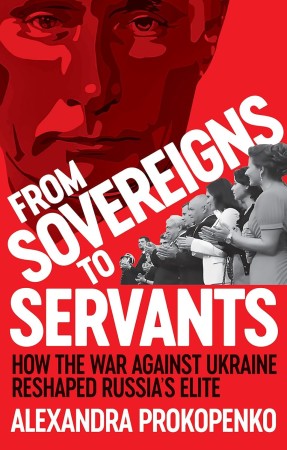
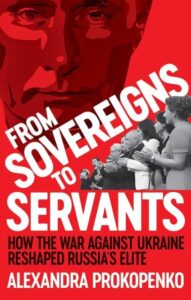
Why did Russia’s technocrats stay? A look at Alexandra Prokopenko’s insider account. (Image Book cover)
By TRH Book Desk
The book walks through the war’s pivotal moments: Western sanctions, mass mobilisation, the annexation of four Ukrainian regions, and Yevgeny Prigozhin’s aborted mutiny in 2023.
New Delhi, November 22, 2026 — Alexandra Prokopenko’s account of how the war reshaped Russia’s elite starts from one of the war’s central puzzles: why the people with the most to lose did not stop it.
When Moscow launched its full-scale invasion of Ukraine, the West imposed sweeping sanctions. Many expected Russia’s liberals and global businessmen to protect their assets and cosmopolitan lifestyles by pressing Putin to stop. Instead, the book argues, liberal-minded officials “rewired the economy for war,” corporations obeyed new rules, and only a handful resigned or spoke out. From Sovereigns to Servants: How the War Against Ukraine Reshaped Russia’s Elite (Hurst in the UK, Oxford University Press in the US, 280 pages) tries to explain why.
Prokopenko is a senior fellow at the Carnegie Russia Eurasia Center in Berlin. Before the invasion she was an adviser at Russia’s central bank from 2019 to 2022 and, earlier, a journalist in the Kremlin press pool from 2008 to 2017. Carnegie describes her as a former Moscow insider who quit over the war.
Edward Fishman of the Council on Foreign Relations calls her “one of the keenest observers of contemporary Russia,” combining the mind of a scholar, the eye of a journalist, and the knowledge of a government official. The book draws on dozens of interviews with top Russian officials and business people dating to the mid-2010s, per Oxford University Press.
The book walks through the war’s pivotal moments: Western sanctions, mass mobilisation, the annexation of four Ukrainian regions, and Yevgeny Prigozhin’s aborted mutiny in 2023. It traces how competing factions, from technocrats to hawks, rationalised each shock and recalibrated their loyalties. The central claim is that although the upper class kept the formal attributes of power, it lost its agency and became an instrument of governance.
In a Carnegie podcast about the book, Prokopenko said both the population and the elites are annoyed, and that the elite are “Not necessarily pro-war.” That distinction between loyalty and belief is the book’s core. She argues the old markers of stability, including an absence of protest, a functioning economy, and a loyal elite, are no longer reliable guides to Russia’s future.
Catherine Belton, author of Putin’s People, calls it the most important book on Russia since the full-scale invasion and an inside view on the “fear, cynicism and warped morality” of the elite. Fishman calls it “essential reading.” They signal professional regard but are not a verdict.
Questions to Bring to the Book
How is the evidence handled: Claims about private opposition rest heavily on candid interviews. Such testimony is hard to verify and can over-represent people who later left Russia or turned critical. Readers should look at how the book corroborates it.
Does servants explain or excuse: Technocrats who rewired the economy for war made choices that sustained it. Belton’s phrase “warped morality” suggests the book confronts this, but readers should check whether the explanation of fear and incentive shades into exculpation.
What is left out: The focus is the elite. How much of its behaviour came from fear, interest, or conviction, and what role the security services and wider society played, are questions the “technocrats to hawks” framing hints at but a reader will want answered in detail.
Who It’s For: Readers of Russian politics, sanctions policy, and authoritarian resilience, and anyone who has read Putin’s People and wants the technocratic side of the story.
The question is well chosen and the author’s vantage is unusual. Whether the book delivers depends on its sourcing and its willingness to hold its subjects accountable while explaining them. Early endorsements from respected Russia watchers suggest it clears the first bar.
FAQs:
Who is Alexandra Prokopenko?
A senior fellow at the Carnegie Russia Eurasia Center in Berlin and former adviser at Russia’s central bank.
What is the book about?
How Russia’s political and economic elites came to support the war despite privately opposing it.
Is it based on interviews?
Yes, dozens of interviews with top Russian officials and business people since the mid-2010s, per the publisher.
Russia Dumps Gold at Fastest Pace Since 1998 Crisis: What Happens to Gold Prices Next?
Follow The Raisina Hills on WhatsApp, Instagram, YouTube, Facebook, and LinkedIn




About The Author