Beyond Raj Kumar Shukla: The Forgotten Story of Ramdayal Prasad Sah and His Contribution to Champaran
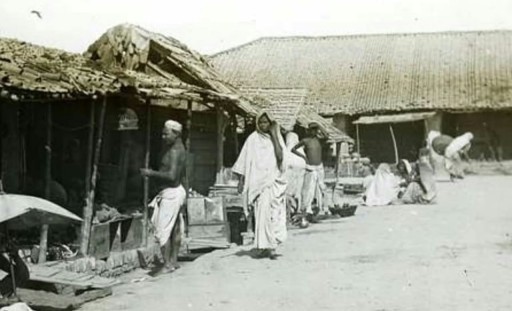
The 1917 Champaran Satyagraha was shaped by local activists and networks that helped prepare the ground for Gandhi's intervention. (Image Local Library)
By RAJESHWAR JAISWAL
While Raj Kumar Shukla is widely credited with bringing Mahatma Gandhi to Champaran, the role of Ramdayal Prasad Sah and his family reveals a broader history of local political mobilisation, social reform, education and institution-building behind the 1917 Satyagraha.
Motihari (Bihar), November 18, 2026 — The story of how Mahatma Gandhi was brought to Champaran generally gives the most prominent place to Raj Kumar Shukla. His role was undoubtedly important. However, available accounts suggest that the process was not the achievement of a single individual. Several local leaders and activists, including Ramdayal Prasad Sah, also played significant roles.
Sah and Shukla worked together throughout this effort, and examples of their association appear in various articles, letters and books. Yet, in the historical narratives that emerged after Independence, Ramdayal Sah received comparatively little recognition.
The Champaran Satyagraha was unquestionably a decisive event in India’s freedom movement. But it was also the culmination of a longer process involving local political consciousness, social resistance, economic discontent and grassroots mobilisation.
In this broader historical context, the contribution of Ramdayal Prasad Sah and his family deserves closer examination.
The story of the Sah family is also an overlooked chapter in Champaran’s freedom struggle and social transformation.
Even today, several traces of the Sah family’s legacy remain visible in Motihari’s social landscape. About 50 metres beyond the Mahatma Gandhi Tower in Meena Bazaar stands the Hiralal Sah Middle School, established in 1932. The institution was established through the efforts and resources of Ramdayal Prasad Sah’s family.
More significantly, during the 1920s, the Sah family reportedly organised community feasts in which members of the Dalit communities sat together with Rajputs, Brahmins, Bhumihars and Kayasthas.
This was a period when the social ideas of Gandhi, Dr B.R. Ambedkar and Jyotirao Phule had not yet acquired the same prominence in Bihar’s wider public discourse that they would subsequently attain.
Ramdayal Prasad Sah also initiated efforts against social practices such as death feasts during the 1920s. His opposition to untouchability and his attempts to bring people from Dalit communities together with members of other castes for collective meals represented an early local effort to break social barriers.
Although some Arya Samaj activists were active in Bihar at the time, such initiatives had not yet developed into a widespread social movement. Sah’s interventions therefore deserve attention as part of the early history of social reform in the region.
Economic foundations and the Sah family’s influence in Champaran
Ramdayal Prasad Sah was born on December 1, 1887, in Bhawanipur village in the Gobindganj area, into the family of Hiralal Sah. The family later moved to Motihari.
Through trade, zamindari and moneylending, the family established an influential position in Champaran’s social, economic and political life. Its financial strength was not used merely to accumulate property. It also supported public, political, educational and social initiatives.
The family’s contribution to the development of modern Motihari can be seen in the establishment of gardens, ponds, religious and spiritual centres, schools and other institutions. It also extended to private enterprise in modern facilities such as electricity.
By the closing decades of the nineteenth century and the beginning of the twentieth, the Sah family’s economic influence had grown considerably. Strong financial relationships had developed between the Bettiah Raj, European indigo planters and the Sah family.
Whenever the Bettiah Raj needed funds, it borrowed from the Sah family. These financial dealings gradually developed into personal relationships, resulting in a close friendship between Maharaja Harendra Kishore and the family.
Government agencies referred to the Sah family as merchants and bankers. They were also substantial landowners.
A letter from Maharaja Harendra Kishore reportedly reflects the trust and personal warmth he felt towards the family. He wrote: “Dear friend, conducting trade and industry is something only you people and the Marwari merchants can do. We members of the royal families are not capable of doing these things.”
The remark offers an insight into the family’s commercial standing and business capabilities in the economic life of that period.
According to the records of the Bettiah Raj, following the death of Maharaja Harendra Kishore, the amount outstanding against the estate in favour of the Sah family as of April 1, 1897, stood at Rs 1,10,847, 15 annas and 7 paise.
The amount illustrates the family’s financial position and the depth of its lending relationship with the Bettiah Raj.
In lieu of interest payable on these loans, the Sah family reportedly received 51 bighas of land in Motihari and approximately 40 acres in Navalpur, within the Jogapatti police station area. The family subsequently donated the approximately 40 acres in Navalpur to Acharya Vinoba Bhave during the Bhoodan movement.
The beginnings of political consciousness
Ramdayal Prasad Sah’s public life began during his adolescence. Discontent was growing in Champaran against indigo cultivation and the oppressive practices of European plantation owners. It was in this atmosphere that his political outlook developed.
He would go on to participate in several phases of the national movement, including Satyagraha, the Non-Cooperation Movement, the Khilafat Movement, the Salt Satyagraha and the Quit India Movement.
After completing his matriculation examination, Sah went to Muzaffarpur for further studies. During his college years, he participated in student conferences and had the opportunity to listen to Annie Besant.
Besant’s visit to Muzaffarpur in 1908 and her association with the Theosophical Society are among the developments associated with this period. She was active in promoting Indian philosophy, culture and education, published the newspaper New India and later launched the Home Rule League in 1916, making self-government a major issue in the national movement.
These activities influenced the political consciousness of the young Ramdayal Sah.
He was subsequently inspired by the speeches of Swami Satyadev Parivrajak, who was associated with the Arya Samaj and was working to spread its ideas in Bihar.
Ramdayal Sah made efforts to bring him to Champaran. According to available accounts, Swami Satyadev visited the region in 1912 following Sah’s initiative. A large public meeting attended by approximately 5,000 people was reportedly organised on the occasion.
Organising such a large gathering was no easy task at the time. The meeting helped extend political discussion and awareness about the Congress at the local level.
Thereafter, Sah became increasingly involved in farmers’ issues and local resistance against European indigo planters. His influence grew as he helped tenants with their legal cases and supported their efforts to seek justice.
Bringing Gandhi to Champaran: A collective effort
The role of Raj Kumar Shukla in bringing Mahatma Gandhi to Champaran is widely acknowledged. However, the available accounts suggest that the initiative involved several local leaders and activists, including Ramdayal Prasad Sah.
Sah and Shukla remained associated throughout the effort. Their cooperation is reflected in references found in different articles, letters and books. Nevertheless, Ramdayal Sah’s contribution has received relatively limited attention in many post-Independence historical narratives.
An account of the family’s association with Gandhi also refers to the earthquake of 1934. When Gandhi and Rajendra Prasad visited Patna City following the disaster, Bhagwat Babu, the father-in-law of Ramdayal Prasad Sah and owner of Shyam Lal Mills, reportedly welcomed them. A member of his family, Arjun Prasad, was honoured by Gandhi, who placed a garland around his neck.
Yamuna Nand, who was associated with the Arya Samaj and is also described as a member of the Servants of India Society, informed Ramdayal Prasad Sah about Gandhi’s return to India. Sah subsequently wrote to Gandhi, inviting him to visit Champaran. His initial efforts, however, were unsuccessful.
The December 1916 session of the Indian National Congress in Lucknow proved decisive.
Ramdayal Prasad Sah, Brajkishore Prasad, Gorakh Prasad, Raj Kumar Shukla, Sant Raut, Pir Muhammad Munis and several other activists travelled to Lucknow.
On December 24, Ramdayal Sah and Raj Kumar Shukla met Gandhi and explained the conditions prevailing in Champaran. Gandhi did not immediately commit himself to visiting the region. He wanted to examine the situation on the ground before making a decision.
Sah and Shukla subsequently followed Gandhi to Kanpur and met him again. It was during this sequence of meetings that Gandhi agreed to visit Champaran.
Raj Kumar Shukla’s diary, which reportedly mentions the meeting with Gandhi alongside Ramdayal Sah, is an important reference for understanding the latter’s contribution.
Gandhi’s arrival in Champaran should therefore be viewed not simply as the achievement of one individual, but as the outcome of a collective effort by local activists. Sant Raut and Ganesh Ram also played significant roles. European indigo planters had reportedly burnt Sant Raut’s house, while Raj Kumar Shukla was among those who supported him.
Champaran Satyagraha and the Gandhi Ashram
After Gandhi arrived in Champaran in 1917, the Sah family assisted him in organising his local activities.
Ramdayal Prasad Sah helped arrange accommodation for Gandhi, transport and other essential facilities. In his book Mahatma Gandhi in Champaran, Dr Rajendra Prasad reportedly described him as an enthusiastic young man from Champaran’s well-known Sah family.
Local accommodation, transport, resources and logistical arrangements were crucial to the functioning of Gandhi’s campaign and the work of his associates.
Following the Satyagraha, Gandhi expressed the need for a permanent ashram and organisational office in Champaran. According to available accounts, the Sah family made approximately two and a half bighas of land available in the Banjaria Pandal area for the ashram and related organisational activities.
There are also references to Gandhi creating a trust for the land.
Congress organisation and local politics
After the Champaran Satyagraha, Ramdayal Sah expanded his political activities.
Working with Harivansh Sahay and Pir Muhammad Munis, he played a role in establishing and strengthening the Congress organisation in Champaran. He was also active during the period when the Congress was developing into a more organised political force following the Montagu-Chelmsford reforms.
In 1921, Ramdayal Prasad Sah, Dev Lal Sah, Kedarnath Sah and Gorakh Prasad were among the early Non-Cooperation activists who contested the Motihari municipal elections under the Congress banner.
Their victory was an important indication of the entry of the national movement into local electoral politics.
Ramdayal Sah remained associated with the District Board for approximately 28 years. This demonstrates that his public life was not confined to protest movements. He also participated in local self-government and administrative institutions.
During the Non-Cooperation and Khilafat movements of 1920-21, he remained active, and under his leadership the organisational reach of the movement expanded in Motihari and other parts of Champaran.
Hindu-Muslim unity was another important aspect of his public life.
Accounts of his activities mention that approximately eight kathas of land were made available near his residence for the construction of a mosque. The Sah family is also said to have provided land for a Karbala and an Eidgah at a later stage.
These initiatives represented examples of community cooperation in the social and political environment of the time.
There are also references to the seizure and burning of Ramdayal Sah’s library in 1921. This suggests that, in the eyes of the colonial administration, the library had become more than a place for books. It had emerged as a centre associated with political awareness and nationalist activities.
Opposition leaders quote Mahatma Gandhi ‘Palestine belongs to Arab…’ in meeting with ambassador
Education, libraries and cooperative institutions
The Sah family’s contribution to education was extensive.
According to available accounts, Motihari’s Mahajani School, also known as Gaurishankar Sah Middle School, was established in 1905. The family’s contribution is also associated with the establishment of Mangal Seminary School in 1927, Hiralal Sah School in 1935, Gopal Sah School and Mahavir Lalita School.
Some of these institutions subsequently developed into intermediate colleges.
Ramdayal Sah was also associated with the establishment of the Ramdayal Sah Central Library, also known as the Yuvak Library. He served as its first chairman and remained a lifelong member.
At a time when libraries were becoming important centres of political awareness, public debate and the spread of nationalist ideas, these institutions played a role beyond the preservation of books.
For the Sah family, education was an important instrument of social transformation. Family members therefore contributed land, buildings and other resources towards the establishment and development of schools.
Ramdayal Prasad Sah also played a role in the development of economic institutions.
He was among the founding members of the Champaran Cooperative Bank and remained its director for life.
At the time, cooperative institutions were emerging as an important alternative for the rural economy. They were seen as a means of reducing the dependence of farmers and smaller economic groups on traditional moneylending arrangements.
His association with the Champaran Cooperative Bank reflected a wider interest in building economic institutions for the region.
Gandhi’s legacy and the family’s post-Independence contribution
The Sah family’s association with Gandhi continued in institutional form even after Independence.
Ramdayal Prasad Sah was among the founding members of the Gandhi Museum in Patna and was associated with its working committee. The institution was established in 1959 under the chairmanship of Bihar’s first Chief Minister, Shri Krishna Sinha.
He was also associated with the establishment of the Gandhi Museum in Motihari. The subcommittee reportedly included Harivansh Sahay, Kedar Pandey, Saryug Prasad, Ramdayal Prasad Sah and Kamal Nath Tiwari.
Following the death of Dr Rajendra Prasad in 1964, a Daridra Narayan Bhoj was reportedly organised at the Congress Committee office.
Around the same period, the Gandhi Ashram had fallen into a state of disrepair. During Indira Gandhi’s visit to Champaran, the need to restore the ashram came into focus.
Thereafter, Rameshwar Nath Sah and Satyanarayan Prasad Sah took responsibility for its renovation. The restored ashram was inaugurated by Krishna Vallabh Sahay, the then Chief Minister of Bihar.
The Sah family’s contribution to the institutional continuity of Gandhi’s legacy thus continued well after the freedom movement.
Reconsidering Champaran’s history
Recent historical writing and research have brought forward several details that raise an important question: whose contributions have been given prominence in historical narratives, and whose have not received adequate recognition?
There are complaints that the contributions of several individuals have been suppressed, overlooked or insufficiently documented in historical accounts written largely from the perspective of dominant and elite sections of society.
The case of Ramdayal Sah and his family is being presented as one such example.
To understand Champaran only through the events of 1917 and Gandhi’s Satyagraha would be to read its history incompletely. Before Gandhi arrived, the region had already begun developing a foundation of political awareness, social reform and economic resistance.
Ramdayal Prasad Sah was an important representative of this local consciousness.
On the one hand, the Sah family accumulated considerable economic power through trade, zamindari and moneylending, playing an important financial role in institutions such as the Bettiah Raj. On the other, it used a part of that economic strength to support education, libraries, cooperative institutions, the Gandhi Ashram, religious and community institutions and public initiatives.
As a young man, Ramdayal Sah drew inspiration from nationalist ideas, brought Swami Satyadev to Champaran, helped organise a gathering attended by thousands, supported farmers and played an important role alongside Raj Kumar Shukla and other local activists in the effort to bring Gandhi to the region.
His association with the 1917 Satyagraha was followed by continued involvement in Congress organisation, municipal politics, the District Board and institutions preserving Gandhi’s memory.
At the social level, he challenged practices such as death feasts and untouchability, encouraged people from different castes to share meals and supported Hindu-Muslim harmony through the provision of land for community institutions.
The family also contributed to the establishment of educational institutions and eventually donated land in Navalpur to Vinoba Bhave during the Bhoodan movement.
The story of the Sah family is therefore not merely that of a prosperous trading family. It is also a story of converting economic strength into social responsibility, connecting social reform with political consciousness and transforming political engagement into lasting public institutions.
The responsibility of history is not simply to repeat the names of well-known personalities. It must also bring forward the local leaders and families whose contributions helped prepare the ground for major movements.
A closer examination of Ramdayal Prasad Sah and the Sah family’s legacy is necessary for a more balanced understanding of Champaran’s freedom struggle and social transformation.
Follow The Raisina Hills on WhatsApp, Instagram, YouTube, Facebook, and LinkedIn




About The Author