Iran’s Double Game? War Preparations Intensify as Tehran Tests US Diplomatic Opening
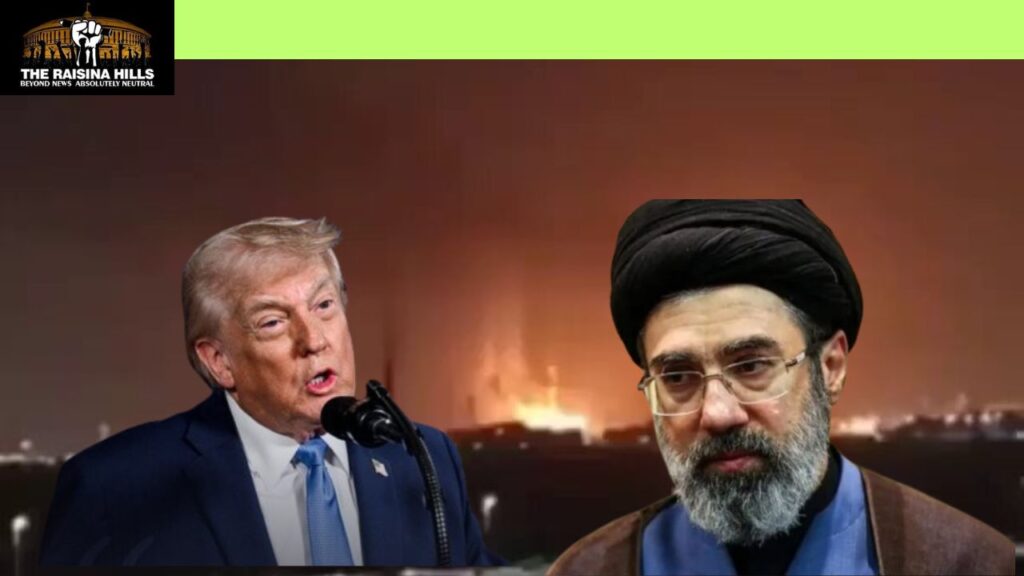
US President and Iran supreme leader.(Images X.com)
By TRH World Desk
Hamidreza Azizi says Tehran is shifting towards a more offensive military posture, warning of retaliation without geographical limits and even pre-emption. Yet Mohsen Rezaei’s positive assessment of JD Vance’s letter and Abbas Araghchi’s proposed two-day roadmap for reopening the Strait of Hormuz suggest diplomacy has not been abandoned. American military deployments in Israel add another layer of uncertainty.
New Delhi, November 1, 2026 — Iran is preparing for the possibility of another military confrontation with the United States and Israel even as diplomatic contacts offer a potential route out of the escalating crisis. The emerging strategy, according to Iran expert Hamidreza Azizi, is to keep negotiations alive while fundamentally changing the military cost of any renewed attack.
In an assessment posted on X, Azizi highlighted a significant warning from Supreme Leader Mojtaba Khamenei, who has instructed Iranian armed forces to respond to threats immediately and effectively, without geographical limitations. Khamenei has also ordered an expansion of Iran’s target bank to include tangible and intangible American and Israeli assets.
The language marks a shift towards a more offensive deterrence posture. Iran’s military chief, Ali Abdollahi, has reinforced the message by warning that Tehran would not necessarily wait for an enemy attack if preparations for hostile action were confirmed.
The implication is that Washington may no longer be able to assume that a limited strike would remain limited. Tehran wants its adversaries to factor in the possibility of a wider regional confrontation, involving targets beyond the immediate battlefield.
Yet the diplomatic channel remains open.
Iran’s security chief Mohsen Rezaei said he had read a letter from US Vice-President JD Vance but had not responded. He described the change in Washington’s tone as a positive sign and claimed that the latest of three American proposals indicated readiness to accept Iran’s seven conditions. The substance of the proposals and the extent of any American acceptance, however, remain unclear.
Foreign Minister Abbas Araghchi has offered another indication of possible flexibility. Following discussions with Qatari mediators, he said a proposed implementation period for Iran’s seven-day plan to reopen the Strait of Hormuz had been reduced to two days, subject to Washington meeting Tehran’s conditions.
Hormuz remains the central bargaining instrument. Iran wants a new maritime arrangement involving Oman and greater Iranian oversight of shipping through the strategic waterway. Rezaei has also indicated that nuclear discussions would follow an initial understanding on ending the conflict, while acknowledging debate over a possible revision of Iran’s nuclear doctrine.
Meanwhile, Israeli public broadcaster KAN reported that ten American military cargo aircraft had landed at the Ovda and Nevatim airbases. The Times of Israel separately reported more than ten US military transport flights to Israeli bases over the preceding week, with analysts suggesting that regional air defences were being reinforced. The precise cargo contents have not been independently established.
The contradiction is striking but not necessarily accidental. Tehran is negotiating over the terms of de-escalation while warning that another attack could open a much wider conflict.
As Azizi observes, the strategy carries risks of miscalculation. Iran’s attempt to make renewed military action prohibitively costly could also narrow the space for compromise.
For Washington, the immediate question is whether Tehran’s warnings represent a negotiating strategy or preparation for a conflict that diplomacy may no longer prevent. For now, both possibilities remain on the table.
Two warnings, no deal: Iran’s “never” and Washington’s “absolutely” leave the Gulf on a knife-edge
Follow The Raisina Hills on WhatsApp, Instagram, YouTube, Facebook, and LinkedIn




About The Author