Indian Americans in 2026 Midterms: Candidates and Influence
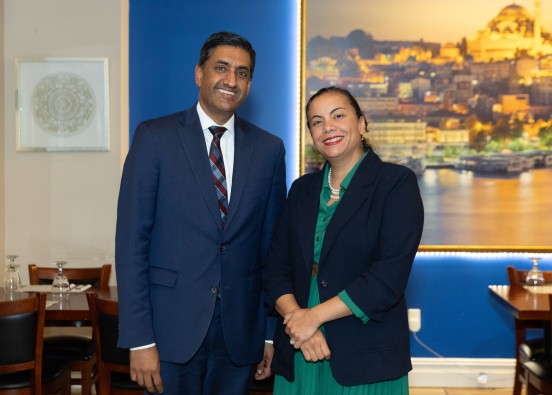
Indian Americans in the midterms: big spotlight, small base (Image X.com)
By TRH World Desk
Indian Americans in the 2026 Midterms: Who Is on the Ballot and How Much Influence They Really Have
New Delhi, November 2, 2026 — Few communities attract as much attention per voter as Indian Americans in this election. The November 3 midterms bring a headline race in Ohio, four congressional incumbents fighting for re-election and a community being pulled in two directions. Counting heads, though, gives a more modest picture of influence than the spotlight suggests.
The biggest name is Vivek Ramaswamy, the Republican nominee for Ohio governor against Democrat Amy Acton. If he wins, he would be Ohio’s first Indian American governor and the first Hindu governor in the US. He raised more than $19.57 million in 2025, more than double Ohio’s previous gubernatorial fundraising record, and would be the third Indian American governor after Bobby Jindal and Nikki Haley.
In the House, incumbents Ro Khanna, Pramila Jayapal, Ami Bera and Suhas Subramanyam are seeking re-election, plus challenger Amish Shah. At least nine Indian Americans are on the Republican ballot, including Saritha Komatireddy, who is running for New York attorney general.
Indian Americans number about five million, roughly 1.7 per cent of the population, according to one analysis. An Axios report on a 2020 survey said they were slightly more than 1 per cent of Americans and less than 1 per cent of registered voters. They are concentrated in California (about 20 per cent), Texas, New Jersey and New York, which magnifies their weight in particular districts. Carnegie’s survey data show they are “high propensity” voters, with 96 per cent of registered voters in its 2024 survey likely to vote.
Six Indian Americans sat in the House after 2024, in what is known as the Samosa Caucus, about 1.4 per cent of 435 seats. That is close to their population share and above their share of voters. This year, though, Raja Krishnamoorthi lost the Illinois Senate primary and Shri Thanedar lost his August primary in Michigan’s 13th district to a democratic socialist challenger by 51.9 per cent to 48.1 per cent. Even if all four remaining incumbents win, the caucus drops to four, or about 0.9 per cent of the House, unless Shah or another candidate wins.
Carnegie’s 2026 survey found Democratic identification down to 46 per cent from 52 per cent in 2020, Republican identification up to 19 per cent from 15, and independents at 29 per cent. Only 29 per cent approve of Trump’s job performance. AAPI Data found 66 per cent of Asian Indian voters favour the Democratic Senate candidate. Pressure is on both flanks: Republicans campaigning amid a party-wide backlash over H-1B visas, which Indian professionals dominate, and Democrats challenged by their left. Five Indian American House members condemned a now-deleted DHS post that used a Sikh identity to portray an unwanted foreigner.
Their weight shows more in money, professional networks and swing-district margins than in raw votes. That is real, but narrow, and it depends on the community staying engaged across party lines.
The Mid-Term Mood: A Democratic Wave, A Long List of Caveats
Follow The Raisina Hills on WhatsApp, Instagram, YouTube, Facebook, and LinkedIn




About The Author