Bangladesh’s Garment Workers Revolt: Wage Anger Tests Tarique Rahman
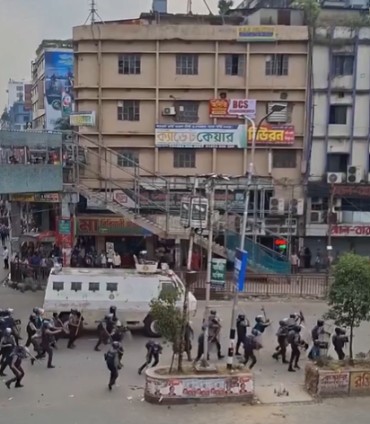
Bangladesh’s garment workers are demanding more than a wage hike. With factories disrupted and clashes erupting in Dhaka and Gazipur, the Tk 30,000 minimum wage demand is testing Tarique Rahman’s government and the country’s post-Hasina transition. (Image video grab)
By TRH World Desk
Violent protests in Dhaka and Gazipur expose the economic vulnerabilities of Bangladesh’s garment industry, as workers demand a Tk 30,000 minimum wage and the new government struggles to contain mounting labour unrest.
New Delhi, November 2, 2026 — Bangladesh’s garment workers are turning their economic desperation into a political and industrial challenge for Prime Minister Tarique Rahman’s government. The violent demonstrations in Dhaka, Gazipur, Mirpur and Ashulia are not merely another labour dispute. They expose the fragility of an economy heavily dependent on low-paid workers and the contradictions confronting a government seeking political stability after Sheikh Hasina’s ouster.
Thousands of garment workers have taken to the streets demanding a monthly minimum wage of Tk 30,000, more than double the existing Tk 12,500. Rising food prices, housing costs, transport expenses and healthcare bills have eroded their purchasing power, leaving workers increasingly unable to sustain their families.
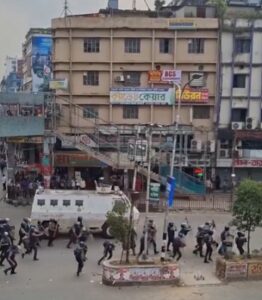
The protests have escalated into road blockades, vandalism, arson and clashes with police. Authorities have deployed tear gas, water cannons and security personnel to disperse demonstrators. At least 529 factories reportedly suspended operations during Sunday’s unrest, affecting nearly one million workers.
The government’s announcement of a six-member wage board on November 1 has failed to immediately calm the streets. The question is whether a wage review can address grievances that extend beyond salary levels to employment insecurity, inflation and working conditions.
Bangladesh’s garment industry employs approximately four million people and contributes more than 80 per cent of the country’s export earnings. Prolonged disruption therefore threatens not only factory owners and international orders but also the livelihoods of millions of households.
Political narratives surrounding the unrest are also becoming increasingly contentious. Allegations of political instigation and sabotage have emerged, while opposition voices are questioning the government’s handling of the crisis. Such claims require independent scrutiny rather than being accepted as explanations for widespread worker anger.
The broader political significance is difficult to ignore. Bangladesh’s post-Hasina transition was expected to deliver stability and institutional renewal. Instead, persistent economic insecurity and labour unrest are testing the credibility of the new administration.
The garment workers’ movement presents Tarique Rahman with an uncomfortable choice: pursue a coercive response that risks deepening resentment, or negotiate a credible wage settlement that recognises workers’ economic realities.
The crisis is a reminder that political change cannot substitute for economic justice. Bangladesh’s streets are demanding more than order. They are demanding dignity, wages and a stake in the country’s future.
Bangladesh on the Brink: Media Faces Fury in Anti-India Protests
Follow The Raisina Hills on WhatsApp, Instagram, YouTube, Facebook, and LinkedIn




About The Author