Fast-Track Courts Won’t Fix Paper Leaks, Says Analyst — “We’ve Tried This Before, and It Failed”
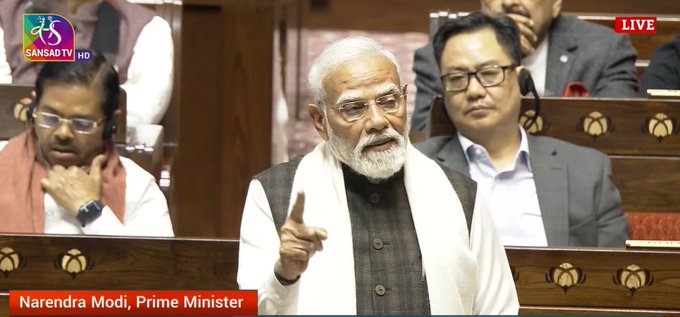
Prime Minister Narendra Modi in Rajya Sabha on Thursday (Image Sansad TV)
By TRH Op-Ed Desk
Manish Anand argues the Modi government’s response to student protests echoes a 13-year-old law that never curbed crimes against women — and warns paper leaks will repeat unless the exam system itself is rebuilt
New Delhi, July 24, 2026 — Political analyst Manish Anand has pushed back hard against the Modi government’s flagship response to the Cockroach Janta Party (CJP) protests — fast-track courts, a decade-long jail term, and a one-crore fine for those behind examination paper leaks — calling it a headline-grabbing gesture rather than a genuine fix.
Anand frames the youth-led agitation itself as a landmark moment, arguing that in twelve years of Narendra Modi’s tenure, no opposition party has managed to mount the kind of pressure that student protesters have now forced onto the government. But he says the proposed remedy exposes a deeper problem: an unwillingness to address why India’s exam system keeps failing in the first place.
The Nirbhaya Precedent
To make his case, Anand points back in his monologue for The Raisina Hills thirteen years, to the aftermath of the Nirbhaya case, when Parliament sat through the night to pass a tough new law against crimes against women, complete with fast-track courts and capital punishment provisions. “If simply setting up courts and prescribing severe punishment could eliminate a crime, offenses against women in this country would have ended thirteen years ago,” Anand said, citing National Crime Records Bureau data that he says shows such crimes have instead grown exponentially since. Conviction rates remain low, he added, because witnesses turn hostile and evidence gathered by police often falls apart in court — while even fast-track courts nationwide are sitting on lakhs of pending cases.
That history, Anand argues, is exactly why announcing fast-track courts for paper leaks is unlikely to satisfy protesters. “This isn’t a solution — it’s a rattle held up to quiet the young people who are out on the streets,” he said.
Contract Staff and a Hollowed-Out NTA
Anand’s sharper critique is aimed at the National Testing Agency, which conducts NEET and JEE exams. He noted that only after student protests intensified did the government terminate 47 officials and employees over lapses — action he says would never have been taken without street pressure. He also cited the education ministry’s own admission in Parliament that a large share of NTA positions are vacant, and that most current staff are on short-term contracts.
“You’ve weakened the institution instead of strengthening it, and that’s exactly why the exam system is riddled with flaws,” Anand said, adding that organized paper-leak rackets have already been dismantled by arrests, yet the underlying vulnerability remains unaddressed.
What UPSC Gets Right
Anand held up the Union Public Service Commission as a comparative benchmark — not flawless, he noted, since interview panels carry their own subjectivity and bias, but still far more consistent than other exam bodies. The difference, he argued, comes down to staffing: UPSC relies on permanent employees rather than contractual ones. “Permanent staff have permanent loyalty; contractual staff don’t — and that gap is where due process and checks and balances break down,” he said, arguing this is precisely how coaching mafias have gained a foothold in NEET and JEE examinations while the government looked away.
A Call for Real Reform, Not Quick Fixes
Anand said genuine reform requires honesty and commitment at a foundational level, not short-term fixes designed to “cap the headline” before the issue resurfaces in a few years, forcing students back onto the streets. He was also critical of cost-cutting measures affecting the exam process — including the use of artificial intelligence in setting and evaluating question papers — asking why savings are targeted here rather than elsewhere, such as unrestricted air travel expenses for politicians. “Don’t play games with the country’s future,” he said.
He further flagged a structural mismatch between the CBSE curriculum and competitive exam syllabi as a root cause of India’s coaching-industry boom, noting that CBSE toppers often fail to qualify for JEE or NEET — a gap he said fuels a multi-thousand-crore coaching industry, including facilities where fatal fires have killed students. Anand called for a detailed review by a parliamentary standing committee, drawing on subject experts, to overhaul the education and examination system comprehensively enough to “settle the question for the next twenty years.”
(Manish Anand is a political analyst. Views expressed in the article solely belong to him.)
Cabinet Clears Tough Paper Leak Law, But Experts Say Deeper Reforms Are Needed
Follow The Raisina Hills on WhatsApp, Instagram, YouTube, Facebook, and LinkedIn




About The Author