Who Got the Seven Foreigners Out? VanDyke’s Russia Allegation Puts India Under Scrutiny
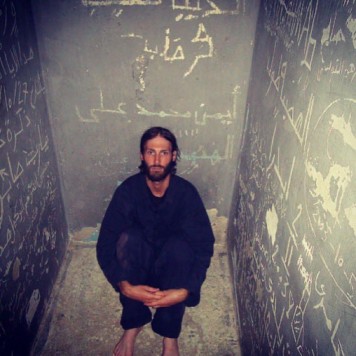
The American national alleges his six-month imprisonment was part of Russia's war against Ukraine. Questions persist over the NIA's investigation, diplomatic intervention and his return to the US. (Image VanDyke on X)
By TRH News Desk
After spending more than six months in Indian custody, American national Matthew VanDyke says his arrest was part of Russia’s war against Ukraine. His promised revelations revive questions about the NIA investigation, the release of seven foreign nationals and India’s handling of a sensitive cross-border security case.
New Delhi, November 10, 2026 — American national Matthew VanDyke has reopened a politically sensitive investigation involving India, Ukraine, Myanmar and Russia, claiming that his arrest and imprisonment alongside six Ukrainian nationals were part of Russia’s war against Ukraine.
“India threw me and several Ukrainians in prison for over six months. This was part of Russia’s war against Ukraine,” VanDyke wrote on X. He promised to disclose what he described as shocking details through social media posts and media interviews over the coming months.
The statement, posted after his release from Tihar Jail, brings renewed attention to a case that had raised serious questions about India’s national security, the activities of foreign military-linked personnel in the Northeast and the movement of drones and military equipment towards Myanmar.
The National Investigation Agency (NIA) arrested VanDyke and six Ukrainian nationals on March 13, 2026. The agency alleged that the group had entered Myanmar through Mizoram and provided training in drone warfare, operations, assembly and jamming technology to ethnic armed groups operating there. The investigation also examined alleged links with armed organisations operating in India’s Northeast.
The case took another turn when the NIA informed a Delhi court that it had received credible information linking some of the accused to a drone attack on a Myanmar National Airlines passenger aircraft at Myitkyina airport on February 20, 2026. The aircraft was damaged while passengers were aboard, although there were no reported casualties.
The agency’s allegations placed the case beyond an ordinary immigration violation. It initially invoked Section 18 of the Unlawful Activities (Prevention) Act (UAPA), dealing with conspiracy to commit terrorist activities.
From terror conspiracy to default bail
The most consequential development came on September 8, when the NIA filed a chargesheet invoking Sections 21 and 23 of the Immigration and Foreigners Act, 2025, without including UAPA provisions. The agency told the court that further investigation into possible UAPA offences remained underway.
On September 18, a special NIA court granted VanDyke default bail, holding that an incomplete chargesheet could not be used to defeat the accused’s statutory right to bail. The other six accused were also entitled to relief.
VanDyke was released from Tihar Jail on September 24. Following his return to India for a court appearance in October, the court permitted him and the Ukrainian co-accused to remain outside the country until the next proceedings in February 2027.
The latest development has raised another question. Journalist Suhasini Haidar has pointed out that the NIA did not oppose VanDyke’s return to the United States. She has sought an explanation from the government on the decision and whether it can ensure his return when required by the court.
The diplomatic question
Political analyst Brahma Chellaney has questioned how seven foreign nationals facing allegations of terrorist conspiracy and activities threatening Indian security were allowed to leave the country. He has also in a post on X raised the possibility of American diplomatic intervention, including the reported involvement of US Secretary of State Marco Rubio.
However, a direct causal link between Rubio’s intervention and the release has not been established in the publicly available court record. The documented legal basis for VanDyke’s release was default bail following the NIA’s incomplete chargesheet and the statutory deadline.
Chellaney’s larger concern is India’s vulnerability to diplomatic pressure in cases involving foreign nationals. His criticism raises a legitimate question about whether national security investigations are being handled with sufficient institutional consistency, although his broader geopolitical conclusions remain contested.
VanDyke’s latest allegation introduces another dimension. By attributing his arrest to Russia’s war against Ukraine, he is suggesting that the case had a geopolitical dimension beyond the NIA’s stated investigation.
India’s Northeast is particularly sensitive in this context. Mizoram shares an international border with Myanmar, where the military conflict has created a complicated security environment involving ethnic armed organisations, the military government and external actors.
Ukraine has also expanded its international cooperation on drone warfare. President Volodymyr Zelensky has publicly discussed deploying Ukrainian drone specialists to train and assist partner countries. But that broader cooperation does not, by itself, establish the allegations against VanDyke and the six Ukrainians.
India still owes answers
The central issue is no longer just what VanDyke intends to reveal. It is whether the government can provide a coherent account of the investigation, the evidence gathered, the decision not to invoke UAPA in the September chargesheet and the circumstances in which the accused were permitted to leave India.
The NIA has maintained that its investigation into possible UAPA offences remains open. The case has not been judicially concluded, and the accused have not been convicted of the allegations.
The government must also clarify the diplomatic dimension. Was there any external pressure? What was the basis for the NIA not opposing VanDyke’s return to the US? What safeguards are in place to ensure that all seven accused comply with future court directions?
The Raisina Hills has previously examined the security and geopolitical implications of this case. VanDyke’s announcement makes it more important to revisit those questions.
Follow The Raisina Hills on WhatsApp, Instagram, YouTube, Facebook, and LinkedIn




About The Author