VanDyke Case: Did India Retreat Under US Pressure?
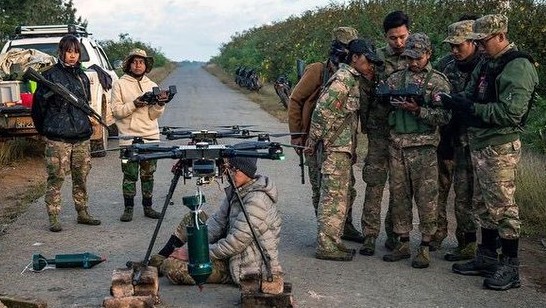
Myanmar Junta has deployed drones against rebels (Image X.com)
By TRH World Desk
Chellaney questions the NIA’s shift from UAPA to immigration charges as Matthew VanDyke and six Ukrainians secure bail and permission to leave India.
New Delhi, September 25, 2026 — The release of US national Matthew VanDyke and six Ukrainian nationals from custody has opened a wider debate over the handling of a case that began as an alleged terror conspiracy and later moved into the domain of immigration offences.
Geopolitical commentator Brahma Chellaney, writing on X, has described the episode as evidence of what he calls India’s “perennial soft state” tendency. He argues that New Delhi has a history of invoking stringent laws before stepping back when cases involving foreign nationals acquire diplomatic significance.
The VanDyke case began in March when the National Investigation Agency arrested the US national along with six Ukrainians. The NIA initially invoked Section 18 of the Unlawful Activities (Prevention) Act (UAPA), alleging a conspiracy linked to terrorist activities. The agency subsequently alleged that the group had travelled through India’s Northeast, crossed into Myanmar and provided training in drone warfare, including drone assembly, operations and jamming technology.
The Raisina Hills had earlier reported on the arrests and the broader security questions surrounding the India-Myanmar frontier, including allegations of foreign involvement in networks operating around the Northeast.
The case took a significant turn in September. In its chargesheet, the NIA invoked Sections 21 and 23 of the Immigration and Foreigners Act, 2025, rather than UAPA provisions. The agency has maintained that its investigation into the alleged terror conspiracy remains open and that a supplementary chargesheet could follow if further offences are established.
A Delhi court subsequently granted VanDyke default bail after the statutory period for completing the investigation had expired. The court later permitted VanDyke and the six Ukrainians to travel to their respective countries for a limited period, subject to conditions.
This sequence is central to Chellaney’s argument.
He wrote on X that the decision to allow VanDyke and the Ukrainians to leave India was “more than an isolated legal reversal” and questioned whether India retreats from enforcement when geopolitical pressure becomes significant.
There is evidence that the case had entered diplomatic channels. VanDyke’s family said in August that US Ambassador to India Sergio Gor had briefed External Affairs Ministry officials and US Secretary of State Marco Rubio about the case during Rubio’s May visit to New Delhi. Reports also said the matter was expected to be raised during high-level India-US engagements.
However, the available public record does not establish that US pressure caused the NIA to omit UAPA provisions from its chargesheet. The Ministry of External Affairs has described the matter as a legal issue that would proceed according to court directions, while the NIA has said its wider UAPA investigation remains open.
The case is not legally closed. The omission of UAPA charges from the first chargesheet does not amount to a judicial finding that the allegations were false, nor does it constitute a conviction. At the same time, the accused have not been convicted of the alleged terror conspiracy.
Chellaney places the episode within a larger historical argument about India’s handling of sensitive cases involving foreign interests, citing examples such as the Bhopal gas disaster, the Purulia arms-drop case, the Enrica Lexie dispute and the Bofors controversy.
The broader question, therefore, extends beyond VanDyke himself: when national-security allegations involve foreign nationals and major diplomatic relationships, how should India balance due process, strategic interests and the enforcement of its own laws?
The VanDyke case remains particularly significant because the NIA’s investigation into the alleged cross-border drone network and its links to Myanmar-based armed groups has not been formally brought to an end.
For New Delhi, the next stage of the investigation—and any supplementary chargesheet—could provide a clearer picture of whether the initial terror allegations can be legally substantiated or whether the case ultimately remains confined to immigration and permit violations.
Myanmar drone case explained: Foreign interference in Northeast
Follow The Raisina Hills on WhatsApp, Instagram, YouTube, Facebook, and LinkedIn




About The Author