Xi Replaces Tibet Boss Wang Junzheng After Nepal Disaster: Coincidence or Political Signal?
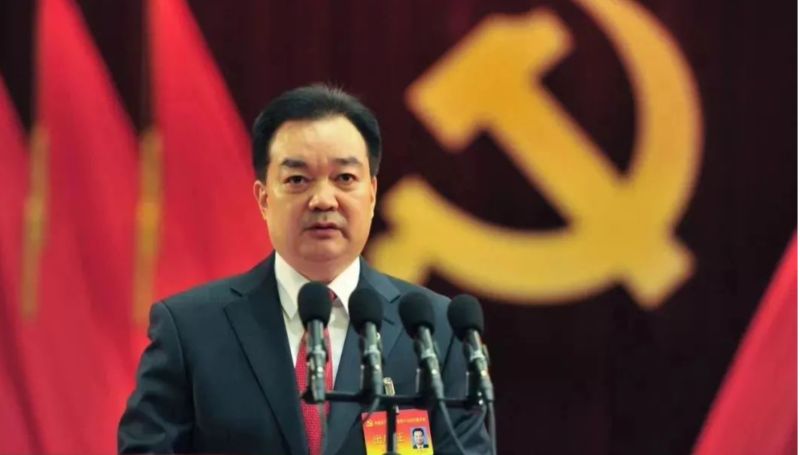
Hu Changsheng replaces Wang Junzheng as Tibet’s Communist Party secretary following a wider Chinese provincial leadership reshuffle. (Image Chinese state media)
By TRH World Desk
Wang Junzheng is replaced by Hu Changsheng after five years as Tibet’s Communist Party chief; analysts are debating whether the timing carries a wider political message
New Delhi, September 25, 2026 — China has replaced Wang Junzheng as Communist Party secretary of Tibet, bringing a five-year tenure to an end just weeks after a catastrophic Himalayan disaster intensified scrutiny of cross-border disaster preparedness and information sharing.
The Chinese Communist Party announced on September 22 that Hu Changsheng, previously party secretary of Gansu, would replace Wang as Tibet’s top political official. Wang, 63, will no longer serve on the Tibet regional party leadership. Chinese state media described the move as a decision made after “overall consideration” and said Wang was leaving because of age.
The timing, however, has prompted political speculation.
Sinologist and China analyst Frank Lehberger, writing on LinkedIn, argued that Wang’s removal was connected to the fallout from the August 26 Nepal-Tibet border disaster. Lehberger described Wang as the “butcher of Tibet” and alleged that he had become a scapegoat for what he characterised as China’s inadequate disaster communication.
Those are Lehberger’s interpretations, not established findings. Current reporting does not establish that Beijing removed Wang because of the Nepal disaster or that Xi Jinping personally ordered his dismissal for that reason.
The Nepal disaster question
The August disaster was catastrophic. A rock-and-ice collapse near Langtang Lirung generated a massive debris flood affecting the Nepal-China border area, killing more than 1,400 people and leaving thousands missing. Scientific assessments have linked the event to the instability of the Himalayan cryosphere.
There is, however, an important geographical distinction. ICIMOD says the 2026 collapse that triggered the disaster occurred at Langtang Lirung inside Nepal, while the resulting debris flow entered the Lhende Khola and affected both the Nepalese and Chinese sides of the border. This differs from the July 2025 Rasuwa disaster, whose triggering event occurred in Tibet.
The disaster did expose serious shortcomings in cross-border warning arrangements. Reuters reported that Nepal is now planning to rebuild an early-warning system along the China border and has sought more real-time Chinese data on glacier movements and upstream water levels.
There is also evidence that the issue predates this year’s catastrophe. Following a July 2025 flood, Nepalese officials had sought a cross-border early-warning mechanism with China. A Stimson Center assessment said Chinese authorities had committed to developing a site-based warning system.
That record supports questions about preparedness and information-sharing. It does not, by itself, establish that Wang deliberately obstructed such a system or that hundreds of deaths could have been prevented.
Why Wang’s removal matters
Wang had served as Tibet’s party secretary since October 2021. Before that, he held senior security and political positions in Xinjiang and was sanctioned by the United States in 2021 over alleged serious human-rights abuses. Radio Free Asia subsequently described him as the “butcher of Xinjiang” in its reporting on his transfer to Tibet.
Lehberger’s use of “butcher of Tibet” therefore reflects his own characterisation and should not be presented as an established official designation.
The more consequential question is what Hu Changsheng’s appointment signals. Hu has pledged to maintain stability, ethnic unity and Beijing’s policies on separatism and religious affairs in Tibet.
The leadership change also comes ahead of important Communist Party meetings and the next national political cycle. Reuters notes that the broader reshuffle has simultaneously changed the party chiefs of Tibet, Gansu and Qinghai.
For now, the evidence supports a cautious conclusion: Wang has been removed, the timing is notable, and the Nepal disaster has exposed unresolved cross-border warning problems. But a direct causal link between the disaster and Wang’s removal remains unproven.
That distinction will matter as Beijing’s next moves in Tibet, Nepal and the wider Himalayan region come under closer scrutiny.
In 1962, Xi Jinping’s father was purged. The experience shaped the man who now leads China
Follow The Raisina Hills on WhatsApp, Instagram, YouTube, Facebook, and LinkedIn




About The Author