Delhi-NCR Smog Alert: Why Punjab, Haryana and Western UP Are Facing Worse Air Quality
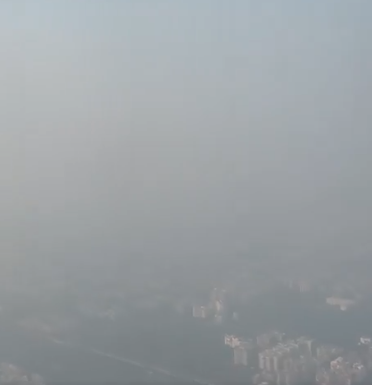
Northwesterly winds are reportedly carrying stubble-burning smoke across the northern plains, worsening air quality beyond Delhi-NCR. (Image video grab)
By TRH News Desk
Weatherman Navdeep Dahiya says northwesterly winds are carrying stubble-burning smoke across Punjab, Haryana and western Uttar Pradesh, with air quality in several areas reportedly worse than parts of Delhi-NCR.
New Delhi, November 3, 2026 — Delhi-NCR’s air pollution crisis is no longer a story confined to the national capital. On the morning of November 3, air quality across Punjab, Haryana and western Uttar Pradesh was reportedly significantly worse than in some core areas of Delhi-NCR, according to weatherman Navdeep Dahiya.
In a post on X, Dahiya attributed the pollution pattern to stubble burning across Pakistan and Punjab, with limited instances reported in northern Haryana over the preceding 24 hours. He said smoke plumes had settled more heavily across these regions because of the prevailing northwesterly winds.
The geographical alignment of the smoke, according to Dahiya, is crucial to understanding the changing pollution map across the northern plains.
West-central Punjab, northern and central Haryana, and western Uttar Pradesh were directly exposed to the movement of smog under relatively calm northwesterly wind conditions. The result, he suggested, was a pollution concentration that extended beyond Delhi-NCR and affected a wider belt of northern India.
Delhi-NCR could face another deterioration
Delhi itself was hardly breathing easy. Dahiya said air quality readings across Delhi-NCR monitoring stations were in the range of 300 to 500, indicating a severe pollution episode.
He warned that conditions could deteriorate further during the day as the smog and wind alignment shifted towards the national capital.
The observation challenges the tendency to treat Delhi as the sole centre of the winter pollution crisis. Smoke, atmospheric conditions and regional geography do not respect administrative boundaries. The pollution affecting Delhi is part of a broader airshed that stretches across neighbouring states and, in this instance, reportedly includes smoke originating in Pakistan.
Dahiya advised people across the northern plains to wear masks when outdoors and limit outdoor exposure wherever possible.
Green firecrackers and the seasonal pollution debate
The latest pollution episode also comes amid renewed debate over the use of green firecrackers following a Supreme Court verdict.
Green firecrackers have remained contentious in Delhi-NCR, particularly after last year’s prolonged spell of smog. Their use raises familiar questions about enforcement, public celebrations and the effectiveness of restrictions during periods of hazardous air quality.
However, the latest observations underline a larger problem: seasonal pollution cannot be addressed through a single measure or by focusing exclusively on Delhi.
Stubble burning, wind direction, regional pollution sources and local emissions all contribute to the wider crisis. The northern plains need a coordinated response that goes beyond city boundaries and seasonal firefighting.
As winter pollution intensifies, the challenge is not merely to bring Delhi’s AQI down. It is to protect millions of people across an interconnected region where smoke can travel far beyond the fields and cities where it originates.
Follow The Raisina Hills on WhatsApp, Instagram, YouTube, Facebook, and LinkedIn




About The Author