Dhaka Garment Worker Protests: Wage Board, Violence, Blame
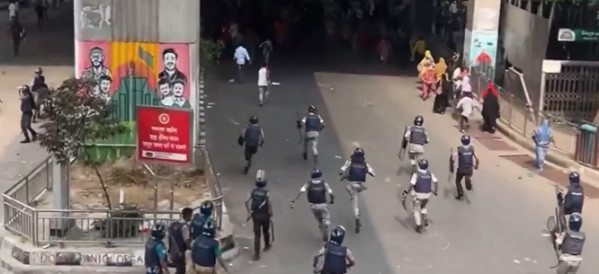
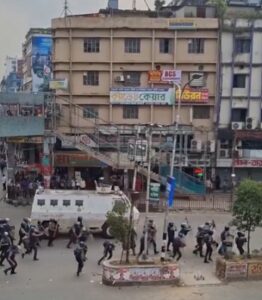
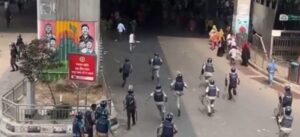
Garment workers demanding a Tk 30,000 minimum wage clashed with police in Dhaka, Gazipur and Savar. (Image video grab)
By TRH World Desk
Dhaka Garment Unrest: Wage Protests, Violence and a New Wage Board, Bangladeshi Outlets Report
New Delhi, November 3, 2026 — For three days, Bangladesh’s garment belt has been a wage dispute and a public-order crisis at once. Both are real, and Dhaka’s response so far suggests officials are treating them as one problem.
Prothom Alo reported that on Sunday protests, blockades and vehicle arson hit Mirpur in Dhaka, Kaliakair in Gazipur, and the industrial zones of Savar and Ashulia, all over a demand for a Tk 30,000 minimum monthly wage.
New Age reported that production at more than 500 factories was suspended, with clashes and vandalism in Dhaka, Gazipur and Savar. In Gazipur, traffic on the Dhaka-Tangail highway was halted for nearly six hours. Two police officers were reportedly hurt by bricks in Ashulia, and Prothom Alo reported a pickup van and a garment-waste warehouse were torched in Kaliakair, with firefighters reportedly obstructed.
On Monday, the Dhaka Tribune reported that at least 264 factories in Savar and Ashulia declared general holidays for the third consecutive day, with workers also demanding an end to blacklisting and layoffs. Police fired tear gas, workers threw bricks and stones, and two workers were detained. The Daily Star reported police used tear gas and water cannons after a rumour that workers had been detained, while police said no cases had been filed and no one held in that incident. Prothom Alo said Gazipur’s police had arrested 30 people.
The labour minister announced a new wage board on Sunday and urged workers to return. Prime Minister Tarique Rahman held a meeting with the home and labour ministers. Law enforcement agencies said leaders and activists of the banned Awami League had joined the violence in Dhaka and Gazipur, according to Prothom Alo, and the paper reported the home minister said factory owners, a former MP and a former state minister were involved in the protests.
New Age reported manufacturers warned they might be forced to close factories if disorder continued despite the wage board.
Both explanations can be true at once. Workers’ demands are tangible: higher pay, an end to blacklisting and no layoffs. At the same time, arson and attacks on police are not wage bargaining, and political groups exploiting unrest is a familiar pattern in Bangladesh. The danger is that a security-first narrative lets officials avoid the bargaining table. Each night of closures also costs workers wages they cannot spare.
Dhaka can restore order by force, but only a credible wage process will keep workers off the streets. The test of the new wage board is whether it can deliver before the next round of closures.
Bangladesh’s Garment Workers Revolt: Wage Anger Tests Tarique Rahman
Follow The Raisina Hills on WhatsApp, Instagram, YouTube, Facebook, and LinkedIn




About The Author