‘No Blanket Immunity’: Court Clears Path for Trump Jan. 6 Lawsuits
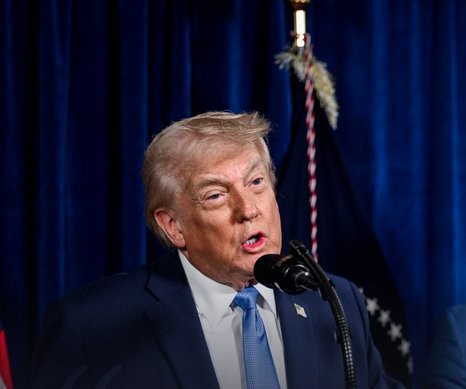
US President Trump delivers remarks on Operation Epic Fury from the White House.
Judge Amit Mehta rules Trump’s rally speech may qualify as incitement, rejecting broad presidential immunity claims
By P. SESH KUMAR
New Delhi, April 3, 2026 — On January 6, 2021, a mob of President Trump’s supporters stormed the U.S. Capitol amid efforts to overturn the 2020 election. In the aftermath, civil lawsuits were filed against Trump by lawmakers and police officers injured in the riot, alleging he incited the violence. After years of litigation, U.S. District Judge Amit Mehta ruled (Mar. 31, 2026) that Trump’s January 6 rally speech was not protected official conduct and that he could be sued for it
Judge Mehta found Trump’s rally exhortations (“We fight … like hell … if you don’t fight like hell, you’re not going to have a country anymore”) and his calls to “walk down Pennsylvania Avenue” were “plausibly words of incitement not protected by the First Amendment”
By denying Trump presidential immunity for much of his January 6 conduct, the decision clears the way for a possible trial (though Trump has asked for interlocutory appeal)
The case (consolidated as Lee, Thompson, Ortiz and Smith v. Trump) charged Trump and associates with conspiracy and intentional torts (assault, battery, civil rights violations) under 42 USC §1985 (Ku Klux Klan or KKK Act) and related laws, alleging that Trump and allies joined the January 6 mob to prevent certification of Biden’s victory. Plaintiffs included Rep. Bennie Thompson (then Homeland Security Committee chair), Reps. Swalwell, Nadler, and police officers who defended the Capitol. They argued Trump’s “Stop the Steal” rally speech at the Ellipse immediately before the riot (“fight like hell”) was outside any official duty, indeed aimed at election interference. Trump’s team countered that even if he was running for office, his words were official in that he was fulfilling presidential duties. They invoked broad notions of “official act” immunity and even the Impeachment Clause (arguing a president can only be prosecuted if first impeached and removed)
Plaintiffs replied that Trump’s speech was plainly campaign rhetoric, that courts have long held that campaign activities are not protected by presidential immunity and that the 1871 KKK Act plainly prohibits election-related violence.
Background
On Jan. 6, 2021, President Trump held a rally in Washington, D.C., on the Ellipse. In his address- considered replete with false claims of election fraud-he had exhorted the crowd to protest near the Capitol and “fight like hell” to overturn the results. Soon after the speech, a mob breached the Capitol, assaulting police and disrupting the certification of Joseph Biden’s victory. Afterwards, Congress created the House Jan. 6 Committee to investigate; Trump repeatedly blamed others (e.g. Pelosi, conspiracies) even after the riot. Meanwhile, plaintiffs sued under the Civil Rights Act of 1871 (42 USC-1985(1)), which prohibits conspiring to intimidate Congress or law enforcement from their duties. They alleged Trump conspired with the rioters, including extremist groups (Proud Boys, Oath Keepers), to stop certification.
How Trump’s Supreme Court Defeat Made War on Iran Inevitable
Legal Issues and Precedents
Central issues include (a) presidential immunity: can Trump be sued for these acts, or are they “official duties” shielded by the Constitution; (b) incitement vs. protected speech: did his words cross the “imminent lawless action” threshold from Brandenburg v. Ohio (1969); and (c) statutory applicability: do the KKK Act claims survive.
On immunity, the parties clashed over Supreme Court precedent. The key case is Nixon v. Fitzgerald (1982), which held presidents are immune from civil damages for official acts (to allow them to do their job without fear of lawsuits). By contrast, Clinton v. Jones (1997) held immunity does not cover unofficial acts even if done while president. Here, both sides cited Trump v. United States (the 2024 Supreme Court case on Trump’s criminal immunity)
There, a narrow 6-3 majority held some immunity: former presidents have absolute immunity for core official acts, and presumptive immunity for all acts within the “outer perimeter” of their duties
But “private” acts remain prosecutable. The Justices remanded to determine which actions (if any) fell within Trump’s official duties. In dissent, the liberal Justices warned this gives presidents too much leeway
Mehta’s ruling closely follows that framework. After Trump lost at the District Court in 2022 (Thompson v. Trump, 590 F.Supp.3d 46) – a decision upheld by the D.C. Circuit (Blassingame v. Trump, 87 F.4th 1 (D.C. Cir. 2023))- Judge Mehta again held Trump not immune for most Jan. 6 conduct
He agreed the Ellipse rally speech was campaign/political (not within constitutional duties of a sitting president) and so fell outside Fitzgerald immunity. (For example, running for re-election and urging protest of Congress is not in the President’s lawful job description.)
Mehta did carve out immunity for Trump’s purely official acts that day -specifically, remarks Trump made in the White House Rose Garden and communications with DOJ during the riot -deeming those protected
But he found that Trump’s public rally speech and many of his tweets were political campaigning, not official decisions, and thus not immune.
Regarding incitement, Mehta reaffirmed that Trump’s rally language was “plausibly words of incitement not protected by the First Amendment.
Under Brandenburg v. Ohio, speech urging imminent lawless action is unprotected if it is directed to inciting violence and likely to produce it. Quoting Brandenburg, Judge Mehta noted that Trump’s use of phrases like “we fight like hell” and telling supporters to march on the Capitol were “an implicit call for imminent lawless action”
He had already ruled this way in 2022. In the 2026 ruling, Trump had argued (citing Counterman v. Colorado, 2023) that intent matters, but Mehta rejected the request to reconsider the incitement finding, certifying it for appeal instead
The judge thus kept in play both the incitement theory and the tort claims.
Trump’s lawyers (led by Jesse Binnall) contended that all his Jan. 6 actions were undertaken in his “official capacity” as President-a position the AP news reports as claiming “absolute immunity from civil and criminal claims for acts in their singular role”
They argued that the Rally was part of carrying out his duties (perhaps by enforcing federal laws or ensuring election integrity). They also invoked the Constitution’s Impeachment Clause (Art. I, §3, cl.7) to suggest that criminal liability for a President requires impeachment first (an argument rejected by Supreme Court in the immunity case). Finally, Trump’s side asserted First Amendment protection- that his speech, however offensive, was political speech about elections and protest
Prosecution/ Plaintiff Arguments
Plaintiffs (and Department of Justice or DOJ in supporting Westfall) argued that constitutional immunity only covers official acts, not purely campaign or private activity. They noted Trump’s own statements (“fight like hell”) and the content of the rally made it obvious he was acting as a candidate seeking to disrupt certification, not as head of state. The District Court accepted this: Mehta emphasized that Trump’s acts “fell outside the scope of presidential duties”
The plaintiffs also urged that the Westfall Act (which can substitute the U.S. as defendant for wrongful acts of federal employees) did not apply here, because Trump’s acts were not within the scope of his employment. Judge Mehta agreed, striking the DOJ’s Westfall certification-meaning Trump remains personally liable. On incitement, the plaintiffs relied on Brandenburg, arguing Trump’s words at the rally were meant to produce imminent unrest. The court agreed they “plausibly” were unprotected incitement.
Legal Impact on the Presidency
Mehta’s ruling makes clear that even a President is not above lawsuits for certain misconduct. It does not strip the presidency of needed powers; it merely rejects an unprecedented extension of Fitzgerald immunity. Typically, immunity from suit ensures officials can perform duties without distraction, but this decision signals that a President cannot use that immunity as a cloak for unofficial or criminal behaviour. The ruling explicitly leaves open that genuine official acts remain protected.
Importantly, it does not erode the core of the presidency- a future President still could not face lawsuits over, say, signing a treaty or commanding troops. But actions taken purely for personal or political ends (even if done on the job podium) are fair game. This aligns with constitutional separation of powers, preventing a president from simply declaring any act “official” to avoid accountability. Among others, constitutional scholar Emily Bazelon has reportedly noted that the decision underscores that “no one, including the president of the United States, is above [the law]”, a principle central to democracy.
Prosecution (Plaintiffs’) Stance
The plaintiffs’ attorneys hailed the decision as a victory for the rule of law. They maintain that holding Trump accountable is necessary to deter future assaults on democratic processes. They also see it as consistent with the notion that candidates have no immunity for election-related acts. Going forward, the plaintiffs will prepare for trial, now that the Westfall excuse is gone. They likely aim to introduce evidence and testimony to show Trump knew the rally was dangerous and intended to disrupt Congress. The ruling permits such a trial to proceed, though at an accelerated pace (certified for appeal) or possibly delayed by interlocutory appeals.
Trump’s Position Going Forward
Trump’s legal team will almost certainly appeal. They have already asked the D.C. Circuit to review the immunity ruling. The judge in this case certified the question for interlocutory appeal (before final judgment), meaning the appellate court can consider Trump’s immunity claims now. If the D.C. Circuit or ultimately the Supreme Court reverses or tempers Mehta’s approach, Trump could get partial immunity. Trump also preserved his First Amendment challenge for appeal. In addition, he could file separate appeals or writs on Westfall or on the incitement analysis. Meanwhile, as President in his second term, Trump is shielded by DOJ policy from criminal prosecution, but these are civil cases, so he must engage in litigation like any defendant. If these cases ever went to trial and Trump prevailed, he could further appeal, potentially up to the Supreme Court.
Ways Forward
For now, the immediate “way forward” is appellate. The D.C. Circuit will review whether the District Court correctly identified which acts were “official.” That involves fine-grained analysis of context (see Trump v. United States and Blassingame). If the circuit disagrees with Mehta on immunity, it could limit what goes to trial. Alternatively, if the circuit affirms, the case would proceed to a jury trial on the merits (liability and damages). On the First Amendment, the ultimate arbiter could be the Supreme Court, which will have the chance to clarify whether Counterman changed any incitement standards.
Other Trump Legal Cases (2026 status)
Beyond Jan. 6, Trump faces (or recently faced) numerous legal battles:
New York Hush-Money Case: Trump was criminally charged by Manhattan DA Alvin Bragg for falsifying records related to hush-money payments. The trial was held April–May 2024, ending with a conviction on all 34 counts
However, after Trump won the 2024 election, sentencing was deferred. In January 2025 he was given an “unconditional discharge” (no jail or fine), apparently under terms of a deal with the new Trump administration (the details are opaque). Trump is appealing the conviction; as President he cannot be re-sentenced now, and a pardon would remove the finality of the case. The likely result: the conviction may ultimately be vacated or pardoned, so this case will not impose punishment on Trump.
Classified Documents (Mar-a-Lago) Case: In 2022 Trump was indicted on 40 counts for retaining classified documents. Judge Aileen Cannon (a Trump appointee) dismissed the charges in September 2024, holding Special Counsel Jack Smith was not lawfully appointed. The DOJ under Biden appealed, but after Trump’s 2024 victory they dropped the appeal (DOJ policy forbids prosecuting a sitting president). In February 2025 the 11th Circuit formally dismissed Trump’s appeal
Thus all charges and appeals were dropped, and this case is effectively closed without conviction
January 6 (Criminal) Case: Special Counsel Jack Smith also indicted Trump in 2023 on four federal counts related to the Capitol riot (obstruction, conspiracy, etc.). Judge Cannon again dismissed those charges in May 2023, citing the same appointment issue. Smith appealed, but again DOJ policy halted the appeal after the 2024 election, so the case ended without a trial
Thus Trump has not been criminally tried for Jan. 6 and faces no active criminal case, at least while he is president.
Civil Defamation (E. Jean Carroll)
Trump lost two civil suits by writer E. Jean Carroll for defaming her when denying her rape allegation. In May 2023 a New York court awarded Carroll over $80 million (punitives and compensatories). Trump is appealing that judgment; the case could reach the New York Court of Appeals. Still, that is a civil case, not criminal, and typically debts from defamation do not bar a president from office.
St. Louis Attorneys General Challenge
The Missouri and Louisiana Attorneys General filed suit in 2023 seeking to disqualify Trump from the 2024 ballot under the 14th Amendment (insurrectionist clause). The Supreme Court heard the case (Trump v. Anderson) in early 2024 and ultimately rejected it on political-question grounds (meaning it didn’t decide on merits). Trump was thus allowed on the ballot and won the 2024 election.
Other Investigations
Trump has been questioned or investigated for various state-level matters (Georgia 2020 election interference, etc.). No indictments have been reported as of March 2026. The Georgia Fulton County probe is ongoing, but so far no charges against Trump personally.
Likely Results of Other Cases
The Manhattan conviction’s practical effect is likely nullified by pardon or impeachment, given Trump’s regained power. The New York State case might result in a pardon or settlement if not already resolved. The Carroll defamation judgments can be appealed but again may be rendered moot by pardon. The special counsel cases ended without trial. In sum, Trump’s election as president has largely frozen or dissolved his federal criminal liabilities.
Appeals and Rights
Trump has the right to appeal unfavorable civil rulings. In the Jan. 6 civil suit, he can appeal immunity and First Amendment decisions to the D.C. Circuit, and eventually seek Supreme Court review if a final decision is reached. As president, he also can invoke executive privilege or litigation privilege in some contexts, but courts have limited those. His civil rights cases (like the Jan. 6 suits and Carroll defamation suits) allow appeals through the normal federal and state channels. If any case reached trial and led to damages, Trump could also claim presidential protections (which the Jan. 6 court mostly rejected). Ultimately, though, his main recourse is appeal, as pardons only apply to criminal convictions (which he has largely sidestepped or ended by reelection).
Judge Mehta’s 79-page opinion thus makes clear that the January 6 lawsuits against Donald Trump survive to press toward trial. It reflects a careful line-drawing: official acts immune, overtly political acts not. The decision underscores that a President’s words can be subject to civil liability if they incite violence, echoing Damion Hewitt of the Lawyers’ Committee: no one, not even a president, is above the law.
The saga of Trump’s Jan. 6 and election subversion cases highlights a constitutional check: immunity exists for governance, not cover for personal schemes. The final chapters may be written by appellate courts, but the story affirms that violent breaches of democracy can trigger accountability-even for a President.
Pam Bondi Fired Before Trump Speech; Epstein Files Loom Large
Follow The Raisina Hills on WhatsApp, Instagram, YouTube, Facebook, and LinkedIn




About The Author