Russia Counts Oil Windfall as Trumpism Tanks in Iran War
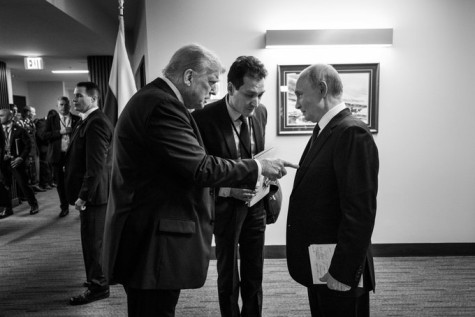
US President Donald Trump speaking to Russia's President Vladimir Putin! (Image The White House)
Hormuz Closure, Tanker Attacks, and Surging India-China Demand Are Turbocharging Putin’s War Chest — While the West Watches Helplessly
By TRH World Desk
New Delhi, March 14, 2026 — Russia is reaping a staggering $150 million per day in oil revenues as the fallout from Iran’s escalating regional conflict reshapes global energy markets, according to a front-page report published by the Financial Times.
The surge in income — described by the FT as the single largest windfall boost to Moscow’s finances since the invasion of Ukraine — comes as Brent crude prices spiked above $100 per barrel following a series of tanker attacks in the Gulf. The attacks have injected acute supply anxiety into an already strained global energy market, dramatically inflating the value of every barrel Russia exports.
With the Strait of Hormuz facing increasing disruption, buyers across Asia have moved urgently to lock in alternative supplies. Russia has emerged as the dominant beneficiary, with oil sales to India and China surging sharply to fill the void left by disrupted Gulf flows. At the same time, Moscow is actively consolidating its grip over secondary energy markets, squeezing out Gulf producers who would otherwise absorb the demand.
The FT reports that Russian state finances — battered by two years of Western sanctions — are experiencing a significant recovery. Energy analysts cited in the report estimate that at current elevated price levels, Russia earns hundreds of millions more per week on existing export volumes alone, providing critical breathing room to fund continued military operations in Ukraine.
The geopolitical irony is stark and has not been lost on Western officials. Efforts to contain Iran’s regional aggression are simultaneously accelerating a financial windfall for Moscow — a second adversarial power the West has spent three years trying to isolate economically.
“High oil prices are, effectively, a subsidy to Putin’s war machine,” one European energy official told the Financial Times, capturing the dilemma now facing policymakers in Washington, Brussels, and London.
With no swift resolution in sight in either the Iran conflict or the Ukraine war, analysts warn the $150 million-a-day revenue stream could persist — or grow — for months to come, further complicating Western strategic calculations heading into a volatile summer.
Follow The Raisina Hills on WhatsApp, Instagram, YouTube, Facebook, and LinkedIn




About The Author