Trump’s Iran War Bind: The Biggest Illusion of Middle East Conflict
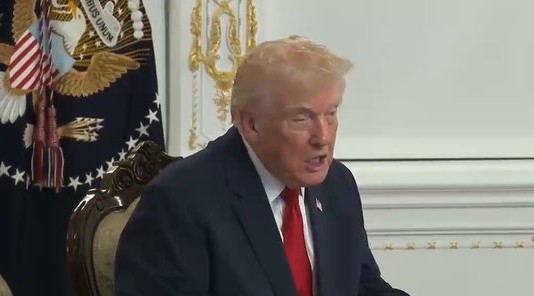
US President Donald Trump speaks after the killing of US National Guard Sarah Beckstrom in DC shootout. (Image X.com)
University of Chicago political scientist Robert A. Pape identifies four recurring strategic patterns that explain why wars begun with confidence in rapid victory almost always spiral beyond any leader’s control
By TRH World Desk
New Delhi, March 13, 2026 — As the US-Israel war on Iran grinds past its second week with no end in sight, one of America’s leading scholars of military strategy is issuing a blunt warning: Donald Trump does not control when this war stops — and believing otherwise may be the most dangerous illusion in Washington right now.
Robert A. Pape, Professor of Political Science at the University of Chicago and one of the world’s foremost experts on the strategic logic of war, laid out his analysis in a series of posts on X, identifying what he calls the Escalation Trap — a pattern that has ensnared powerful leaders across modern history, and one he argues is already operating in the current conflict.
“Ending the war would require Israel stopping assassinations, Russia stopping support to Iran, and Iran choosing to stop retaliation,” Pape wrote, adding: “Once wars enter the Escalation Trap, even powerful presidents lose control over stopping them.”
Pape identifies four strategic patterns now visibly at work in the Iran conflict — each drawn from repeated historical precedent.
The first is the Escalation Trap itself. Early battlefield success produces strategic disappointment rather than resolution. Rather than reconsidering strategy, leaders respond by escalating further — creating a cycle in which tactical success feeds political failure, which feeds more escalation.
The second is Horizontal Escalation. When a weaker state faces overwhelming military power, it widens the theatre of war geographically rather than absorbing defeat. Iran, Pape argues, is doing precisely this — through attacks on shipping in the Strait of Hormuz and strikes on Gulf energy infrastructure, drawing in new players and new vulnerabilities.
The third pattern Pape calls the Smart Bomb Trap. Precision strikes can produce dramatic short-term results, but they rarely collapse regimes. Instead, the bombing campaign expands while the opponent retaliates asymmetrically — hitting the attacker where it is most exposed.
The fourth and perhaps most historically consistent pattern concerns air power and regime change. Bombing, Pape argues, changes the political incentives of a civilian population in ways that almost always work against the attacker’s objectives. “Foreign attack leads to nationalist mobilisation, which leads to regime consolidation,” he writes — the opposite of the regime change that air campaigns typically promise to deliver.
Taken together, these four patterns explain a recurring tragedy in modern conflict: wars that begin with confident expectations of rapid, decisive success routinely spiral into something far larger, longer, and more destructive than any of their architects anticipated.
For a war that the Trump administration has repeatedly declared won — while the fighting continues — Pape’s framework offers a sobering corrective. The Iran war, he suggests, is not unfolding as its architects expected. It rarely does.
Russia Emerges as the Quiet Winner of the Iran–US–Israel War
Follow The Raisina Hills on WhatsApp, Instagram, YouTube, Facebook, and LinkedIn




About The Author