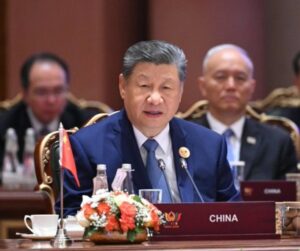
RN Ravi as West Bengal Governor: Prez Rule Fears Grip Kolkata
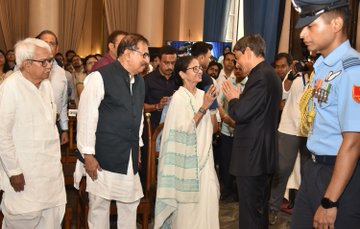
West Bengal CM Mamata Banerjee greets R. N. Ravi as he is sworn in as the Governor (Image X.com)
A tough IPS veteran close to Modi, Shah and Doval lands in Raj Bhavan as BJP stays away from the oath ceremony — and Trinamool’s rattled leadership braces for the most consequential political confrontation Bengal has seen in years
By NIRENDRA DEV
Kolkata, March 13, 2026 — The Centre’s decision to appoint RN Ravi as West Bengal’s 22nd Governor has detonated like a political bomb in Kolkata — and the question now ricocheting through Bengal’s corridors of power is blunt and urgent: is this a prelude to President’s Rule?
Ravi was sworn into office by Sujoy Paul, Chief Justice of the Calcutta High Court, on Friday, with Chief Minister Mamata Banerjee, Assembly Speaker Biman Banerjee, senior minister and Kolkata Mayor Firhad Hakim, and Left Front chairman Biman Bose all present. Conspicuously absent was the entire BJP leadership — not a single saffron party figure attended the ceremony.
Analysts say the BJP’s no-show was almost certainly deliberate. The absence was likely calculated to ensure Ravi does not walk into Raj Bhavan already branded as a BJP functionary — sidestepping any controversy about his political proximity before he has even unpacked. It is a studied neutrality designed to give him maximum constitutional room to maneuver.
That room, in the hands of RN Ravi, is precisely what is alarming the Trinamool Congress.
Analysts say Home Minister Amit Shah played Chanakya in handpicking Ravi for Kolkata — a man described uniformly as a tough nut, a proven confrontationist, and an operator with deep state instincts honed across decades. Considered close to PM Narendra Modi, Amit Shah and NSA Ajit Doval, Ravi is no ceremonial figurehead.
Born in Patna, Bihar, Ravi completed his Masters in Physics in 1974 before joining the Indian Police Service in 1976. His career took him through the CBI, where he led anti-corruption crusades against organised criminal networks, and through the Intelligence Bureau, where he served in India’s most volatile insurgency theatres — Jammu and Kashmir, the Northeast and Maoist-affected regions. In Nagaland, where he served as Governor, he picked public fights with Chief Minister Neiphiu Rio and took on the state’s powerful extortion syndicates head-on — a Governor who governed, not just presided.
His Tamil Nadu tenure was equally combative. Ravi broke from the traditional aloofness of the office, making Raj Bhavan accessible to civil society, personally addressing over one lakh students on nation-building, and distributing more than 50,000 university certificates himself across 24 convocation sessions. He also clashed repeatedly and publicly with the DMK leadership — a pattern that ultimately led to his removal from the post.
Now he arrives in West Bengal — a state where Raj Bhavan and the TMC government have long been at war — with that full biography intact.
Mamata Banerjee, who initially said she was “shocked and deeply concerned” by the resignation of his predecessor CV Ananda Bose on March 5, attended Friday’s oath ceremony. The smile was present. The tension underneath it was unmistakable.
With a battle-hardened Governor now installed in Raj Bhavan, a rattled Trinamool government watching its back, and assembly elections bearing down on Bengal, the stage is set —for “one of the most consequential political confrontations the state has seen in years.”
(This is an opinion piece. Views expressed are author’s own.)
West Bengal Elections: BJP Faces Bengal’s Cultural Resistance
Follow The Raisina Hills on WhatsApp, Instagram, YouTube, Facebook, and LinkedIn




About The Author