Trump’s Birthright Citizenship Order Reaches Supreme Court
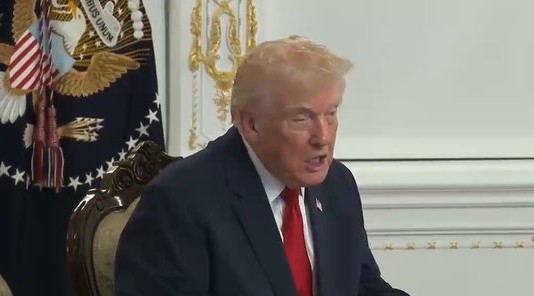
US President Donald Trump speaks after the killing of US National Guard Sarah Beckstrom in DC shootout. (Image X.com)
For the first time in history, a sitting US president may attend Supreme Court oral arguments as his executive order faces its ultimate legal test
By TRH World Desk
New Delhi, April 1, 2026 — The United States Supreme Court convened Wednesday to hear arguments on one of the most consequential constitutional questions of the Trump presidency — whether the president’s executive order ending birthright citizenship violates the 14th Amendment.
The case, Trump v. Barbara, puts at stake a citizenship guarantee that has stood for over a century, and could directly impact more than 250,000 babies born in the United States every year, according to the Migration Policy Institute and Penn State’s Population Research Institute.
In an extraordinary move, US President Trump was scheduled to attend the oral arguments in person — which, if he followed through, would make him the first sitting president on record to attend Supreme Court proceedings. CBS News reported the development citing the White House’s official schedule for Wednesday.
The Executive Order and What It Seeks to Do
Trump signed the executive order on the first day of his second term as part of a sweeping immigration crackdown. It seeks to deny citizenship to children born in the US to parents who are in the country illegally, on temporary visas such as student or work permits, or under certain deportation protections.
Lower courts have blocked the order, finding it likely unlawful. The Supreme Court agreed in December to bypass the appeals court and directly review its legality.
The Constitutional Battleground
The 14th Amendment’s Citizenship Clause, adopted after the Civil War to repudiate the infamous Dred Scott decision, states that all persons born or naturalised in the United States and subject to its jurisdiction are citizens. Congress reaffirmed that language in federal immigration law in both 1940 and 1952.
The central legal dispute turns on four words: “subject to the jurisdiction thereof.” CBS News reported: Solicitor General D. John Sauer, defending the executive order, argued that the clause was intended to grant citizenship to freed slaves — not to children of undocumented immigrants or temporary residents. He contended that a century of “misreading” the amendment had conferred citizenship on hundreds of thousands who did not qualify, incentivising illegal entry and so-called “birth tourism.”
The American Civil Liberties Union, representing the plaintiffs, countered that the 14th Amendment guarantees citizenship based on birth on US soil — regardless of a parent’s immigration status. Pointing to the landmark 1898 Supreme Court ruling in Wong Kim Ark — which affirmed citizenship for a man born in San Francisco to Chinese parents — the ACLU argued that birthright citizenship is settled constitutional law that the president cannot overturn by executive order.
“Birthright citizenship is foundational to who we are as a Nation,” ACLU lawyers wrote in court filings. “The government is asking for nothing less than a remaking of our Nation’s constitutional foundations.”
The Stakes
A Supreme Court ruling is expected by late June or early July. If the court upholds Trump’s order, it would represent the most significant reinterpretation of the 14th Amendment since its ratification in 1868 — casting uncertainty, opponents warn, over the citizenship status of millions of Americans going back generations.
George Clooney Takes French Citizenship: Privacy Over Paparazzi
Follow The Raisina Hills on WhatsApp, Instagram, YouTube, Facebook, and LinkedIn




About The Author