Bengal Verdict to Test ‘Moditva’ and Push Hindu Rashtra Debate
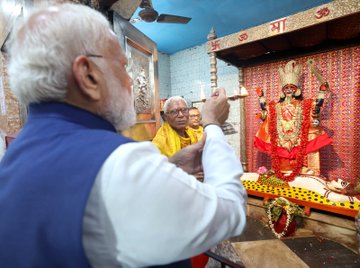
PM Narendra Modi attacks Mamata Banerjee’s TMC in North 24 Parganas (Image Modi on X)
Final phase of voting may redefine BJP’s ideological trajectory, with West Bengal emerging as a decisive battleground
By NIRENDRA DEV
New Delhi, April 29, 2026 — As West Bengal heads into its decisive phase of voting, the outcome could carry implications far beyond state politics. The verdict may not only test the perceived limits of “Moditva” but also sharpen the ongoing ideological debate around the idea of a Hindu Rashtra.
The notion of “limitations of Brand Moditva” was widely discussed around 2012–13, after Narendra Modi’s third consecutive victory in Gujarat. Critics and even voices within the BJP argued that expansion into regions like West Bengal, Kerala, Andhra Pradesh, and the Northeast—together accounting for nearly 150 Lok Sabha seats—would be the real test. Since 2014, that landscape has shifted significantly. While Kerala remains elusive, the BJP has expanded its footprint in the Northeast and Odisha and emerged as a major challenger in Bengal.
Electoral data reflects both progress and limits. In the 2024 Lok Sabha elections, the BJP won 12 of Bengal’s 42 seats with a vote share of 39.08%, down from 18 seats and over 40% vote share in 2019. The numbers underline a key political truth: today’s success does not guarantee tomorrow’s dominance.
Yet, mass appeal continues to be a decisive force. Modi’s political persona has retained its pull, evolving into a broader ideological framework blending nationalism, welfare, and identity politics.
A BJP victory in Bengal could mirror, in some ways, the 2017 Uttar Pradesh turning point, when Yogi Adityanath’s elevation as chief minister signaled a more assertive articulation of Hindutva politics. His governance model—often described as tough on law and order—has since become a reference point within the party.
In Bengal, similar narratives are already visible. The BJP has consistently targeted the ruling Trinamool Congress over alleged minority appeasement, framing the contest through a sharper ideological lens. Leaders like Suvendu Adhikari have also signaled alignment with the broader Hindutva plank.
The deeper issue, therefore, goes beyond cultural symbols or food politics. The real contest lies in competing visions of identity, governance, and nationalism. If the BJP performs strongly, West Bengal could mark not just an electoral gain, but a decisive shift in India’s ideological trajectory—potentially redefining the next phase of its politics.
Follow The Raisina Hills on WhatsApp, Instagram, YouTube, Facebook, and LinkedIn




About The Author