Three-Day Parliament Session Buzz Puts DMK at Centre of Delimitation Arithmetic
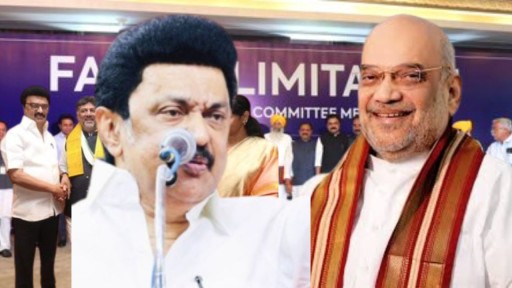
Tamil Nadu CM MK Stalin and HM Amit Shah (Image credit X.com)
By AMIT KUMAR
With the Monsoon Session still not prorogued, attention is turning to the government’s numbers and the DMK’s position on the delimitation package.
New Delhi, September 16, 2026 — Political buzz is growing in New Delhi over the possibility of the government summoning Parliament for a three-day sitting to revive the stalled delimitation-linked legislative package, with the DMK emerging as one of the parties under close watch as the Centre weighs its parliamentary arithmetic.
No formal announcement has been made on a three-day sitting. However, the possibility of another sitting has remained open because the Monsoon Session, although adjourned sine die on August 13, has not yet been prorogued. Parliamentary Affairs Minister Kiren Rijiju had earlier indicated that Parliament could technically be summoned again without formally closing the existing session.
The unusual gap between adjournment and prorogation has itself fuelled speculation about the government’s legislative plans. Reports have said the Centre is keeping open the option of a special session in the last week of this month, with delimitation and women’s reservation among the issues under consideration.
The numbers remain the central question: The government’s immediate challenge is not simply bringing the legislation back to Parliament. The constitutional amendment at the heart of the package requires the special majority prescribed under Article 368.
The Constitution (131st Amendment) Bill, 2026, which is linked to the delimitation and women’s reservation framework, was defeated in the Lok Sabha on April 17. The official parliamentary record states that the Bill failed to secure the required majority, following which the related Delimitation Bill and Union Territories Laws (Amendment) Bill were not proceeded with.
The April vote — 298 in favour and 230 against, according to parliamentary reporting — demonstrated that the government needed to broaden its support base if it wanted to revive the constitutional amendment.
That is where the DMK becomes significant.
Why the DMK is in focus: The DMK’s position has been closely watched because the party’s relationship with the wider Opposition has changed since the April vote.
In July, the DMK said it would decide its position on the proposed delimitation legislation after seeing the actual Bill.
By August, however, the party publicly clarified that it had opposed delimitation from the beginning and would continue to oppose it. Udhayanidhi Stalin made the position clear amid speculation that the DMK could soften its stand.
The DMK’s position is especially important because delimitation has become a politically sensitive issue in Tamil Nadu, where concerns have been raised over the possible redistribution of Lok Sabha seats between states based on population.
Recently, the DMK even supported a resolution moved in the Tamil Nadu Assembly against the delimitation move of the Centre.
In June, DMK leaders had said the party would not support the proposed delimitation exercise and would not compromise on state rights. At the same time, reports had highlighted speculation that the Centre could seek to engage the DMK after changes in the Opposition’s political configuration.
Three days, if the numbers are ready: A three-day parliamentary sitting would therefore have significance beyond its duration.
If the government decides to summon Parliament, the immediate focus would be on whether it has assembled sufficient support for the constitutional amendment. The question would also be whether the legislative package has been modified sufficiently to attract parties that opposed the April version.
For the DMK, the issue presents a difficult political and constitutional calculation. The party has publicly maintained its opposition to the delimitation exercise, while its separate positioning in Parliament has already been visible on other issues during the Monsoon Session.
The government, meanwhile, has not publicly confirmed that a three-day session will be held. Deccan Herald in a report on Wednesday, quoting NDA allies, said that the government could call a three-day session this month.
The significance of the present situation lies in the fact that the parliamentary door has not formally been closed. With the Monsoon Session still awaiting prorogation, the possibility of reconvening Parliament remains procedurally available.
If the three-day session materialises, however, the most closely watched development may not be the calendar itself but the numbers on the floor of the House — and whether the DMK’s position changes the arithmetic surrounding delimitation.
Delimitation in India: Past to Future, A Parliament Reset Ahead
Follow The Raisina Hills on WhatsApp, Instagram, YouTube, Facebook, and LinkedIn




About The Author