Azam Khan Breaks Silence on Jail Ordeal, Jauhar University and Political Targeting
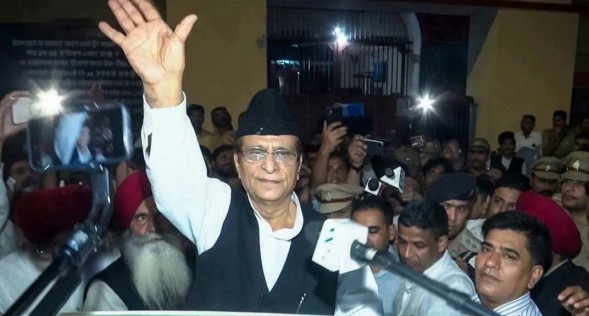
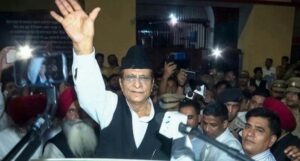
Azam Khan’s return could influence the Samajwadi Party’s Muslim outreach and wider PDA strategy ahead of Uttar Pradesh elections. (Image Akhilesh on X)
By AMIT KUMAR
Azam Khan’s Jail Ordeal, University Fight and Political Targeting Claims: Interview with Kapil Sibal
New Delhi, November 25, 2026 — The latest interview of Samajwadi Party leader Azam Khan on Kapil Sibal’s YouTube channel has brought his prolonged legal battles, imprisonment, the controversy surrounding Mohammad Ali Jauhar University and his allegations of political persecution back into the spotlight. In an emotionally charged conversation, Khan described his jail conditions, disputed theft allegations, seizure of university property and what he called a systematic attempt to destroy his political standing.
The interview is marked by a mix of personal anguish, defiance and political accusation, with Khan repeatedly framing his troubles around his educational initiatives and his political identity.
Azam Khan dismisses theft allegations, recalls university property seizure
Responding to questions about allegations involving stolen items, including furniture, books, livestock and other property, Khan denied personally committing theft. He explained that some furniture he acquired came from discarded or auctioned materials in Kolkata, which he claimed he purchased at low prices, repaired and refurbished. He said he possessed truck receipts supporting the purchases and alleged that police subsequently took the furniture and books, portraying him as a thief.
Khan also revisited the origins of Mohammad Ali Jauhar University, drawing parallels with Sir Syed Ahmad Khan’s educational vision and the development of institutions such as Banaras Hindu University. He argued that his own objective was to provide quality education to children from poor families, including those of labourers, street vendors, rickshaw pullers and small tradespeople.
He alleged that university buildings, schools and educational assets were taken over, that equipment was never returned, and that authorities failed to properly document the property seized or used during the COVID-19 period. He also claimed the university’s educational work and infrastructure were unfairly targeted.
‘I was kept in a place meant for executions’
One of the most disturbing parts of the interview concerned Khan’s description of his imprisonment. He alleged that he was kept in a former execution facility, in cramped and poorly ventilated conditions, with limited access to medical care and opportunities to move around. He recalled spending prolonged periods confined to a cot and described health problems suffered by himself and his wife.
Khan further alleged that criminal cases were extended to family members, associates and people connected with him, presenting this as an effort to intimidate and isolate his circle. These remain his claims in the interview and are not independently established by the transcript.
Azam Khan invokes courts and public support
Despite his account of incarceration and legal setbacks, Khan expressed faith in the judiciary, crediting court proceedings and higher-court relief for helping him through difficult circumstances. He argued that courts remained the crucial safeguard for citizens against alleged misuse of state power.
He also rejected the idea that his political influence or public standing could be erased, recounting interactions with ordinary people who continued to approach him with warmth and support.
The interview offers a window into how Azam Khan views his legal and political battles: not merely as a series of criminal cases, but as a struggle over education, institutional control, political survival and the rule of law. His narrative is forceful, but the allegations he raises require independent verification and a response from the authorities concerned.
For Uttar Pradesh politics, the conversation revives questions about the Jauhar University controversy, the treatment of opposition leaders, and how legal accountability and political vendetta are distinguished in an increasingly polarised environment.
Azam Khan’s Return Poses a Political Dilemma for Akhilesh Yadav Ahead of UP Polls
Follow The Raisina Hills on WhatsApp, Instagram, YouTube, Facebook, and LinkedIn




About The Author