Modi Govt’s Double Game on Protests: Concessions by Day, Raids by Night, Says Analyst
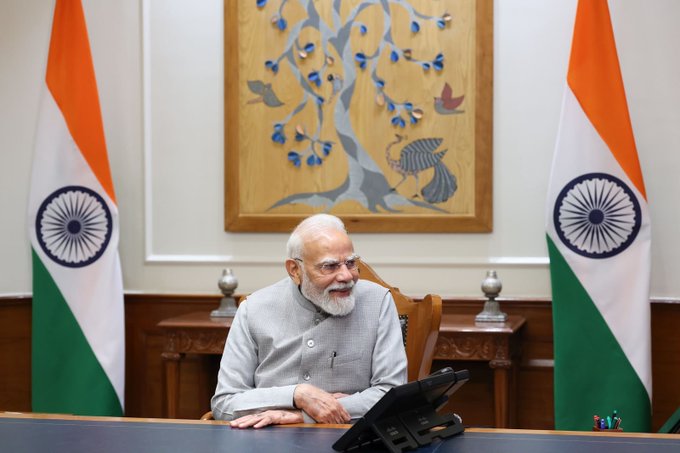
PM Narendra Modi as he speaks on phone in his office in New Delhi. (Image PMO)
By TRH Op-Ed Desk
Political analyst Manish Anand says the NDA government’s mixed signals on the youth protest crackdown — and a brewing ethanol blending row — could deepen its troubles, even as BJP keeps winning elections
New Delhi, July 29, 2026 — The Modi-led NDA government is showing visible strain in handling a wave of youth-led protests, appearing to bend to demonstrators’ demands even as its police machinery moves against the same protesters behind the scenes, political analyst Manish Anand said in a commentary for The Raisina Hills.
A Government Pulling in Two Directions
According to Anand, the government has agreed to one of the protesters’ central demands — withdrawing FIRs filed against demonstrators in BJP-ruled states — even as the Supreme Court has directed continued police action against individuals with “criminal antecedents” who were part of the protests. Anand said protest leaders have accused the government of using the court’s order as a tool against young demonstrators.
“There is a double, even a four-faced approach visible in the Modi government,” Anand said, describing one face that appears to be listening to protesters and conceding their demands, and another in which plainclothes police visit the homes and offices of those who took part in the demonstrations.
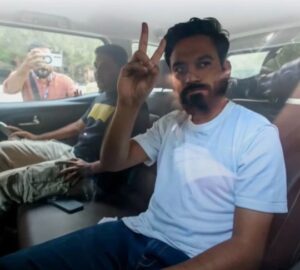
As an example, Anand pointed to plainclothes police arriving at a Communist Party office in Delhi to arrest a student organisation’s general secretary — an episode he said points to confusion within the government itself over how to handle the movement, with police action and conciliatory outreach running on visibly separate, uncoordinated tracks.
“Troubles Will Only Grow,” Analyst Predicts
Anand was blunt about where this leads. “It doesn’t look like the government’s troubles will ease because of this dual approach,” he said, noting that protest group spokespersons have already threatened to call fresh demonstrations nationwide. If police action continues alongside renewed protest calls, he said, opposition parties could rally behind the movement with new grievances layered on top of the old ones — compounding the pressure on the government rather than relieving it.
Dharmendra Pradhan’s Resignation: A Rare Reminder That Public Pressure Still Matters
The Ethanol Blending Row Waiting in the Wings
Anand flagged a second, largely dormant issue he expects to resurface alongside the protests: the government’s ethanol blending programme. He said there is no clear, publicly available data on how much ethanol is actually being blended into petrol and diesel, even as motorists report — based on their own driving experience — that blending levels appear far higher than official figures suggest.
He also cited reports that the Food Corporation of India sold rice procured from farmers to private mills at a loss specifically for ethanol production, which he argued has mainly benefited sugar mill owners rather than the farmers the scheme is meant to help.
Anand noted a widespread public perception that a majority of India’s sugar mills are owned by, or linked to, politicians — a claim he said fuels suspicion that the ethanol push serves connected interests rather than the farming community, especially since fuel prices have shown no corresponding relief for consumers. He described this as a matter that remains open to debate rather than settled fact.
A Puzzle for BJP’s Critics: Why Hasn’t Any of This Cost Votes?
The most striking part of Anand’s analysis was his read on why none of this — paper leaks, the UGC resolution controversy, declining education standards, or the ethanol issue — has dented BJP’s electoral record so far.
He noted that in state elections held after the 2024 Lok Sabha polls, BJP lost ground only in Jammu & Kashmir and Jharkhand. In Haryana, Maharashtra, Delhi, Bihar, West Bengal and Assam, the party won comfortably — in several cases by wide margins — despite the opposition raising the same issues throughout each campaign.
“This is a challenge for anyone doing political analysis,” Anand said. “The issues people criticise the Modi government over most fiercely on social media are simply not the issues they vote on.” His conclusion: Indian elections today remain driven by competing narratives rather than specific policy grievances, and BJP’s Hindutva-based narrative has continued to dominate in Bihar, Delhi, West Bengal and Assam. That same narrative, he noted, has had far less traction in the south — with the party performing weakly in Tamil Nadu, Kerala and Puducherry.
Unanswered Question
Anand’s assessment paints a government caught between managing a restive protest movement and an unresolved ethanol controversy, while its electoral fortunes — for now — remain largely untouched by either. Whether that insulation holds if the two issues combine into a single opposition narrative, he suggested, is the question to watch next.
(Commentary by Manish Anand, political analyst, for The Raisina Hills. Views expressed are his own.)
Rahul Gandhi Recasts CJP Protest as a Battle for India’s Soul, Puts Amit Shah in the Dock
Follow The Raisina Hills on WhatsApp, Instagram, YouTube, Facebook, and LinkedIn




About The Author