CJP Protest and the Unravelling of Modi’s Third-Term PMO
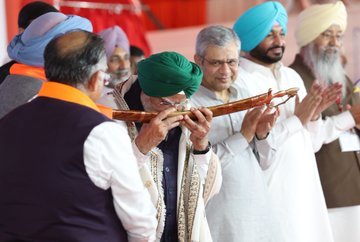
Prime Minister Narendra Modi wearing a green turban while addressing a public rally in Jalandhar, Punjab. (Image BJP on X)
By MANISH ANAND
Amit Shah’s signature on Modi’s third term is making the PMO losing grip over the administration, argues the political analyst
New Delhi, July 21, 2026 — In a span of a few days, Prime Minister Narendra Modi seems to have run straight into the eye of an angry storm of the youth anger. The spectacle of the police firing tear gas on youth protestors in the national capital gives a body blow to the Modi government’s perception that the Prime Minister has no opposition in the country.
The police crackdown on the protestors seems to have followed already known pattern. With Union Minister Amit Shah at the helm of Ministry of Home Affairs, the stick has acquired the image of the administration.
The pattern also includes now the well-known BJP’s tool kit — defame and malign agitation by throwing conspiracy theories at the organisers, lampoon the faces of the protests, and hype theory that foreign agents are out to destabilise the Modi government.
The BJP eco-system spent almost 23 days doing what it had done for years, while activist Sonam Wangchuk fasted at the Jantar Mantar. The Monsoon session of parliament loomed, and a brazen strategy unveiled to dismantle the protest led by the Cockroach Janata Party (CJP).
The Delhi Police saw a sudden change in leadership, and next morning the police covered Wangchuk with white sheets to forcibly shift him to the Safdarjung Hospital. But the police left a trail of images of Wangchuk being dragged away from the protest venue.
Those images electrified fence-sitters who had just been only sympathizing with the CJP for taking up the right cause. They jumped the fence and hit the street.
Still, the Amit Shah-led security mandarins believed that the force could overwhelm the protestors. That ended up leaving more ugly trails of images of the police beating up the youth and even children.
Indeed, the police also have claimed that many of its personnel have been injured in clashes with protestors. But in times of internet when images and videos tell tales of truth, the police personnel being assaulted by the protestors is not trending on platforms.
In 2022, Manipur erupted with ethnic violence. Meitei versus Kuki. Four years have passed by. They are still baying for blood of each other. The response of the administration remains static: more force.
Now the Haryana Police are barricading borders with Punjab to stop farmers from marching to New Delhi for Mahapanchayat against the India-US trade agreement, which is still under discussion. With details of discussions remaining opaque, agitating farmers believe that the Modi government will allow the US to sell the highly subsidised agricultural produces in India.
Amit Shah has emerged as a powerful power centre, stamping his signature on the third term of Modi as the PM. The Prime Minister’s Office (PMO) now seems weak. That is also apparent as the Prime Minister couldn’t take actions against Dharmendra Pradhan, Education Minister, despite visible chaos in India’s education sector, and Bhupender Yadav, the Minister for Environment and Climate Change, who got the rare distinction of his four PAs dismissed. Pradhan and Yadav happen to be key members of Amit Shah’s core team, per political observers.
(This is an opinion piece. Views expressed are the author’s own.)
Delhi Protest Crackdown a “Big Warning” for Modi Government: Analyst
Follow The Raisina Hills on WhatsApp, Instagram, YouTube, Facebook, and LinkedIn




About The Author