BRICS 2026 Raises Questions Over India’s China Strategy
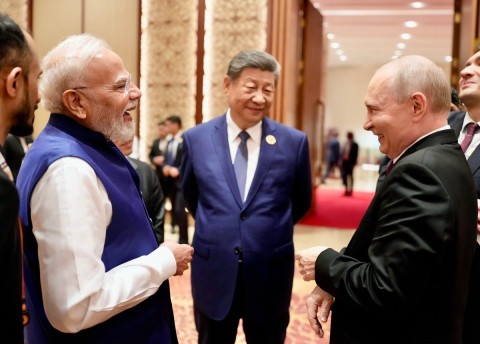
Prime Minister Narendra Modi with Chinese President Xi Jinping and Russian President Vladimir Putin during the BRICS Summit 2026 in New Delhi. (Image Modi on X)
By TRH Op-Ed Desk
Manish Anand, a geopolitical analyst, argues that India must seek concrete gains on the LAC and avoid giving China concessions without reciprocal steps.
New Delhi, September 13, 2026 — India’s growing engagement with China and Russia through BRICS has triggered fresh questions over New Delhi’s economic and foreign policy strategy, with geopolitical analyst Manish Anand arguing that closer ties with Beijing must be matched by tangible progress on border stability and trade.
In a monologue for The Raisina Hills, Anand said the growing political attention around the 2026 BRICS Summit in New Delhi should be assessed against the economic and strategic realities facing India.
Anand cited economist Surjit Bhalla’s increasingly critical assessment of the Modi government, particularly its economic and foreign policies. He argued that while BRICS countries collectively account for a substantial share of global GDP, China represents a disproportionately large part of the bloc’s economic growth.
The geopolitical analyst also questioned whether India is giving China greater diplomatic and economic space as it seeks to hedge against an increasingly unpredictable US policy environment.
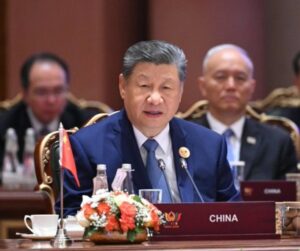
The central concern, Anand said, is the situation along the Line of Actual Control (LAC). He pointed to reports of forward military positions in the Taksing area of Arunachal Pradesh and argued that China’s military posture needs to be assessed alongside President Xi Jinping’s diplomatic messaging in New Delhi.
“Can India trust China?” Anand asked, arguing that statements on people-to-people contacts, business activity and economic integration need to be backed by concrete action on the ground.
He also raised concerns over China’s infrastructure development in areas adjoining Arunachal Pradesh and its longstanding objections to India’s sovereignty over the state.
According to Anand, India’s experience since the 2020 Galwan Valley clash makes it necessary to distinguish between diplomatic messaging and military behaviour.
He further argued that China’s dominance in critical minerals and rare-earth processing gives Beijing significant leverage in global trade. Anand said India must therefore be cautious about becoming overly dependent on BRICS partners while simultaneously creating uncertainty in its economic relationship with the US and Europe.
India’s trade deficit with major BRICS economies, particularly China and Russia, is another factor that requires closer scrutiny, he said.
“India must be careful about giving away too much without securing immediate and definitive gains,” Anand argued, particularly on maintaining peace and stability along the LAC.
He said the key test for India’s China policy should be whether Beijing takes verifiable steps to reduce border tensions and build trust.
The BRICS grouping, Anand concluded, can remain important for India’s strategic autonomy, but New Delhi must ensure that engagement with China serves India’s national interest rather than creating new strategic vulnerabilities.
BRICS Delhi Declaration Exposes US Faultlines; Can India Make the Bloc a Bridge?
Follow The Raisina Hills on WhatsApp, Instagram, YouTube, Facebook, and LinkedIn




About The Author