Fire Over Hormuz: US bombs and Iran’s blockade shake the world

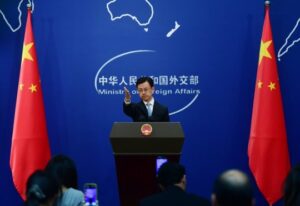
US and Iran war intensified as negotiations remain stalled. (Image video grab)
By TRH World Desk
As US strikes enter a second consecutive night, Iran closes the Strait of Hormuz to all shipping — while Trump and Hegseth trade ultimatums for bombs.
New Delhi, June 11, 2026 — The Persian Gulf is on the edge of catastrophe. On the night of June 9–10, 2026, the United States launched strikes on Iranian military targets near the Strait of Hormuz — the narrow passage through which roughly one-fifth of the world’s oil and liquefied natural gas flows. Iran responded by closing the strait entirely.
“The IRGC accused the US of ‘repeated violations’ of the April ceasefire and declared the Strait of Hormuz ‘closed until further notice’. It said all traffic in the waterway — including oil tankers and commercial vessels — would be affected,” reported Al Jazeera.
The trigger for this latest escalation was the downing of a US Army AH-64 Apache helicopter near the Strait of Hormuz. Washington placed the blame squarely on Tehran.
US Central Command (CENTCOM) confirmed the second straight night of strikes had been completed, targeting Iranian military surveillance capabilities, communication systems, and air defence sites.
“Iran’s top joint military command announces the closure of the Strait of Hormuz, including oil tankers and commercial ships, saying any vessel that will attempt passage will be shot at,” stated The Times of Israel.
Iran also attacked US military bases in Bahrain and Kuwait, as well as a base in Azraq, Jordan — widening what had already become a sprawling regional conflict. Iranian state media reported blasts on Qeshm Island and in Bandar Abbas, Sirik, and Kargan.
Trump Serves Ultimatum
US President Trump, never one to underplay his hand, used the latest crisis to make a series of sweeping assertions — some verifiable, others impossible to confirm. Trump declared to reporters at the White House that the United States has been covertly moving oil through the Strait of Hormuz — escorting commercial ships without public knowledge — and that America, not Iran, effectively controls the waterway.
He claimed the US military had secretly helped 200 commercial ships and over 100 million barrels of oil pass through the strait, and announced it publicly for the first time on June 10.
Trump also accused Iran of being responsible for the downed Apache and vowed a ‘very powerful’ response. Speaking to Fox News, he confirmed he was close to authorizing strikes on Iranian power plants and bridges if Tehran refused to sign a peace agreement, warning Iran would be attacked ‘very hard.’
“US Central Command is denying Iran’s claim that the Strait of Hormuz is closed, saying that commercial ships continue to transit in and out of the waterway,” claimed The Times of Israel in an update.
CENTCOM categorically denied Iran’s closure declaration, posting on X: “CLAIM: Iran’s Islamic Revolutionary Guard Corps claims that the Strait of Hormuz is closed. TRUTH: Commercial ships are continuing to transit in and out of the Strait of Hormuz tonight.’ The dueling narratives — Iranian closure vs American denial — illustrate how deeply the information war parallels the military one.
Hegseth Speaks: ‘Tap, Tap, Tap Bombs’
US Defence Secretary Pete Hegseth was equally unambiguous. Before the second night of strikes began, he signalled what was coming with a phrase that will likely define this chapter of the war. “As President Trump said, they’ve been tap-tap-tapping. You can see when someone’s trying to tap-tap-tap on a deal. Instead, they’re going to have tap, tap, tap bombs dropping on key facilities in Iran from the United States of America,” he told reporters.
Hegseth framed the second night of strikes as a direct consequence of Iran’s dilatory negotiating tactics and described the operation as part of efforts to secure “the kind of deal President Trump expects.”
He simultaneously denied that Washington was seeking to resume full-scale hostilities — a distinction that, with bombs falling on Iranian soil for the second straight night, will strike many observers as semantic at best.
The World Holds Its Breath
The Strait of Hormuz has long been the jugular vein of global energy supply. Around 20 percent of all petroleum and 20 percent of liquefied natural gas transits the strait each year. Since the conflict began in late February, commercial traffic through the waterway has already dropped by over 90 percent. An Iranian closure — even a contested one — sends shock waves from Tokyo to London to Mumbai.
The deeper question is whether Washington’s strategy of negotiating through airstrikes is producing the deal Trump wants, or simply pushing Iran deeper into a defensive crouch from which compromise becomes politically impossible for Tehran. Each bomb Hegseth orders risks being answered not with a concession but with another closure, another tanker attack, another regional escalation.
Iran’s counter-moves — targeting Bahrain, Kuwait, Jordan, and ships in the strait — confirm that despite a significantly degraded military (its Supreme Leader killed in February, key commanders assassinated, nuclear sites damaged), the Islamic Republic retains enough capability and motivation to make the cost of this war open-ended.
The ceasefire announced in April, brokered by Pakistan, already looks frail. The Islamabad talks failed. The naval blockade imposed in mid-April has not brought Iran to the table on Washington’s terms. And now — with Apache helicopters being shot down and the strait declared closed — the conflict has re-entered a phase of direct military escalation that the April ceasefire was meant to forestall.
For India and the wider region, the stakes could hardly be higher. India imports a significant proportion of its crude oil from the Gulf. A sustained closure of the Hormuz Strait — even a partial one — would drive oil prices to levels not seen since 2022 and strain economies already navigating a difficult global environment.
Trump’s assertion that the United States controls the Strait of Hormuz is bold. Whether it is true in any durable operational sense — or merely reflects America’s current military advantage in a volatile theatre — will be tested in the days ahead.
KEY FACTS AT A GLANCE
Feb 28, 2026: US and Israel launch joint strikes on Iran targeting nuclear and military sites; Iran’s Supreme Leader Ali Khamenei killed.
March 4, 2026: Iran declares the Strait of Hormuz ‘closed’; attacks on merchant vessels begin.
April 8, 2026: Ceasefire brokered by Pakistan; Iran agrees to allow passage through Hormuz.
April 13, 2026: US imposes naval blockade on Iran after Islamabad talks fail.
June 9, 2026: US Apache helicopter downed near Hormuz; US launches retaliatory strikes.
June 10, 2026: Second night of US strikes; Iran re-declares Hormuz closed; attacks Bahrain, Kuwait, Jordan.
June 10, 2026: Trump claims US has secretly escorted 200 ships and 100M+ barrels of oil through the strait.
CENTCOM denies Hormuz is closed; says commercial ships continue to transit.
Three Indians Missing as Missiles Turn Gulf of Oman Into War Zone
Follow The Raisina Hills on WhatsApp, Instagram, YouTube, Facebook, and LinkedIn




About The Author