AJ Philip Says Jaswant Singh Khalra’s Story Cannot Be Censored
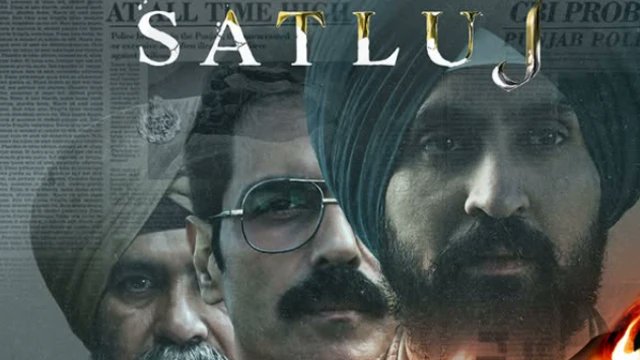
AJ Philip says the disappearance of the film Satluj from an OTT platform revives debate over censorship (Image X.com)
By TRH News Desk
In a Facebook post, veteran journalist AJ Philip says the disappearance of the film Satluj from an OTT platform revives debate over censorship, historical memory and the legacy of human rights activist Jaswant Singh Khalra.
New Delhi, July 6, 2026 — Veteran journalist AJ Philip has criticised the removal of the film Satluj from an OTT platform shortly after its release, arguing that attempts to suppress the story of slain human rights activist Jaswant Singh Khalra only reinforce the importance of preserving historical truth.
In a detailed Facebook post, Philip said he had intended to watch the film over the weekend after it quietly appeared on the Zee network’s streaming platform, only to discover that it had been taken down within two days.
“If I wish to watch it now, I may have to do so from another country,” he wrote, questioning why an Indian citizen should have to leave the country to watch a film about another Indian citizen.
According to Philip, the episode reflects the continuing sensitivity surrounding Khalra’s work exposing alleged illegal disappearances and secret cremations during Punjab’s militancy era.
Philip recalled that the film was originally titled Punjab 95 and was based on Khalra’s life. He noted that the Central Board of Film Certification (CBFC) had reportedly suggested 127 cuts before certification, effectively preventing its release in its original form. The producers later renamed the film Satluj before securing an OTT release.
The veteran journalist also shared his personal association with Punjab’s turbulent years. As a member of a fact-finding team constituted by Archbishop Alan de Lastic in 1994 to investigate the vandalism of a church in Patiala district, Philip said the visit challenged several assumptions he had formed while covering militancy as an editorial writer with The Hindustan Times.
He said his deeper understanding of Khalra’s work came after reading Reduced to Ashes: The Insurgency and Human Rights in Punjab, which documented the activist’s investigation into alleged illegal cremations of unidentified bodies in Amritsar.
Philip recounted how Khalra meticulously examined cremation records and claimed to have uncovered evidence suggesting that hundreds of unidentified bodies had been secretly cremated. After approaching the courts, Khalra was allegedly abducted, illegally detained and murdered. Subsequent investigations by the Central Bureau of Investigation led to the conviction of several police personnel in the case.
Calling Khalra “an ordinary man with extraordinary moral courage,” Philip said his legacy endures despite attempts to suppress his story. He pointed to the naming of an elementary school after Khalra in the United States as evidence that his contribution continues to be recognised globally.
“Governments may suppress uncomfortable films… But truth survives in books, judicial records, eyewitness accounts and conversations,” Philip wrote, concluding that while films may be censored, history cannot be permanently erased.
Satluj Review: Diljit Dosanjh’s Masterpiece Vanishes in 48-Hour
Follow The Raisina Hills on WhatsApp, Instagram, YouTube, Facebook, and LinkedIn




About The Author