Sheikh Hasina Team Demands Death Sentence Set Aside
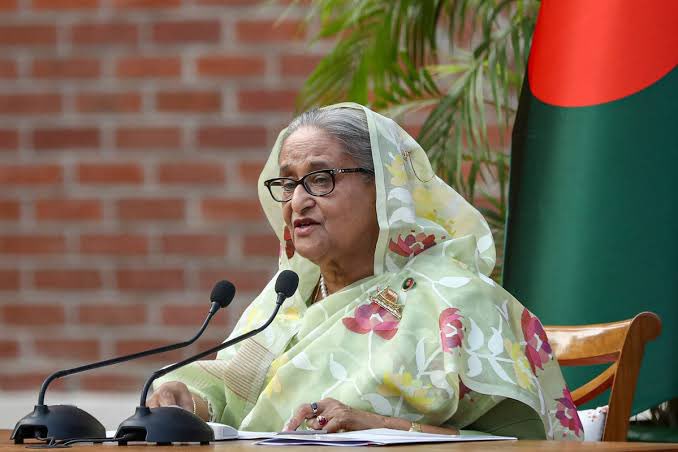
Image credit X.com
Letter dated March 30 demands fair trial standards, objects to in-absentia conviction and calls on Bangladesh to protect Awami League lawyers
By NIRENDRA DEV
Kolkata, April 1, 2026 — The legal team of former Bangladesh Prime Minister Sheikh Hasina has formally written to Dhaka’s International Crimes Tribunal demanding that the verdict and death sentence imposed against her be immediately set aside as “legally void” — and that no steps be taken to execute the sentence.
The letter, dated March 30, 2026 and made available by informed sources, represents the most direct legal challenge yet to the tribunal’s proceedings against the former prime minister, who was convicted and sentenced in absentia.
The Core Demands
The letter, addressed to the International Crimes Tribunal at the Old High Court Building in Dhaka, makes three central demands:
That the verdict and sentence against Sheikh Hasina be immediately set aside as legally void; that no steps be taken to execute the death sentence, which the letter describes as constituting “summary execution in violation of international law”; and that any further proceedings be conducted only in full compliance with international fair trial standards — including proper notification, disclosure of all allegations and evidence, and the opportunity for Hasina to participate meaningfully in her own defence with legal representation of her choosing.
The letter also calls on the government of Bangladesh to take immediate steps to ensure the safety and security of lawyers and others associated with the Awami League who face intimidation and violence.
“Fundamentally Incompatible With International Standards”
The letter states that Sheikh Hasina “was prosecuted and sentenced in absentia for capital offences in proceedings that are fundamentally incompatible with basic international standards for fairness and due process and violate her fundamental rights under international law.”
It adds a pointed disclaimer: “This correspondence does not constitute acceptance of, submission to, or recognition of the legitimacy of these proceedings as currently constituted. Sheikh Hasina expressly reserves the right to challenge the jurisdiction, composition, conduct and outcomes of these proceedings in all available fora.”
The Legal Arguments
The letter raises several specific legal objections of significant weight.
On jurisdiction, it argues that the alleged conduct — arising from law enforcement responses to civil unrest in July-August 2024 — falls within the jurisdiction of Bangladesh’s ordinary criminal courts, not a specialised tribunal created for historical war crimes. “The proper forum for any legitimate prosecution of the alleged conduct is Bangladesh’s ordinary criminal justice system,” the letter states.
On retrospective application, it raises serious concerns under the principle of legality. The letter notes that amendments to the tribunal’s jurisdiction purport to have retrospective effect from 2009 yet are being applied to prosecute conduct from 2024 — which it describes as “a legal impossibility that violates fundamental principles of fair notice and legal certainty.” It invokes Article 35(1) of Bangladesh’s own constitution, which guarantees that no one shall be punished except in accordance with law.
On judicial independence, the letter contends that the tribunal “failed to satisfy” the requirements of independence and impartiality, thereby violating Sheikh Hasina’s right to a fair trial under Article 14(1) of the International Covenant on Civil and Political Rights (ICCPR).
The Political Context
Analysts note that the letter carries special significance coming in the wake of Bangladesh’s 2026 elections and the change of regime under BNP leadership. The cooling of relations with India, they suggest, has created a new regional balance — one in which the letter’s demands land in an altered diplomatic landscape.
The role of paramilitary forces in the new political order, analysts add, underscores the central challenge facing Bangladesh’s institutions: whether they can serve as a genuine stabilising force or remain instruments of the political transition.
What Happens Next
The letter makes no ambiguity about its legal standing: the verdict and sentence, it concludes, are “without legal validity and constitute a grave violation of Sheikh Hasina’s fundamental rights — in particular, her right to a fair trial and right to life.”
Whether the Dhaka tribunal, operating under the new BNP-led government, responds to these demands — or proceeds toward execution — will be among the most closely watched legal and political developments in South Asia in the weeks ahead.
Khaleda Zia and Sheikh Hasina Turned Power into a Personal War
Follow The Raisina Hills on WhatsApp, Instagram, YouTube, Facebook, and LinkedIn




About The Author