Vedanta vs Adani: Supreme Court Showdown Over Jaypee Bid
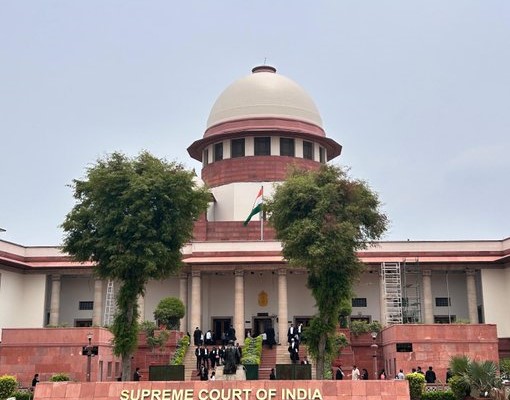
Image credit X.com
Can courts override creditors’ choice? The Vedanta–Adani clash over Jaiprakash Associates tests the limits of IBC’s core doctrine
By P. SESH KUMAR
New Delhi, April 2, 2026 — The battle between Vedanta and Adani over the acquisition of Jaiprakash Associates Ltd (JAL) is not merely a corporate rivalry-it is a stress test for India’s Insolvency and Bankruptcy Code (IBC). At its heart lies a fundamental question: can courts interfere when creditors choose a lower bid over a higher one?
A High-Stakes Insolvency Drama
Jaiprakash Associates Ltd, (JAL) once a sprawling infrastructure giant with cement plants, real estate, and even India’s only Formula One track, collapsed under debt estimated at over ₹50,000 crore. The IBC process attracted multiple bidders, with Vedanta and Adani emerging as principal contenders.
Vedanta reportedly offered a higher overall bid (₹16,700–17,000 crore), while Adani’s bid (₹14,500 crore) was lower in total value but stronger in upfront cash and execution certainty.
The Committee of Creditors (CoC), exercising its statutory authority under the IBC, approved Adani’s plan in November 2025. The NCLT subsequently approved this resolution plan in March 2026.
Vedanta, aggrieved by the decision, triggered a multi-tier legal challenge-first before the NCLAT, and now before the Supreme Court. Let us examine this in a little more detail.
A Race Against Finality: The Timeline and Strategy Behind the Vedanta-Adani Legal Blitz
What unfolded in the JAL insolvency battle was not a routine appellate journey-it was a calculated legal sprint, where timing mattered as much as legal merit, and every move reflected a deeper strategic anxiety: once implemented, an IBC resolution becomes almost impossible to reverse.
The story accelerates sharply in mid-March 2026. On March 17, 2026, the Allahabad Bench of the National Company Law Tribunal gave its approval to the resolution plan submitted by Adani Group for the acquisition of JAL. This was not merely a procedural milestone-it was the moment when a commercial decision taken months earlier by the Committee of Creditors (CoC) acquired judicial sanctity. In IBC architecture, this approval is the tipping point: once granted, the plan moves from proposal to implementation.
Vedanta’s response was swift and revealing. Within days-around March 22, 2026-it approached the National Company Law Appellate Tribunal (NCLAT). This immediacy was not accidental. Vedanta clearly understood that delay would weaken its position irreversibly. The appeal appears to have filed before the resolution could gather operational momentum-before assets began to change hands, before lenders started receiving payouts, before the plan hardened into reality.
But the decisive moment came on March 25, 2026. The NCLAT refused to grant an interim stay on the implementation of Adani’s plan. This single order changed the strategic landscape. By allowing the process to continue, even while keeping the appeal pending, the appellate tribunal effectively signaled its reluctance to derail the resolution timeline-a position entirely consistent with the IBC’s deep hostility to delay.
For Vedanta, this was the red-alert moment.
Because in insolvency law, time is not neutral. Time is corrosive. Once implementation begins-once control shifts, funds flow, and third-party rights crystallize-the legal system becomes increasingly reluctant to unwind the transaction. Even a successful appeal can become pyrrhic if the plan is substantially implemented. Courts have repeatedly shown discomfort (discussed separately) in reversing completed insolvency transactions, fearing systemic disruption and investor uncertainty.
It is against this backdrop that Vedanta’s next move must be understood.
Without waiting for a final adjudication by the NCLAT, Vedanta escalated the matter to the Supreme Court of India around March 29–30, 2026. This was not merely an appeal-it was a strategic bypass. By invoking Article 136, Vedanta sought to leapfrog the appellate process and secure what it could not obtain below: an immediate stay.
This move reveals a sophisticated procedural calculation. Vedanta was not just challenging the decision; it was racing against the clock of implementation. The objective was clear-freeze the transaction before it became fait accompli. The Supreme Court, unlike the NCLAT, offers the possibility of urgent intervention, especially where irreversible consequences are imminent.
But this strategy carries its own risks. The Supreme Court has consistently emphasized (discussed separately) that the IBC is a time-bound process and that excessive judicial interference undermines its very purpose. By approaching the apex court at an interim stage, Vedanta effectively asks it to do what lower forums declined-to halt a creditor-approved, tribunal-sanctioned resolution in mid-stream.
This creates a tension at the highest judicial level. On one hand lies the principle of finality and speed; on the other lies the possibility-however remote-of procedural unfairness or misjudgment by creditors.
Seen as a sequence, the timeline reads less like a routine litigation path and more like a tactical escalation:
The NCLT’s approval on March 17 transforms a commercial choice into a legally enforceable plan. Vedanta’s appeal to the NCLAT within days reflects urgency. The NCLAT’s refusal to stay on March 25 shifts the balance decisively in favour of implementation. And Vedanta’s rapid move to the Supreme Court by the end of March reveals a last-ditch attempt to arrest that momentum.
What makes this sequence particularly significant is what it tells us about the evolving nature of IBC litigation. Parties are no longer merely contesting outcomes; they are actively managing timing, sequencing, and forum selection to shape outcomes. The battlefield is no longer just legal-it is procedural, strategic, and intensely time-sensitive.
And therein lies the deeper critique.
The IBC was designed to minimize litigation and maximize certainty. Yet, cases like this expose an emerging paradox: while the law prioritizes speed, the stakes involved are so high that parties are willing to litigate at multiple levels simultaneously, compressing timelines rather than extending them. The result is not delay-but legal intensity.
In the end, Vedanta’s strategy reflects a fundamental truth about insolvency law: losing on merits is one thing, but losing after implementation is something else entirely. Because by then, the law may still hear us-but the asset is already gone.
The Core Issue: Value vs Certainty
This case thus boils down to a deceptively simple but legally explosive dilemma: Should creditors maximize headline value, or prioritize certainty and timing of recovery?
Adani’s bid appeared to have offered faster and higher upfront recovery, while Vedanta’s promised more value-but spread over time. Creditors, wary of execution risks, leaned towards immediacy.
This tension is not new. It lies at the heart of IBC design itself.
Vedanta’s Case: The Challenge to Process Integrity
Vedanta’s arguments-based on available public reporting and legal patterns-appear to revolve around three pillars: First, Vedanta claims it was the highest bidder, and therefore rejection of its bid violates value maximization principles. Second, it questions the fairness and transparency of the bidding process, suggesting possible inconsistencies in evaluation criteria.
Third, it is likely invoking procedural impropriety, including whether the CoC adhered to objective parameters or arbitrarily preferred one bidder.
There are also indications (from public discourse and commentary) that Vedanta believes the outcome may have been reversed despite earlier indications in its favour, a point that-if substantiated-could introduce elements of legitimate expectation and fairness into the case.
At a doctrinal level, Vedanta’s strongest weapon is the “maximization of value” principle under Section 30 of IBC.
Adani & Creditors’ Case: The Fortress of “Commercial Wisdom”
The Adani Group and the CoC stand on far firmer jurisprudential ground. Their defence is rooted in the doctrine of commercial wisdom, which has been repeatedly upheld by the Supreme Court as non-justiciable except on limited grounds.
Their arguments are straightforward: First, the CoC has statutory authority to decide the best resolution plan based on feasibility, viability, and risk-not merely headline value.
Second, Adani’s bid offered higher upfront payment and lower execution risk, which is critical in distressed asset resolution. Third, courts and tribunals cannot sit in appeal over commercial decisions of financial creditors. This position finds strong backing in precedent. Let us now examine how jurisprudence has evolved in the matter.
Commercial Wisdom: The Invisible Hand Guiding India’s Insolvency Revolution
The story of India’s Insolvency and Bankruptcy Code (IBC) is, in many ways, the story of a quiet but radical shift in power-from courts to creditors. At the heart of this transformation lies a doctrine that sounds deceptively simple but carries enormous legal weight: the “commercial wisdom” of the Committee of Creditors (CoC). Over the past few years, the Supreme Court has not merely endorsed this idea; it has fortified it, refined it, and elevated it into the defining principle of insolvency jurisprudence.
The journey begins with the landmark ruling in K. Sashidhar v. Indian Overseas Bank (2019), a case that laid the foundation for everything that followed. In that decision, the Supreme Court drew a clear and uncompromising line. Once financial creditors, acting collectively through the CoC, evaluate a resolution plan and take a decision, that decision is not open to judicial second-guessing. Courts, the Bench declared, are not equipped to sit in judgment over commercial decisions-whether a bid is financially superior, whether risks are acceptable, or whether timelines are realistic. Their role is far narrower: to ensure that the resolution plan complies with the basic legal requirements laid down in Section 30(2) of the IBC. Beyond that, the wisdom of creditors is supreme, even if it appears imperfect. The message was unmistakable—insolvency is not a courtroom exercise; it is a business decision taken under distress.
The doctrine did not stop there. It gained muscle and clarity in the much-discussed CoC of Essar Steel v. Satish Kumar Gupta (2019) judgment. Here, the Supreme Court moved from principle to philosophy. It reaffirmed that the CoC is firmly “in the driver’s seat” of the resolution process. But more importantly, it recognized a deeper economic truth: insolvency resolution is not about chasing the highest number on paper. It is about balancing feasibility, viability, and certainty. A bid that promises more but delivers less is far more dangerous than one that offers less but delivers with certainty. The Court made it clear that creditors are entitled to weigh these factors, to distribute value as they deem appropriate, and to structure deals based on commercial realities. Judicial interference, the Court cautioned, would not only delay the process but also destroy value-the very outcome the IBC seeks to avoid.
If these two judgments built the structure, the ruling in Kalpraj Dharamshi v. Kotak Investment Advisors (2021) sealed the boundaries. This case addressed a recurring temptation in insolvency disputes-the urge to reopen decisions because a competing bid appears better or because allegations of unfairness are raised after the fact. The Supreme Court resisted that temptation. It held that even in such scenarios, judicial intervention must remain tightly confined. Courts can step in only when there is clear illegality, material irregularity, or violation of the statutory framework. They cannot reopen the commercial evaluation of bids or substitute their judgment for that of the creditors. The Court effectively warned that allowing such interference would convert the insolvency process into endless litigation, defeating the very purpose of the IBC.
Taken together, these judgments have created a legal regime where the CoC operates with significant autonomy. The courts have consciously stepped back, choosing not to micromanage business decisions. This is not an abdication of responsibility but a deliberate design choice. The Supreme Court has recognized that in a distressed economy, speed and certainty are as valuable as recovery itself. Every delay erodes value, every litigation prolongs uncertainty, and every judicial overreach risks derailing the process.
Yet, this doctrine is not without its tensions. By placing such strong faith in the commercial wisdom of creditors, the system inevitably reduces the scope for challenging decisions that may appear questionable or opaque. Critics argue that this creates a zone of limited accountability, where decisions affecting thousands of stakeholders can escape rigorous scrutiny. Supporters counter that any attempt to expand judicial review would reopen the floodgates of delay and uncertainty that plagued India’s pre-IBC regime.
This delicate balance is precisely why contemporary disputes-like the one between Vedanta and Adani over Jaiprakash Associates (JAL)-have acquired such significance. These cases are not just about who wins a corporate asset; they are about testing the resilience of a doctrine that has become the backbone of India’s insolvency framework. When a losing bidder argues that its offer was higher, and the winning bidder relies on the CoC’s commercial judgment, the courts are inevitably drawn into this tension between value and certainty, fairness and finality.
For now, the Supreme Court’s message remains consistent and clear. The commercial wisdom of the CoC is not to be lightly disturbed. It can be questioned only when it crosses the boundaries of legality, not when it merely produces an outcome that someone dislikes. In that sense, the doctrine acts both as a shield and a discipline-it protects creditor decisions from interference while demanding that those decisions remain within the framework of law.
And that is perhaps the most striking feature of India’s insolvency revolution. It is not driven by grand judicial interventions, but by a conscious judicial restraint. The courts have chosen to trust the market, to trust the creditors, and to trust that in the crucible of financial distress, commercial judgment-however imperfect-remains the most reliable compass.
NCLT’s Logic: Deference to Creditors
The NCLT, Allahabad bench, approved Adani’s bid, effectively endorsing the CoC’s decision.
While detailed reasoning is not fully public, the approval implicitly reflects established principles:
The tribunal’s role is limited to ensuring that the plan complies with Section 30(2) of the IBC-fair treatment of stakeholders, legality, and procedural compliance-not to reassess commercial merits.
Thus, the NCLT did not evaluate whether Vedanta’s bid was “better”-only whether Adani’s bid was legally valid.
NCLAT’s Stand: No Stay, Let the Process Continue
The NCLAT’s refusal to grant a stay is perhaps the most revealing judicial signal.
It held that: The resolution process should continue without interruption
Implementation would be subject to final outcome of the appeal
In effect, the NCLAT balanced two competing concerns: Speed of resolution (a core IBC objective) versus fairness of adjudication.
By refusing a stay, it reaffirmed a key IBC philosophy: delay is value destruction.
The Supreme Court: The Final Arena
Vedanta has now approached the Supreme Court seeking a stay on Adani’s takeover.
The grounds likely include: Violation of value maximization; Arbitrary exercise of CoC discretion; Procedural irregularities; and need for judicial intervention in exceptional cases.
However, the Supreme Court’s own jurisprudence presents a formidable barrier.
The Weight of Precedent: Why Vedanta Faces an Uphill Battle
As described in detail earlier, at least three landmark rulings define the battlefield: Sashidhar v. Indian Overseas Bank (2019), where the Court held that CoC’s commercial wisdom is supreme and non-justiciable; Committee of Creditors of Essar Steel v. Satish Kumar Gupta (2019), where the Court reinforced that tribunals cannot interfere with business decisions of creditors; and Kalpraj Dharamshi v. Kotak Investment Advisors (2021)
Where the Court limited interference even in cases involving procedural disputes unless illegality is proven. These precedents collectively erect a high threshold: Courts intervene only if there is illegality, fraud, or material irregularity-not merely because a better bid exists.
Critical Evaluation: Who Has the Stronger Case?
Vedanta’s case appeals to economic logic-higher value should prevail. But the IBC is not merely about maximizing value-it is about maximizing realizable value under uncertainty. Adani and the CoC rely on a legally entrenched principle: certainty beats speculative value. From a legal standpoint, Adani’s position appears stronger because: It aligns with settled Supreme Court doctrine; It respects creditor autonomy; and It preserves the speed-centric architecture of IBC
Vedanta’s case would succeed only if it proves process failure-not outcome dissatisfaction.
The Larger Question: Commercial Wisdom or Commercial Arbitrage?
This case revives a simmering debate:
Is “commercial wisdom” becoming a shield for opaque decision-making? Or is judicial restraint essential to prevent endless litigation?
The Jaypee case may become a defining test of this balance.
Way Forward: Lessons for the IBC Ecosystem
This episode offers powerful lessons.
First, resolution frameworks must clearly define bid evaluation criteria upfront—balancing value, timing, and risk transparently. Second, CoCs must document reasoning rigorously, especially when rejecting higher bids.
Third, regulators may consider introducing standardized scoring models to reduce discretion. Fourth, bidders must structure offers to align with creditor priorities—front-loaded cash is king in insolvency. Finally, the judiciary must continue to walk the tightrope—intervening in illegality, but not second-guessing business judgment.
A Case That Could Redefine IBC’s Soul
The Vedanta–Adani clash is not just about one acquisition. It is about whether India’s insolvency regime remains creditor-driven or court-driven.
If the Supreme Court upholds the current trajectory, it will reaffirm that in the IBC ecosystem, the highest bid does not always win—the most credible one does.
And that may be the harsh but necessary truth in the economics of distress.
(This is an opinion piece. Views expressed are author’s own.)
Vedanta vs. Viceroy: Is Legality Masking Governance Failures?
Follow The Raisina Hills on WhatsApp, Instagram, YouTube, Facebook, and LinkedIn




About The Author